
Among the most common questions Dr. Farhad Rafizadeh hears in his Morristown consultation room — and one that shows up repeatedly on his RealSelf Q&A page and in tummy tuck forums — is some version of this:
“Do I really need drains after a tummy tuck, or can it be done drainless? I’ve heard drains are uncomfortable, but I’m also worried about getting a seroma either way.”
It is a smart question, and it gets to the heart of how modern abdominoplasty has changed. Patients in Northern New Jersey have read about the “drainless tummy tuck,” seen the before-and-after photos, and want to know whether avoiding drains is genuinely safer and more comfortable — or just marketing. The honest answer requires understanding what drains actually do.
Dr. Rafizadeh’s Short Answer
Drains exist to remove the fluid that collects in the space created when we lift the skin off the abdominal muscle. The better way to handle that fluid is to remove the space itself. I close that space from the inside with progressive tension sutures, which quilt the skin down to the muscle as I advance it. That alone prevents most fluid from pooling, and in many patients it eliminates the need for a drain entirely. But I don’t make it a blanket rule — if I’m doing extensive liposuction or a patient is prone to fluid buildup, I’ll add a soft drain. The goal is always the lowest risk of a seroma for that particular patient.
That captures the modern philosophy in a few sentences: the best way to prevent a fluid collection is to eliminate the empty space where fluid would gather — and to keep the decision individualized rather than dogmatic.
What Drains Actually Do — and Why Surgeons Use Them
A full tummy tuck involves separating the skin and fat of the lower abdomen from the muscle wall, tightening the muscles, removing excess skin, and re-draping what remains. That separation creates what surgeons call dead space — a broad, flat pocket between the skin flap and the muscle. The body responds to any raw surgical surface by producing serous fluid, and in a large dead space that fluid has room to collect.
Traditional drains are soft plastic tubes placed in that space and connected to a small suction bulb. Their job is to evacuate fluid and residual blood before it can accumulate into a seroma — the most common complication after abdominoplasty. For decades, drains were simply the standard. They work, but they come with a cost: tubes pinned to your clothing for one to two weeks, output to measure and record, tubing to strip several times a day, and an extra office visit to remove them.
The Drainless Alternative: Progressive Tension Sutures
The drainless tummy tuck takes a different approach to the same problem. Instead of leaving the dead space open and suctioning out the fluid, the surgeon closes the dead space itself using progressive tension sutures (also called quilting sutures). These are rows of dissolvable stitches that anchor the lifted skin flap directly down to the underlying muscle fascia as the flap is advanced toward the incision.
The technique, introduced by Pollock and Pollock in 2000, does two things at once. It distributes the tension across the whole flap rather than concentrating it at the incision — which can improve scar quality — and it collapses the space where fluid would otherwise pool. With nowhere to collect, the small amount of low-pressure serous fluid the body produces is simply reabsorbed through the lymphatic system, the same way the body clears ordinary tissue fluid every day.
What Does the Research Say?
This is one area where the evidence has caught up with the marketing. The surgical literature is genuinely supportive of progressive tension sutures:
- A 2024 systematic review and meta-analysis in Aesthetic Surgery Journal concluded that progressive tension sutures were more effective than drains at reducing seroma and reoperation rates, with no difference in hematoma formation.
- A dedicated 2021 study reported that the near-elimination of seroma after abdominoplasty with a properly performed progressive tension suture technique is now well established in the literature.
- Separately, research on “long drainers” — patients whose drains stay in far longer than expected — has documented that prolonged drain use is associated with discomfort, limited mobility, and slower recovery, which is part of the motivation for moving away from routine drains.
The recurring theme in the data: it is not the drain that prevents a seroma so much as closing the space. When the space is closed well, the drain often becomes unnecessary.
The phrase that matters in every one of these studies is “properly performed.” Progressive tension sutures only work when the surgeon places enough of them, in the right rows, with the right tension. Done casually, they don’t close the space — and then you have neither a drain nor a real quilting closure. Technique is everything here.
Dr. Rafizadeh has performed abdominoplasty in Morristown for over 40 years. See techniques, candidacy, recovery, and real before-and-after results.
Explore Tummy Tuck Surgery or call (973) 267-0928So Why Not Go Drainless Every Time?
Because no single closure is right for every patient, and a good surgeon stays flexible. Dr. Rafizadeh begins every full abdominoplasty with progressive tension sutures, but he will add one or two soft drains when the situation calls for it — for example:
- Extensive liposuction is combined with the tummy tuck. A liposuction-heavy lipoabdominoplasty creates more raw surface area that can weep fluid, so a drain may be added as a safety margin.
- A very large amount of tissue is removed, as in significant weight-loss cases or a post-pregnancy mommy makeover in NJ, leaving a larger surface to heal.
- The patient has a bleeding tendency or is on medications — certain blood thinners or supplements — that raise the risk of fluid or blood collecting.
In these cases the drain isn’t a step backward; it’s the conservative choice for that specific anatomy. The progressive tension sutures still do most of the work, and the drain simply handles the extra fluid until the space seals.
What Recovery Looks Like Either Way
For a drainless patient, the first two weeks are noticeably simpler: no bulbs to empty, no output log, no tubes to conceal under clothing, and no separate drain-removal appointment. The quilting sutures also hold the tissues firmly against the muscle, which many patients say makes early movement feel more secure.
For a patient who does have a drain, recovery is still very manageable. The drain typically comes out within one to two weeks once daily output drops below roughly 25–30 mL, and removal takes only a moment. In both cases, wearing your compression garment as directed, walking gently and often, and keeping a slightly bent-forward posture early on all help the abdomen heal smoothly and lower the chance of fluid collecting.
What This Looks Like in Real Patients
The cases below were performed by Dr. Rafizadeh in Morristown. Each reflects the flat, natural contour and well-placed scar that progressive tension closure is designed to produce — the same priorities, whether or not a drain was used.
Patient Before & After
View Full Gallery →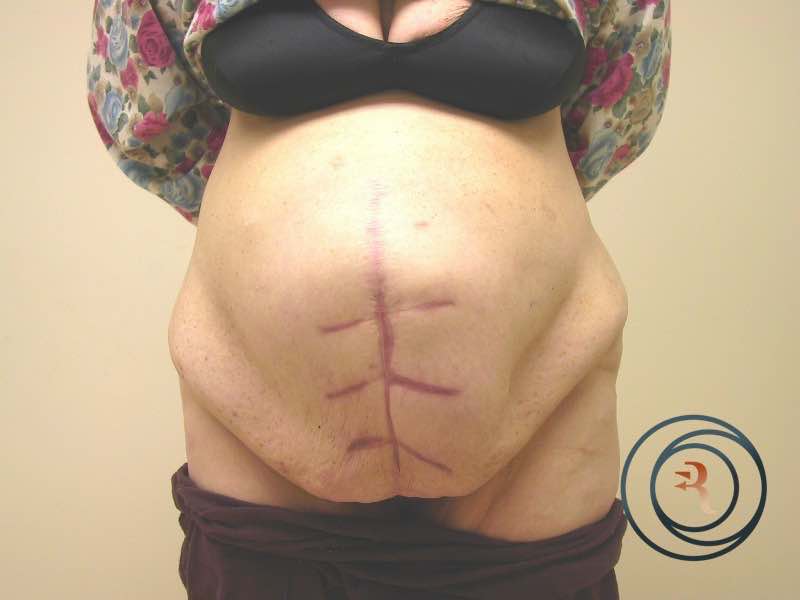
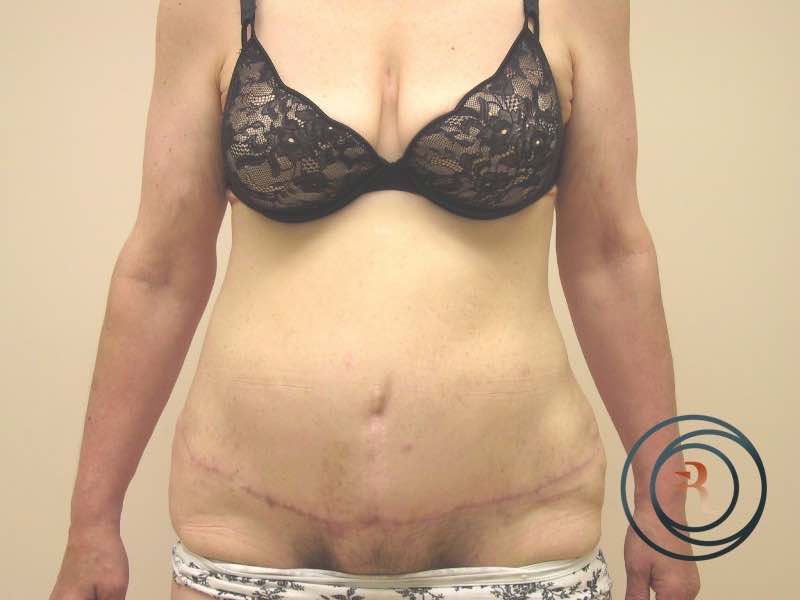


Both abdominoplasty patients above were operated on in Morristown. Dr. Rafizadeh uses progressive tension sutures to close the dead space, adding drains only when the individual case warrants it.
Questions Patients Should Ask Any Plastic Surgeon in North Jersey
If you are interviewing surgeons in Morristown, Summit, Chatham, Madison, Short Hills, Bernardsville, Mendham, Florham Park, or anywhere in Northern New Jersey, the drains conversation is a useful window into how a surgeon thinks. Worthwhile questions include:
- Do you use progressive tension sutures on every full tummy tuck, or only sometimes?
- In what situations do you still add a drain, and why?
- What is your seroma rate, and how do you handle a seroma if one develops?
- If I have liposuction combined with my tummy tuck, does that change the plan?
- How long would I expect any drains to stay in, and what is removal like?
- How do you manage my existing medications — blood thinners, supplements — before and after surgery?
A surgeon who closes the dead space deliberately will answer these in specific, concrete terms. The takeaway Dr. Rafizadeh emphasizes is that “drainless” is not a gimmick and it is not a guarantee — it is a well-supported technique that, in experienced hands, lets most patients skip the drains while keeping seroma risk low.
Common Questions Patients Search About Tummy Tuck Drains
Can a tummy tuck be done without drains?
Yes. A full abdominoplasty can be performed without external drains by using progressive tension sutures to close the internal dead space, so fluid has nowhere to pool. It is a well-established technique supported by the surgical literature. Whether it is right for you depends on your anatomy, how much liposuction is added, and your medical history — which is why Dr. Rafizadeh individualizes the decision rather than applying a blanket rule.
How long do you keep your drains in after a tummy tuck?
When drains are used, most patients keep them one to two weeks. They are removed once daily output falls below roughly 25–30 mL, which signals the internal space has largely sealed. A mini tummy tuck, which lifts a smaller area, often allows removal within five to seven days. Removal itself is quick and usually causes only brief discomfort.
Which is better, drain or drainless tummy tuck?
Neither is universally better — it depends on the patient and the surgeon’s technique. Studies show progressive tension sutures match or beat drains for seroma prevention in experienced hands, with an easier recovery. But a drain can still be the safer choice when extensive liposuction is added or when a patient is prone to fluid collection. The right answer is whichever approach gives that specific patient the lowest complication risk.
Where does the fluid go with a drainless tummy tuck?
Because progressive tension sutures collapse the space under the skin, there is very little room for fluid to pool. The small volume of serous fluid the body still produces is low-pressure and is reabsorbed naturally through the lymphatic system, the same way the body clears everyday tissue fluid. That is why a properly performed quilting closure does not need an external tube to evacuate fluid.
Will a seroma after a tummy tuck go away on its own?
Small seromas frequently reabsorb on their own over a few weeks as the body clears the fluid. Larger or persistent ones usually need to be aspirated with a fine needle in the office, occasionally more than once, and wearing your compression garment as directed helps. Tell your surgeon if you notice a soft, fluid-feeling swelling low in the abdomen so it can be checked early.
What does a seroma feel like after a tummy tuck?
A seroma typically feels like a soft, movable, fluid-filled swelling under the skin of the lower abdomen, sometimes with a sloshing or wave-like sensation when you press or shift position. It is usually not very painful but can feel tight or heavy. If you notice this, contact the office — it is easily evaluated and, if needed, drained in just a few minutes.
What day is the hardest after a tummy tuck?
Most patients find days two through four the most uncomfortable, when swelling peaks and the muscle repair feels tightest. After that, soreness improves steadily each day. Staying ahead of pain with your prescribed medication, walking gently but frequently, and keeping a slightly bent-forward posture early on all make those first days easier. Progressive tension sutures, by holding the tissues firmly against the muscle, can make movement feel more secure during this window.
Sources & References
- Rao G, et al. “A Systematic Review and Meta-Analysis Evaluating the Surgical Efficacy of Progressive Tension Sutures Versus Drains in Abdominoplasty.” Aesthetic Surgery Journal. 2024. PubMed Central
- Patronella CK. “Progressive Tension Sutures Eliminate the Need for Drains in Abdominoplasty.” 2021. PubMed Central
- Pollock H, Pollock T. “Progressive Tension Sutures: A Technique to Reduce Local Complications in Abdominoplasty.” Plastic and Reconstructive Surgery. 2000;105(7):2583–2586. PubMed
- Alves M, et al. “Long Drainers After Abdominoplasty: A Risk Analysis.” 2025. PubMed Central
- American Society of Plastic Surgeons. “Drainless Tummy Tuck: What Is It and How Does It Compare to a Tummy Tuck With Drains?” plasticsurgery.org
Related Reading From Dr. Rafizadeh’s Blog
Patients researching tummy tuck options and recovery in Northern New Jersey may find these articles useful:
- TissuGlu and the No-Drain Tummy Tuck in Morristown, New Jersey
- Tummy Tuck Recovery in Morristown, New Jersey
- TAP Block Anesthesia for Post-Operative Tummy Tuck Pain
- Can Tummy Tuck Scars Be Shorter?
- Mommy Makeover: Tummy Tuck and Breast Lift in One Surgery
- Mini Tummy Tuck, Full Tummy Tuck, or Just Liposuction?
Bottom Line
The question “do I really need drains?” has a more reassuring answer in 2026 than it did a generation ago. By closing the dead space with progressive tension sutures rather than relying on suction to evacuate fluid, most full tummy tucks can now be done drainless — with seroma rates that match or beat traditional drains and a recovery that is simpler to manage. The important caveat is that the technique only works in experienced hands, and a thoughtful surgeon will still reach for a drain when a particular case calls for it.
If you are considering a tummy tuck, with or without liposuction, in Morristown, Summit, Chatham, Madison, Short Hills, or anywhere across Northern New Jersey, Dr. Rafizadeh is happy to walk through your anatomy, your goals, and exactly how he would close your abdomen — drains or drainless — during a consultation.
Ready to schedule a consultation in Morristown, NJ?
Book a Consultation