Tumescent Liposuction
Liposuction has been and remains the most successful plastic surgery procedure since its inception in the early 1980s, yet there is constantly an attempt to “improve” on it. The only true improvement came early with the addition of a wetting solution — local anesthetic and epinephrine — that made the procedure dramatically safer and more precise. This is the tumescent technique, and it remains the gold standard.
Dr. Rafizadeh uses the tumescent technique and has carefully evaluated every newer alternative. His position is clear: ultrasonic and laser-assisted liposuction offer no meaningful benefit and increase side effects. The claims that ultrasound or laser cause the skin to shrink after liposuction either don't materialize in practice or, when they do, the improvement is so minimal it is not worth the additional risk. Patients across the state choose Dr. Rafizadeh, a board certified plastic surgeon in NJ, for this conservative, results-focused approach to body contouring.
“Liposuction has been and remains the most successful plastic surgery since its inception in the early eighties. For me, the ultrasonic and laser assisted liposuction offer no benefit and increase the side effects. The tumescent technique — a large volume of dilute Lidocaine and epinephrine — made the procedure safer and allowed it to be performed under local anesthesia.”
— Dr. Farhad Rafizadeh, MD FACS
How Tumescent Liposuction Works
A large volume of dilute solution of Lidocaine and epinephrine is injected with a blunt cannula into the target area. The epinephrine constricts blood vessels, dramatically reducing bleeding. The Lidocaine numbs the area, allowing the procedure to be performed under local anesthesia or with minimal sedation in many cases. Once the area is infiltrated, small incisions are made and a thin cannula is used to remove fat with precision. Multiple areas can be treated in the same session.
Treatment Areas
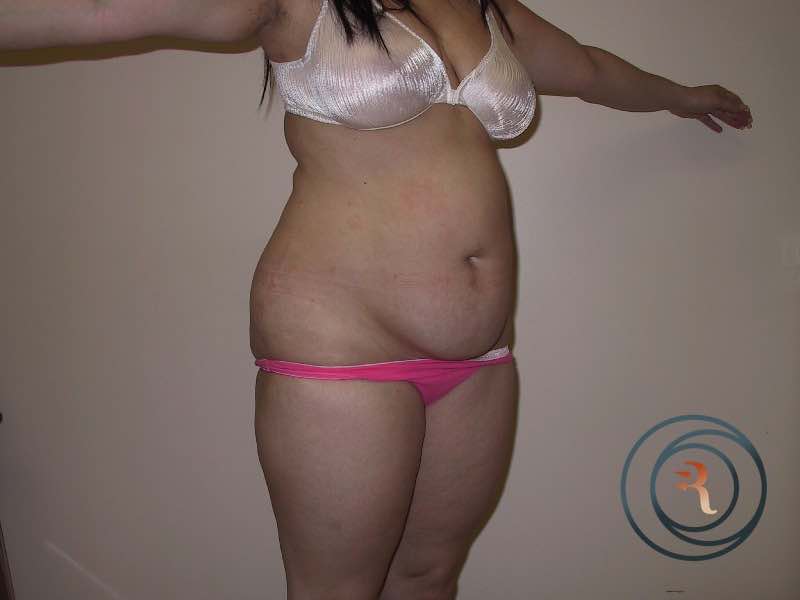
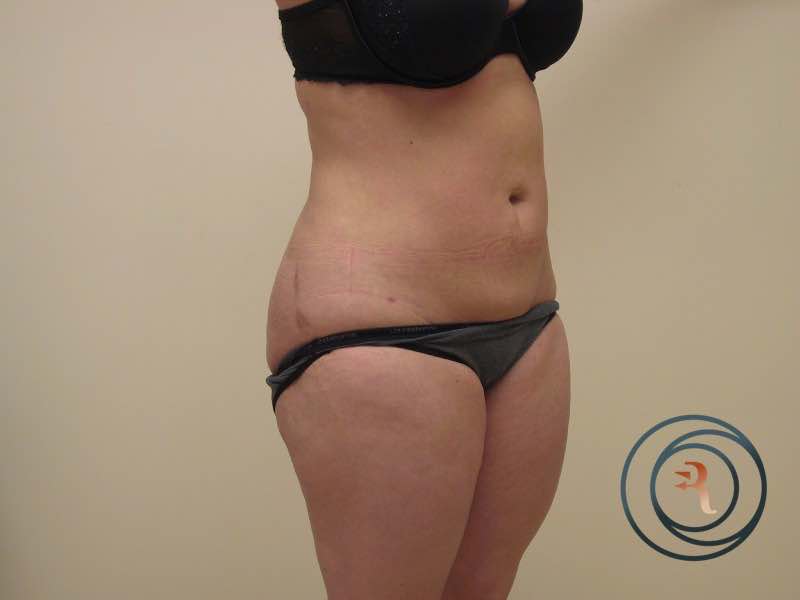
Dr. Rafizadeh performs liposuction of virtually any area of excess fat — most commonly the abdomen, flanks (love handles), thighs (inner and outer), upper arms, back, chest (gynecomastia), knees, and the submental area (under the chin). Multiple areas are frequently treated together in a single session for comprehensive body contouring.
Liposuction vs. Tummy Tuck
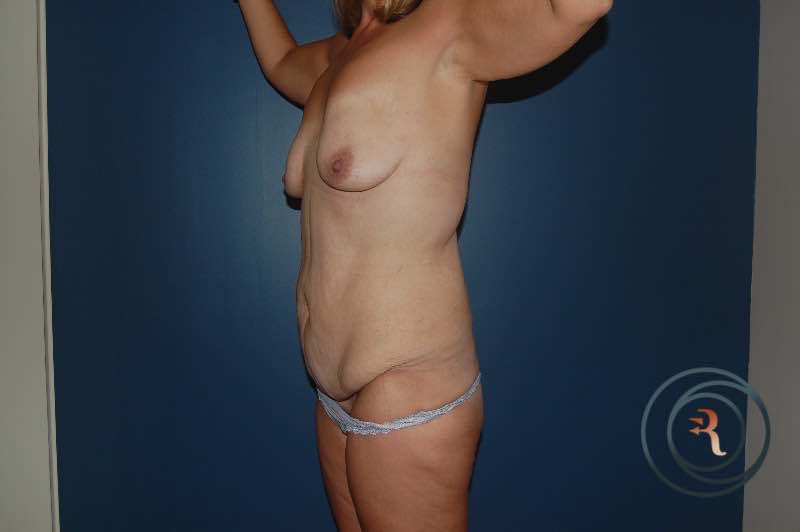
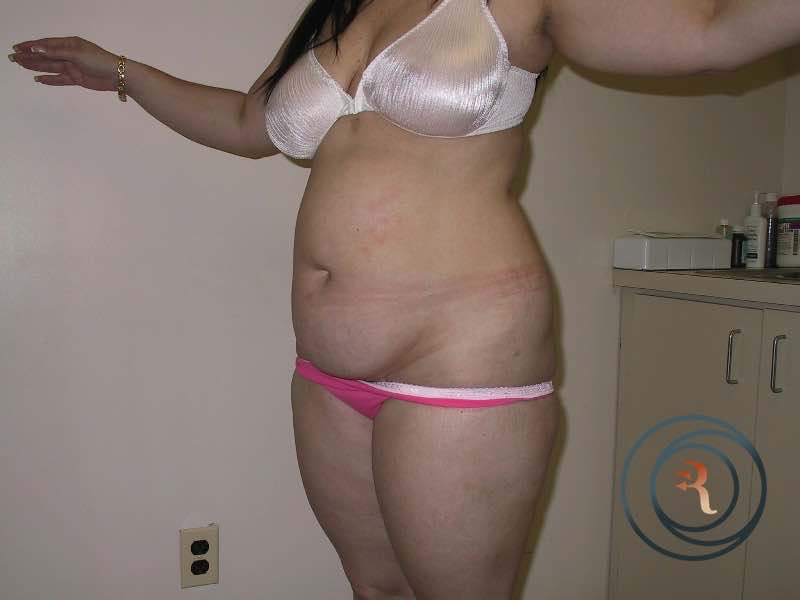
The most important decision in body contouring is choosing the right procedure. Liposuction is the correct choice when the skin is tight and elastic with good quality — it will retract appropriately after fat removal and produce a smooth result. When the skin is redundant, has stretch marks, or is of poor quality, a tummy tuck is needed to remove excess skin — and after major weight loss, when a hanging apron of lower-abdominal skin remains, a panniculectomy removes it. Performing liposuction in a patient who needs a tummy tuck is one of the most common causes of patient dissatisfaction in body contouring. When that loose skin and muscle separation follow pregnancy — and the breasts have changed too — liposuction is usually folded into a mommy makeover in NJ rather than performed on its own.
→ Schedule a ConsultationMeet with Dr. Rafizadeh personally to discuss your goals and a personalized plan. Call (973) 267-0928 or request a consultation online.Liposuction & Fat Grafting
Fat removed during liposuction can be purified and reinjected as fat grafting to restore volume where needed — the face, breasts, or areas of contour irregularity. This combination — removing fat from unwanted areas and adding it where it is desired — represents the pinnacle of body sculpting.
Recovery Timeline
Days 1–3: Soreness, swelling, and bruising in treated areas. Compression garments worn continuously.
Days 4–7: Most patients return to light activity and desk work. Compression continues.
Weeks 2–4: Return to most exercise. Swelling continues to resolve.
Months 1–3: Final contour becomes visible as all swelling resolves.
Liposuction Techniques — In Depth
The following pages explore key liposuction topics and technique decisions in detail:
- Liposuction vs. Tummy Tuck — The critical differences, how to know which you actually need, and what happens when patients choose the wrong procedure.
- Neck Liposuction — Submental fat removal, cervicomental angle restoration, candidacy, and how neck lipo compares to Kybella and other options.
- VASER Liposuction — How ultrasound-assisted liposuction differs from traditional lipo, when it provides meaningful advantages, and realistic expectations.
- Awake Liposuction — Tumescent lipo under local anesthesia, without going under: which areas suit it, the honest lidocaine-dose limit, cost savings, and when sedation is safer.
Liposuction in New Jersey
Dr. Rafizadeh has been performing liposuction in New Jersey since the early 1980s — he was among the first surgeons in the state to adopt the tumescent technique. Patients travel from throughout New Jersey for body contouring, including from Morristown, Madison, Chatham, Summit, Westfield, Livingston, and across Morris, Essex, Union, Somerset, and Middlesex counties. He also sees patients from New York City who prefer his low-pressure consultation style and his insistence on performing only what is appropriate for each patient's anatomy. For more on liposuction cost and technique, see his articles on liposuction cost in Morristown, NJ and CoolSculpting vs. liposuction.