Upper & Lower Blepharoplasty
Eyelid surgery — also called an eyelid lift or blepharoplasty — is one of the most commonly performed and most impactful facial rejuvenation procedures. The eyes are the first feature people focus on during conversation — and heavy upper lids or prominent lower bags convey fatigue and age regardless of how you actually feel. Dr. Rafizadeh performs blepharoplasty under local anesthesia with moderate sedation, making the procedure gentle, efficient, and recoverable within days. As an experienced plastic surgeon in NJ, Dr. Rafizadeh tailors each blepharoplasty to the patient's individual facial anatomy. Patients travel to his Morristown office from across North Jersey — including Morris, Essex, Union, and Bergen counties — and from New York City for eyelid surgery with a board-certified blepharoplasty specialist.
“I have mastered facial surgery over 35 years to achieve the most significant results with the shortest scars and the fastest recovery. Doing eyelid surgery under local anesthesia with moderate sedation makes the procedure less invasive, yet improves the overall result.”
Blepharoplasty Techniques
Dr. Rafizadeh offers the full range of blepharoplasty approaches, each tailored to the patient's anatomy, goals, and ethnic identity:
Upper Blepharoplasty
Removes excess upper eyelid skin, redundant muscle, and herniated fat through an incision hidden within the natural lid crease. May qualify for insurance coverage when visual field obstruction is documented. Learn more about upper blepharoplasty →
Lower Blepharoplasty
Addresses under-eye bags via a transconjunctival (hidden, no external scar) or subciliary approach, with fat removal or repositioning selected based on whether tear trough hollowness is also present. When the concern is purely a hollow or shadow with no true fat bag, a non-surgical under-eye / tear trough filler may be the better option. Learn more about lower blepharoplasty →
Asian Blepharoplasty
Creates a defined upper eyelid crease (double eyelid) in patients of Asian descent. Incisional or non-incisional technique selected based on lid thickness and goals. Crease height and shape designed collaboratively with the patient to honor ethnic identity. Learn more about Asian blepharoplasty →
Functional Blepharoplasty
Upper blepharoplasty performed for medical indications when excess skin obstructs the visual field. May be covered by health insurance with appropriate documentation. Dr. Rafizadeh is experienced with the visual field testing and pre-authorization process. Learn more about functional blepharoplasty & insurance coverage →
Upper Eyelid Surgery
Upper blepharoplasty removes excess skin and, when appropriate, a small amount of fat that creates a hooded or drooping upper lid. The incision is hidden within the natural upper eyelid crease, leaving a virtually invisible scar. In some patients, drooping of the upper lid is worsened by brow descent — and a combined brow lift and upper blepharoplasty may be the most appropriate plan.
→ Upper BlepharoplastyUpper blepharoplasty (upper eyelid surgery) in Morristown, NJ by Dr. Rafizadeh.Lower Eyelid Surgery
Lower blepharoplasty addresses under-eye bags caused by prolapsed fat, excess skin, or both. Dr. Rafizadeh uses a transconjunctival approach (incision inside the lower eyelid, no external scar) when excess skin is not the primary concern, or a transcutaneous approach (very fine incision just below the lash line) when skin laxity also needs addressing. Fat repositioning is used when appropriate to avoid the hollow look associated with fat removal alone.
→ Lower BlepharoplastyLower blepharoplasty (under-eye bag surgery) in Morristown, NJ by Dr. Rafizadeh. Transconjunctival and skin-pinch techniques.Eyelid Reconstruction & Revision
Dr. Rafizadeh is also experienced in reconstructive eyelid surgery for conditions such as entropion (eyelid rolling inward) — a painful condition that can restrict lifestyle. Several patients have sought him specifically for his ability to correct complications from prior surgeries and restore both function and aesthetics.
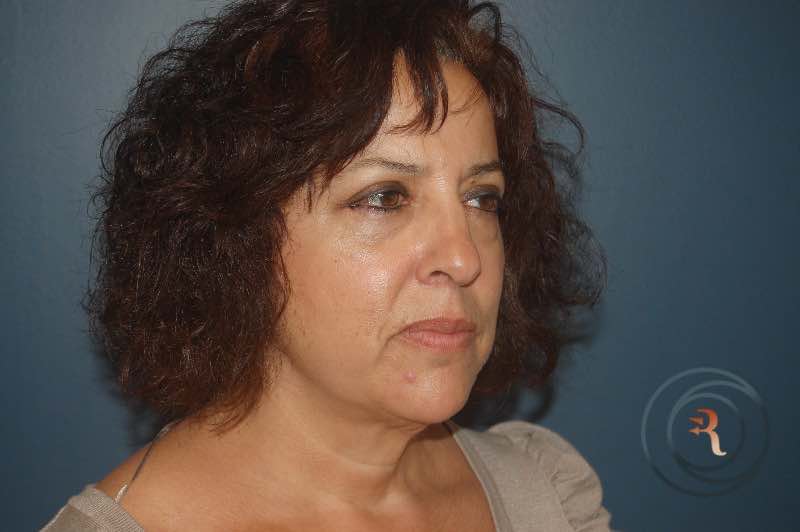
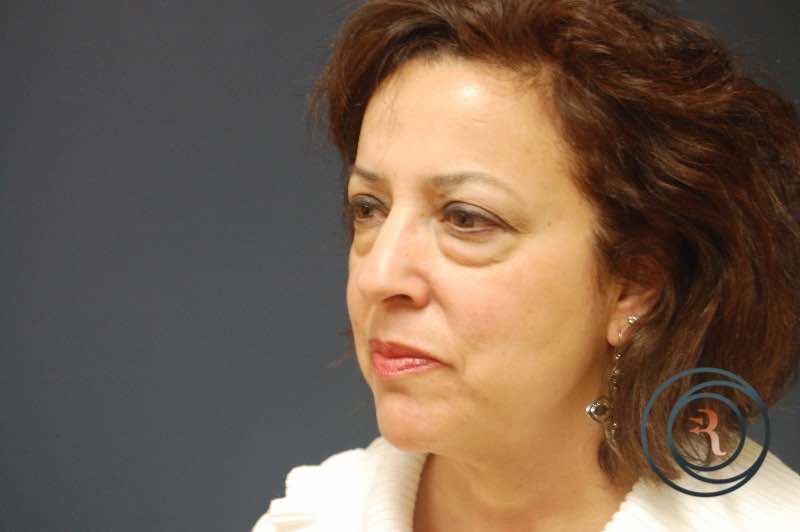
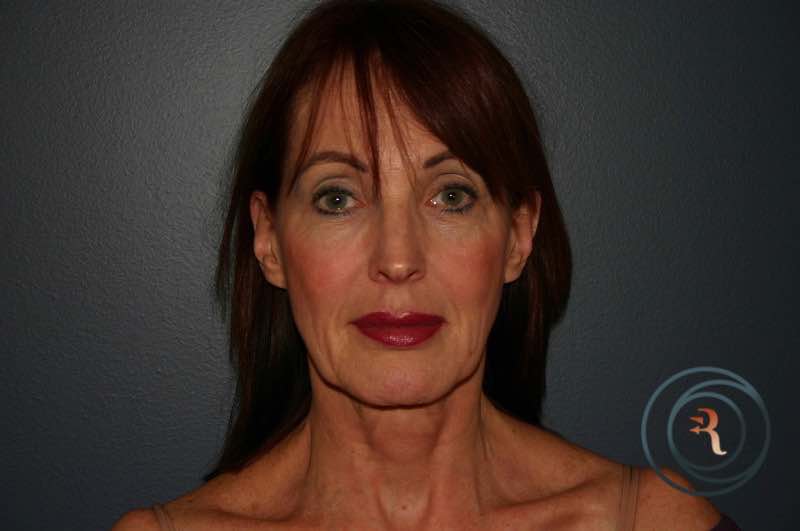
→ Functional BlepharoplastyFunctional blepharoplasty for droopy eyelids and visual field obstruction in Morristown, NJ.Eyelid Surgery Before & After




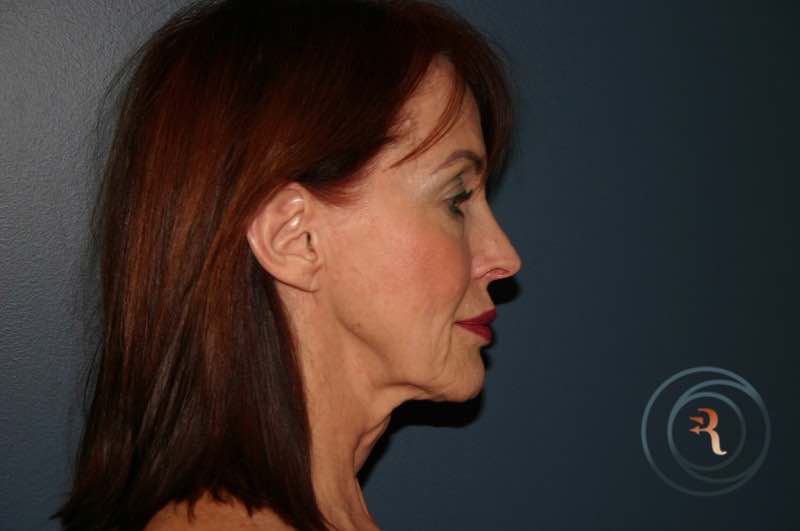


A Highly Individualized Procedure
Eyelid surgery can be performed on the upper lid, the lower lid, or both together, and is frequently combined with a facelift or brow lift. In combined cases the brow or cheeks are addressed first. The procedure is highly individualized — sometimes only skin is removed; other times muscle or fat must be removed or repositioned. When the lower lid is lax, tightening through lateral canthopexy is required. Dr. Rafizadeh has developed a specific canthopexy technique designed to minimize chemosis, one of the more common complications of lid-tightening procedures.
Dr. Rafizadeh performs blepharoplasty under local anesthesia with intravenous sedation, typically taking 1½ to 2 hours for all four lids. He uses fine non-absorbable sutures removed in three to four days — producing less reaction and less scarring than absorbable alternatives. Iced compresses are applied after surgery; patients keep the head elevated the first night. Bruising and swelling typically subside within 10 days.
The Surgical Technique
For the upper eyelid, skin is removed so that the closure sits within the natural crease, making the scar nearly imperceptible. The lower eyelid can be approached from inside the lid (trans-conjunctival) or through an incision beneath the eyelashes. New trends favor conserving fat and transposing it into the tear trough area — creating a natural auto-augmentation effect. Candidates range from age 30 upward, though most patients are in their 50s or older. When excess upper eyelid skin interferes with the visual field and an ophthalmologist documents the impairment, insurance may cover the procedure.
Possible complications include lower lid retraction and dry eye syndrome — both significantly reduced by Dr. Rafizadeh's preoperative evaluation protocol and his specialized canthopexy technique. With meticulous surgery performed by experienced hands, complications can be avoided or greatly reduced. The combination of experience, proportion, and harmony achieves a result that looks naturally refreshed — not operated.
Recovery Timeline
One of the most common questions patients ask about eyelid lift recovery is how to sleep. For the first one to two weeks, sleep on your back with your head elevated on two pillows or a wedge — keeping the head above the heart reduces overnight swelling and bruising and helps the lids settle faster. Avoid sleeping on your side or stomach until Dr. Rafizadeh clears you, since pressure on the healing eyelids can prolong swelling.
Cost of Blepharoplasty in New Jersey
The cost of blepharoplasty in New Jersey varies from patient to patient, because eyelid surgery is highly individualized. What you pay depends on whether you treat the upper lids, lower lids, or all four; whether fat is simply removed or repositioned into the tear trough; whether lid-tightening (canthopexy) is needed; and whether the blepharoplasty is combined with a brow lift or facelift. A single-lid upper blepharoplasty is a smaller procedure than a combined four-lid surgery, so the fee reflects that difference.
A blepharoplasty quote generally has three parts: the surgeon's fee, the facility fee, and the anesthesia fee. Because Dr. Rafizadeh performs eyelid surgery under local anesthesia with intravenous sedation rather than general anesthesia in a hospital operating room, facility and anesthesia costs are often lower than a comparable hospital-based procedure. Rather than publish a single price that rarely fits an individual patient, the practice provides a precise, all-inclusive written quote — surgeon, facility, and anesthesia together — at your Morristown consultation, so North Jersey patients know the full cost before scheduling.
When excess upper-eyelid skin obstructs your vision and an ophthalmologist documents the impairment with a visual field test, functional blepharoplasty may be partially covered by health insurance or Medicare; purely cosmetic eyelid surgery is not. Dr. Rafizadeh is experienced with the visual field testing and pre-authorization process and will tell you at consultation whether your case may qualify.
Your Blepharoplasty Plastic Surgeon in North Jersey
Dr. Rafizadeh has performed eyelid surgery for North Jersey patients for more than 40 years from his Morristown practice at 101 Madison Avenue. As a board-certified blepharoplasty plastic surgeon in NJ, he cares for patients throughout Morris, Essex, Union, Bergen, Passaic, and Somerset counties — including Morristown, Chatham, Madison, Summit, Short Hills, Livingston, Montclair, Wayne, and Ridgewood — as well as from New York City and the greater Tri-State area. Morristown is a short drive from most of North Jersey and easily reached from NYC via NJ Transit's Morris & Essex line. Out-of-town patients can review our travel and accommodation guidance before scheduling a blepharoplasty consultation.