Dr. Rafizadeh's Lip Lift
What Is a Lip Lift?
The lip lift — also known as a subnasal lip lift, bullhorn lip lift, or philtrum reduction — is a surgical procedure that removes a small, precisely designed strip of skin from beneath the nose to shorten the philtrum (the space between the base of the nose and the upper lip). The result is a lip that sits higher, shows more of the pink vermilion border, increases upper tooth show at rest, and creates a more defined Cupid's bow. Unlike lip fillers, the structural change is permanent.
Dr. Rafizadeh has performed lip lift surgery in Morristown, New Jersey since 2012 — well before the procedure became widely popular — and today counts it as his declared super-specialty. He draws patients from across North Jersey, including Morristown, Summit, Chatham, Short Hills, Livingston, Madison, Millburn, Westfield, Ridgewood, and Montclair, as well as from New York City and the broader tri-state area.
“I have developed a method of hiding the scars in the nostrils — I find this is the best way to hide them in an area that is less visible. In general the scarring is good and the incision heals very well. Over hundreds of cases I have only seen a few patients with slight hypertrophic scars that required a steroid injection.”
— Dr. Farhad Rafizadeh, MD FACS
The Golden Ratio & Lip Proportion
The ideal philtrum length is 11–13 mm for women and 13–15 mm for men. When this distance exceeds these proportions — either naturally or through age-related elongation — the upper lip appears flat, the Cupid's bow flattens, the teeth show less when smiling, and the face loses the youthful balance associated with classical facial proportion. Dr. Rafizadeh takes precise measurements before marking the incision and the patient must agree with the proposed amount of resection before surgery begins. He has written about why restoring this proportion rejuvenates and beautifies the entire face — not just the lips.
Who Is a Candidate?
Ideal candidates for lip lift surgery in New Jersey include patients who have any of the following: a philtrum longer than 13 mm (women) or 15 mm (men), diminished upper tooth show at rest, a thin or flat upper lip where filler alone doesn’t achieve the desired effect, or loss of Cupid’s bow definition due to aging. Both younger patients with a naturally long philtrum and older patients experiencing age-related elongation are appropriate candidates.
Dr. Rafizadeh also performs lip lifts on male patients and finds that men generally heal very well due to the robust blood supply of the perioral area. The technique for male patients is adapted slightly to preserve the natural masculine character of the perioral region. Patients do not need to be a specific age — he evaluates each consultation based on anatomy, not age.
→ Am I a Candidate for a Lip Lift?Dr. Rafizadeh explains how he selects lip lift candidates in Morristown, New Jersey — the facial features he looks for and who benefits most.Lip Lift Techniques
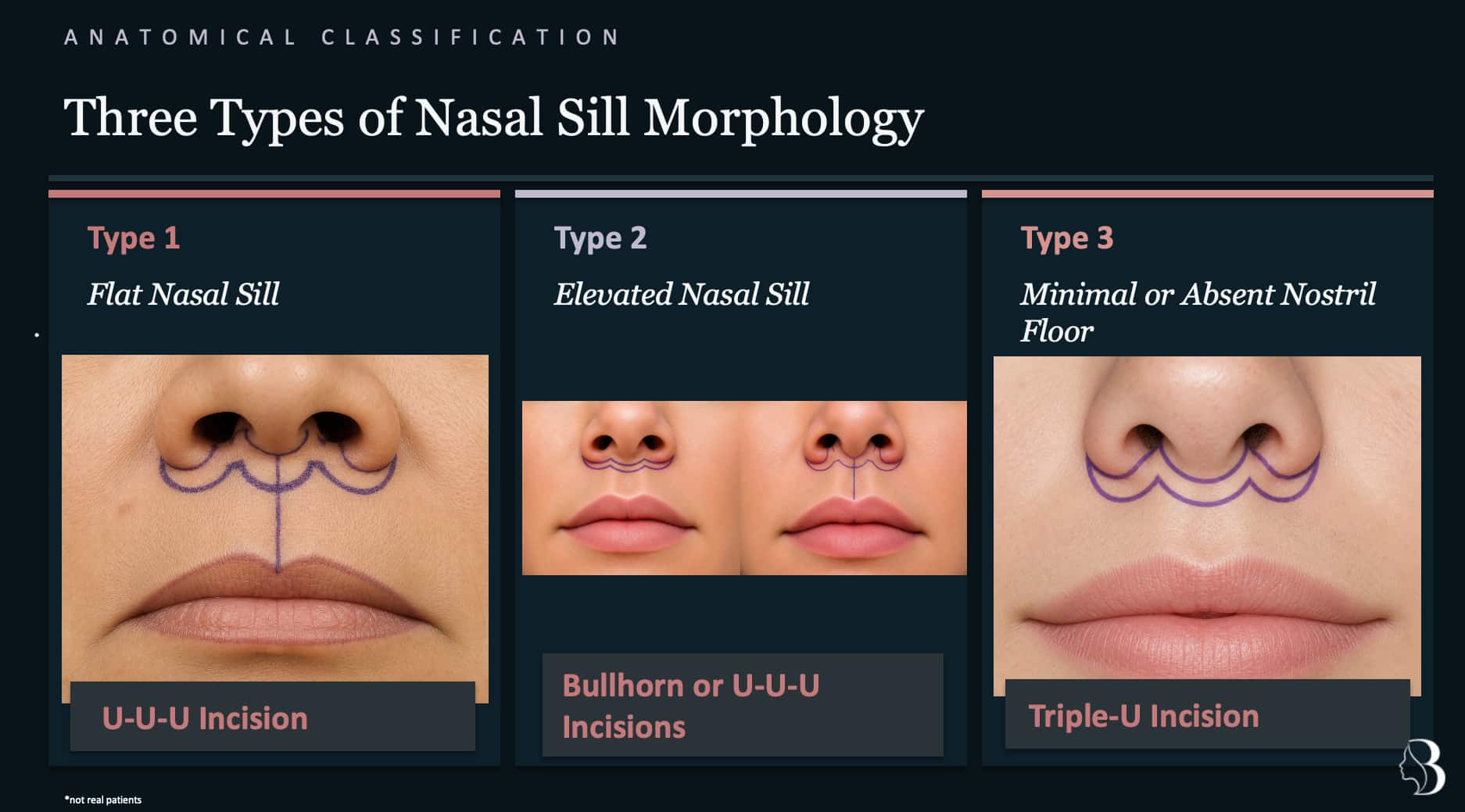
Dr. Rafizadeh performs two primary lip lift techniques — the subnasal lift and the corner lift — each addressing a different anatomical concern and performed alone or combined in a single session. The subnasal lift is the foundation of the procedure, and Dr. Rafizadeh tailors it with one of three incision designs — the bullhorn, the U–U–U, or the triple-U — selected by classifying each patient’s nasal sill morphology before surgery. This level of pre-operative planning distinguishes his approach from a one-size-fits-all excision.
| Subnasal Lift | Corner Lift | |
|---|---|---|
| What it addresses | A long philtrum and a low upper lip — the most common concern and the foundation of the lip lift procedure. | Downturned corners of the mouth (oral commissures) that create a resting “frown” or sad expression regardless of mood. |
| Incision location | A precisely designed excision at the base of the nose (nasal sill). | Small triangles of skin removed at each mouth corner (commissure). |
| The change it creates | Shortens the philtrum, elevates the lip, and increases upper tooth show. | Lifts and neutralizes the downturn to soften a resting frown. |
| Scar concealment | Incision design — bullhorn, U–U–U, or triple-U — matched to the patient’s nasal sill type to conceal the scar optimally. | Placement precisely at each oral commissure. |
| Also called | Central lip lift; its incision designs are the bullhorn, U–U–U, and triple-U. | Commissuroplasty, or the “Italian lip lift.” |
Lip Lift Results
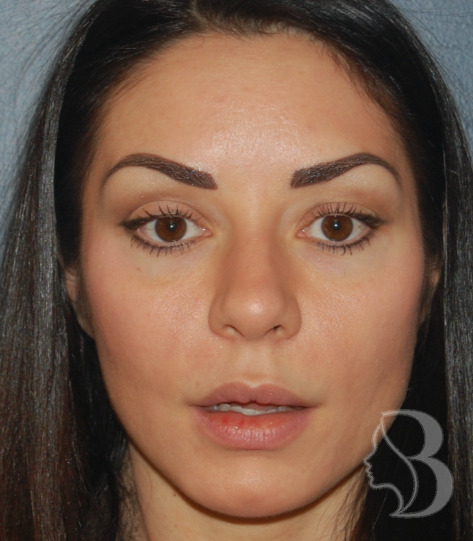
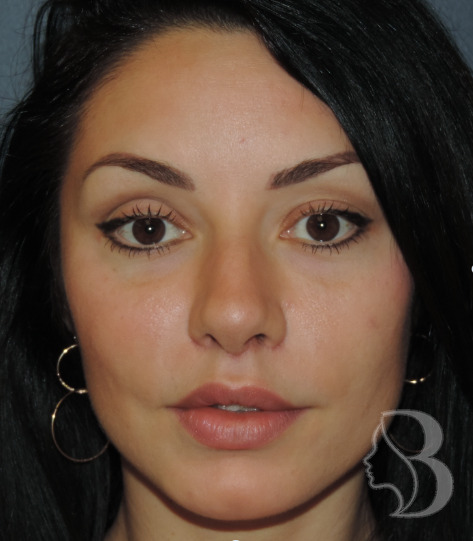
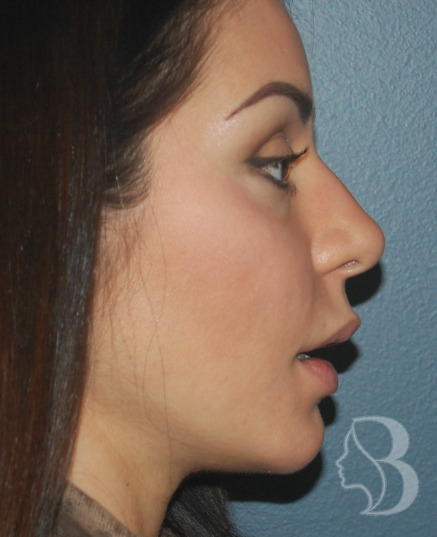
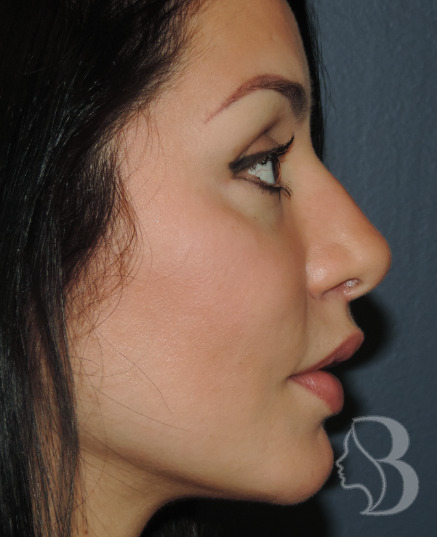
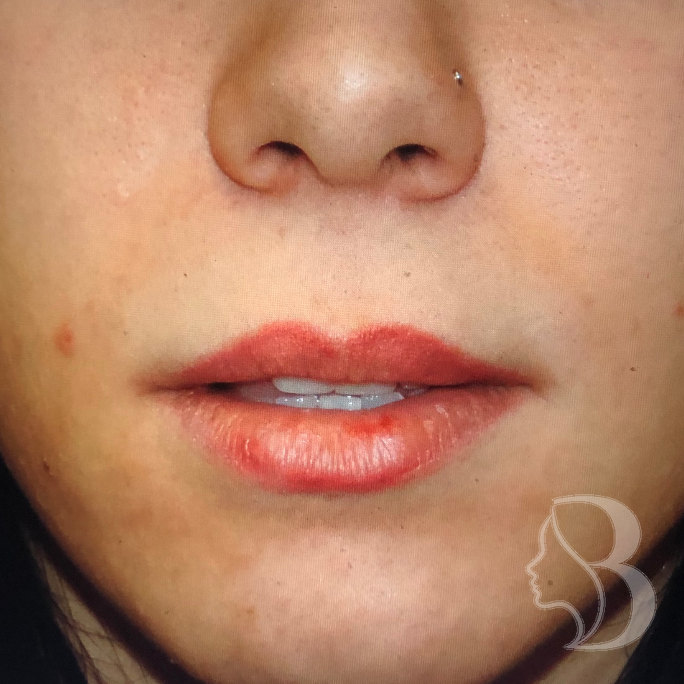
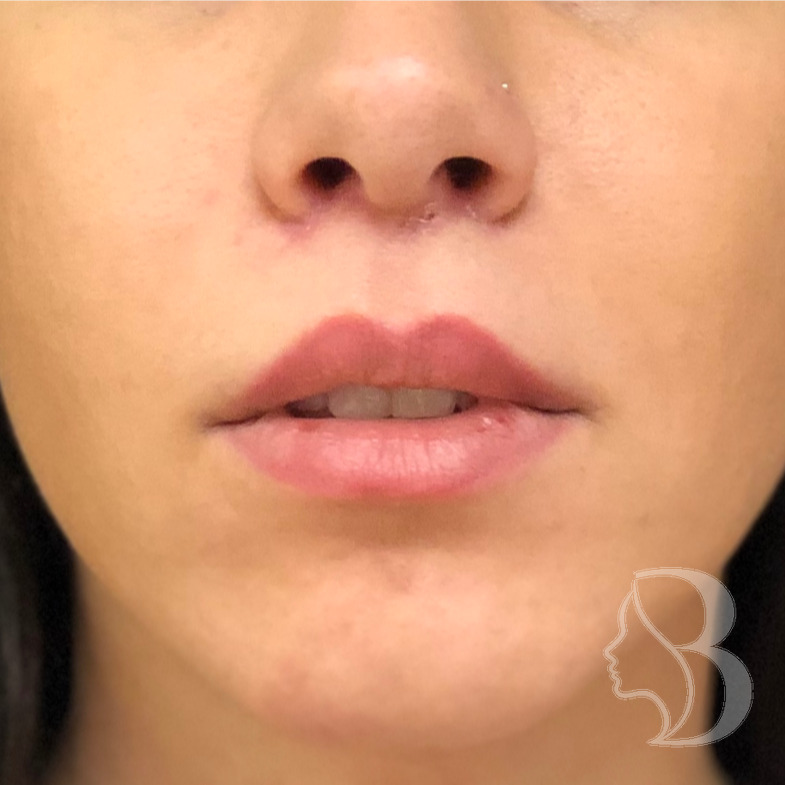
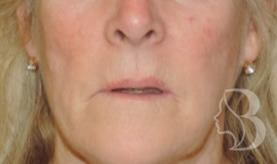
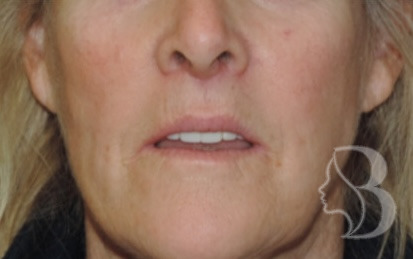
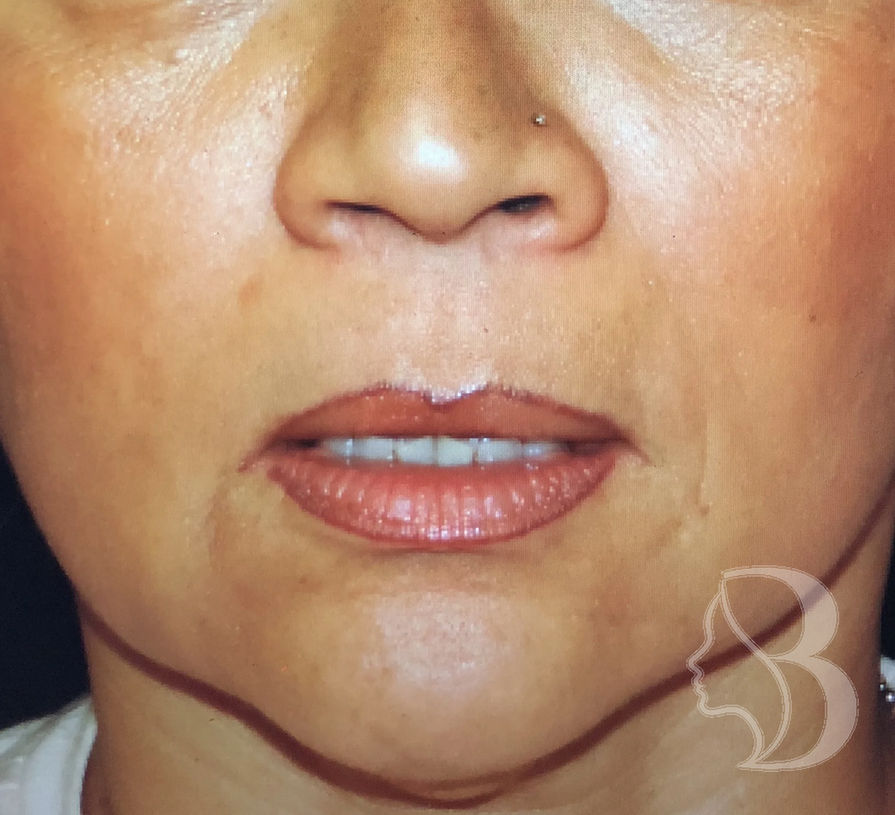
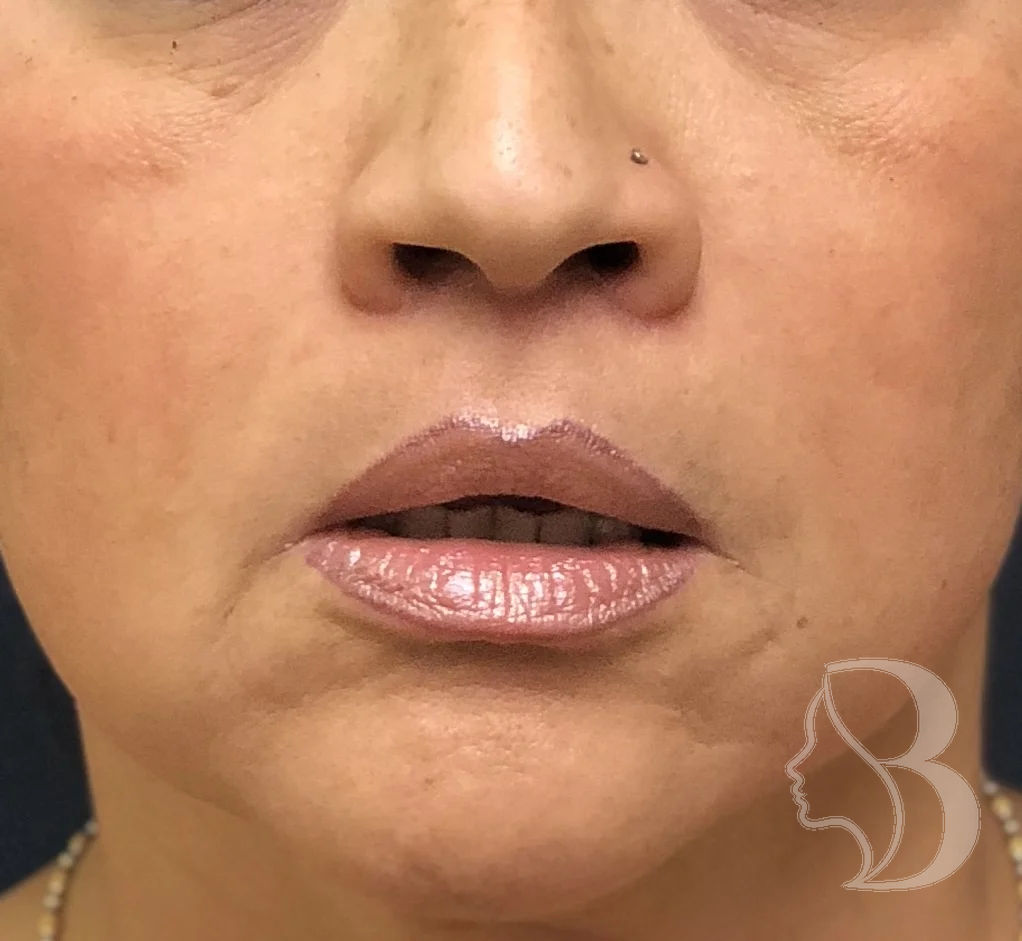
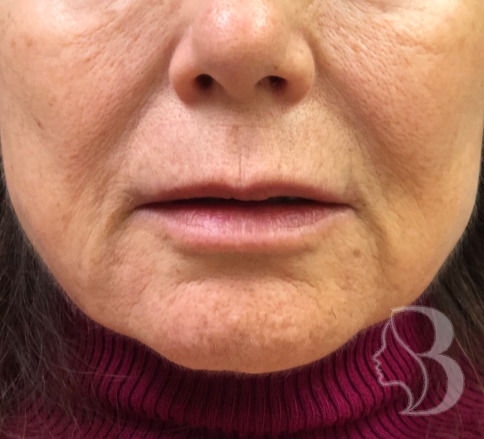
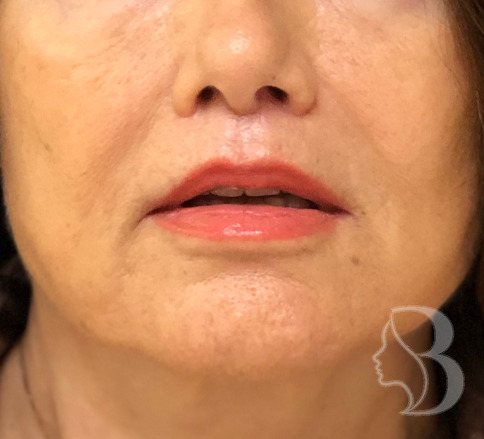
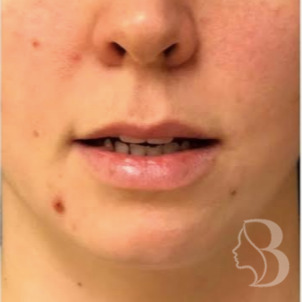
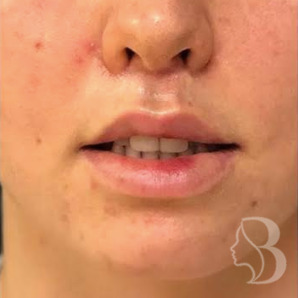
Every result below is an actual lip lift patient of Dr. Rafizadeh. Tap any case to view it side by side. View the full gallery →
Lip Lift vs. Lip Fillers
Lip fillers (hyaluronic acid injectables such as Juvéderm and Restylane) add volume to the lips but cannot reliably shorten a long philtrum, increase central tooth show at rest, or improve Cupid’s bow definition in patients with structural deficiency. A surgical lip lift makes these structural changes directly and permanently. Many patients continue to use small amounts of filler after a lip lift for fine volume contouring — the two approaches are complementary, not competing. Full comparison: lip lift vs. lip filler →
→ Lip Lift vs. Lip Filler — Full ComparisonPermanent structural change vs. temporary volume — feel, tooth show, Cupid’s bow, longevity, and who benefits from each. → My Lip Filler Keeps Migrating — Could I Need a Lip Lift?Why a long philtrum — not the wrong filler — is often the real cause, and when a lip lift is the better fix.Lip Lift vs. Lip Flip
A lip flip is frequently confused with a lip lift, but the two are fundamentally different procedures.
| Lip Flip (Botox / Dysport) | Surgical Lip Lift | |
|---|---|---|
| What it is | A non-surgical treatment in which a few units of a neuromodulator (Botox or Dysport) are injected into the upper lip border, relaxing the muscle so the edge of the lip rolls slightly outward and shows a little more pink. | A surgical procedure that removes a measured strip of skin beneath the nose, permanently shortening the philtrum and elevating the entire upper lip. |
| Philtrum & tooth show | Changes nothing about philtrum length or upper tooth show at rest. | Permanently shortens the philtrum and increases central tooth show — a structural change a lip flip cannot replicate at any dose. |
| How long it lasts | Only 8–12 weeks; the subtle effect disappears as the neuromodulator wears off. | Permanent — the skin that is removed does not grow back. |
| Best suited for | Patients with a normal philtrum length who want a very subtle, reversible change in lip roll. | Patients with a genuinely long philtrum and little resting tooth show who want a lasting change in proportion. |
Many New Jersey and NYC-metro patients try a lip flip first because it requires no downtime, then return for a lip lift once they find the effect too small or too short-lived for their goals. At consultation in Morristown, Dr. Rafizadeh will tell you honestly whether your anatomy — particularly your philtrum length and resting tooth show — is better suited to a lip flip, a surgical lip lift, lip filler, or a combination. A genuinely long philtrum will never be meaningfully corrected by a lip flip alone, and being clear about that distinction up front saves patients from repeated temporary treatments that never address the underlying proportion. See also: lip lift vs. lip filler →
Lip Lift for New York City & North Jersey Patients
Dr. Rafizadeh’s Morristown, NJ practice is a destination for lip lift patients from across the New York metropolitan area. Morristown is approximately 40–45 minutes from Midtown Manhattan by car via I-287 or Route 24, and is accessible by NJ Transit’s Morris & Essex Line from Penn Station or Hoboken Terminal.
Patients travel regularly from Manhattan, Brooklyn, Queens, the Bronx, Hoboken, Jersey City, and across North Jersey — including Bergen County, Essex County, Morris County, Somerset County, and Union County — to consult with Dr. Rafizadeh specifically for the lip lift. His early adoption of the procedure (since 2012), signature nostril-concealment technique, and hundreds of documented cases make him one of the most experienced lip lift surgeons in the greater NYC metro area.
For out-of-town and out-of-state patients, the practice offers virtual consultations. Surgery is typically performed as an outpatient procedure under local anesthesia, allowing same-day travel home. See the Out-of-Town Patients page for logistics, hotel recommendations, and travel planning.
Lip Lift Cost in New Jersey & the NYC Metro
Lip lift surgery in New Jersey typically ranges from $3,500 to $6,500 depending on the technique (subnasal only vs. combined with corner lift), case complexity, and anesthesia type. Combined procedures cost more than a standalone subnasal lift. New Jersey pricing is generally lower than comparable procedures at high-overhead Manhattan or New York City practices — where the same lip lift often runs $6,000 to $10,000+ — while offering equivalent or superior surgical expertise.
What the price includes. A lip lift quote at Dr. Rafizadeh’s Morristown office is an all-inclusive figure covering the surgeon’s fee, the in-office procedure suite, local anesthesia, every follow-up visit, and suture removal — there are no surprise facility or recovery-room charges added afterward. Because an isolated subnasal lip lift is performed awake under local anesthesia, patients avoid the separate anesthesiologist and hospital-facility fees that inflate the cost of the same procedure at a Manhattan surgical center. When a corner lip lift or a simultaneous rhinoplasty is added, each component is quoted and reviewed line by line at consultation.
Lip lift surgery is considered a cosmetic procedure and is not covered by insurance. Many patients find that the permanent nature of the result — compared to lip filler costs of $800–$1,500 every 6–12 months indefinitely — makes the lip lift a better long-term value: filler repeated two or three times a year can exceed the one-time cost of a lift within just a few years. Specific pricing for your case is discussed during your in-person or virtual consultation at our Morristown, NJ office.
Choosing a Lip Lift Surgeon in NJ
New Jersey has several plastic surgeons who perform lip lifts, but the procedure demands a level of specialization that not all general plastic surgeons have developed. When evaluating lip lift surgeons in New Jersey, consider the following:
Volume and specialization. Dr. Rafizadeh designated lip lift surgery as his super-specialty and has performed the procedure since 2012 — well before it became widely popular. A surgeon who has completed hundreds of lip lifts has encountered edge cases, refined their incision design, and developed consistent scar-management protocols that a lower-volume surgeon has not yet acquired.
Anatomical planning. Dr. Rafizadeh classifies each patient’s nasal sill morphology into one of three types before surgery and customizes the excision pattern accordingly — using a flat, elevated, or triple-U incision based on anatomy. A surgeon applying a single incision template to every patient is not optimizing scar concealment for individual anatomy.
Board certification. Verify that the surgeon is certified by the American Board of Plastic Surgery (ABPS) — not simply “board-certified” by a non-core specialty board. Dr. Rafizadeh is ABPS board-certified and holds Fellowship of the American College of Surgeons (FACS). See his full credentials →
NJ vs. NYC pricing. A lip lift in New Jersey typically costs less than the same procedure at a Manhattan practice due to lower facility overhead — while offering equivalent or superior surgical expertise. Patients from New York City, Long Island, and Connecticut routinely choose New Jersey surgeons like Dr. Rafizadeh for exactly this reason. Board certification, specialization, and case volume matter far more than ZIP code.
Your Lip Lift Consultation in Morristown, NJ
The consultation for a lip lift at our Morristown, New Jersey practice is a structured, one-on-one evaluation with Dr. Rafizadeh that typically lasts 30–45 minutes. Unlike many practices where consultations are delegated to a nurse coordinator or physician assistant, Dr. Rafizadeh meets personally with every prospective patient before agreeing to perform any procedure.
Philtrum measurement. Dr. Rafizadeh begins with a precise measurement of your philtrum length in millimeters. He discusses the proposed amount of resection — typically 3–6 mm — and explains how this correlates with the expected change in lip position, upper tooth show, and Cupid’s bow definition. No resection amount is finalized until you have reviewed and agreed with the plan.
Nasal sill classification. Your nasal sill morphology is assessed to determine the optimal incision pattern for your specific anatomy — flat, elevated, or triple-U. This individualized planning step directly determines how effectively the scar can be hidden at the base of the nose. The three sill types — and the incision each calls for — are shown here and explored in depth further down the page.
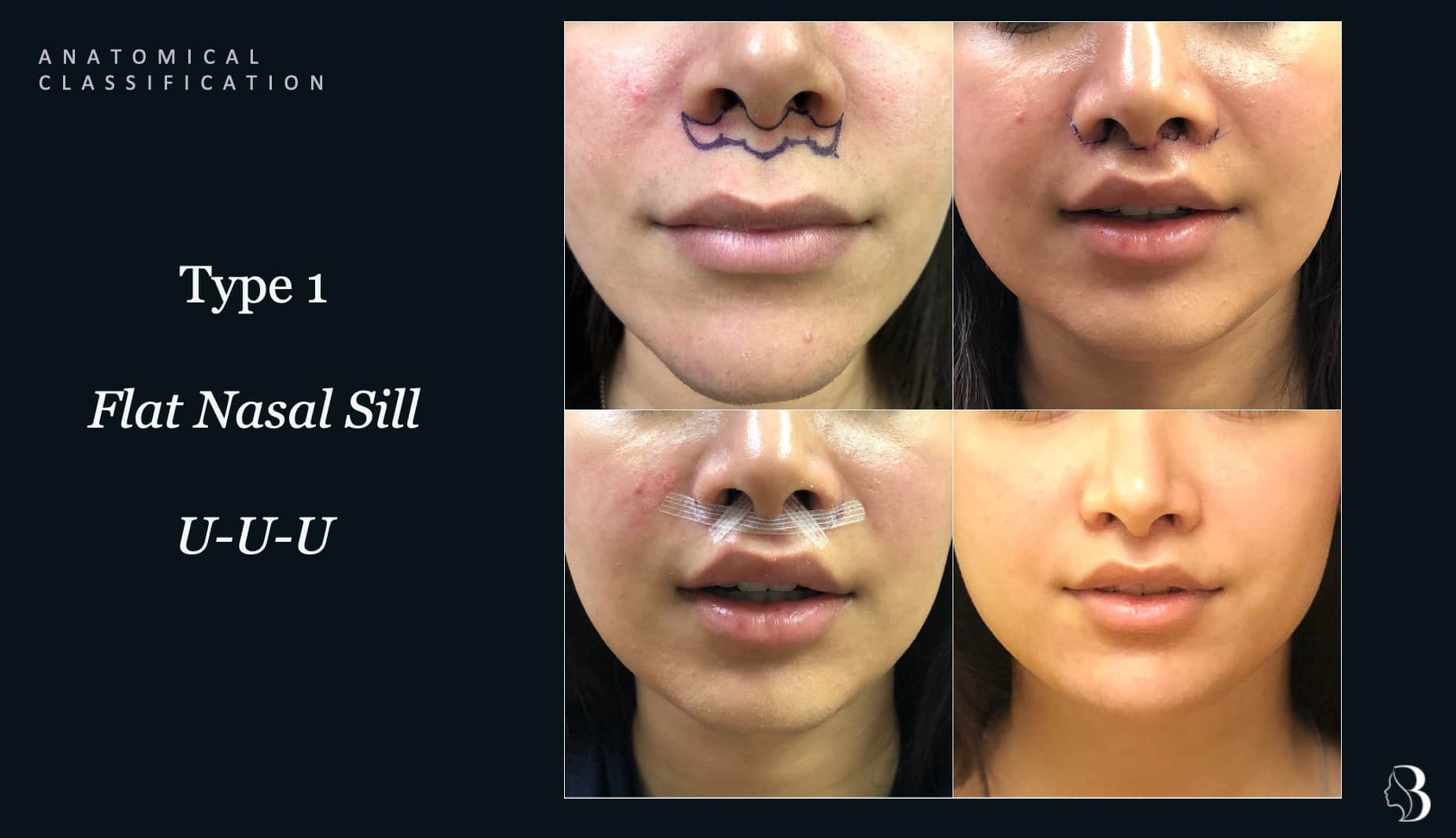
U–U–U incision
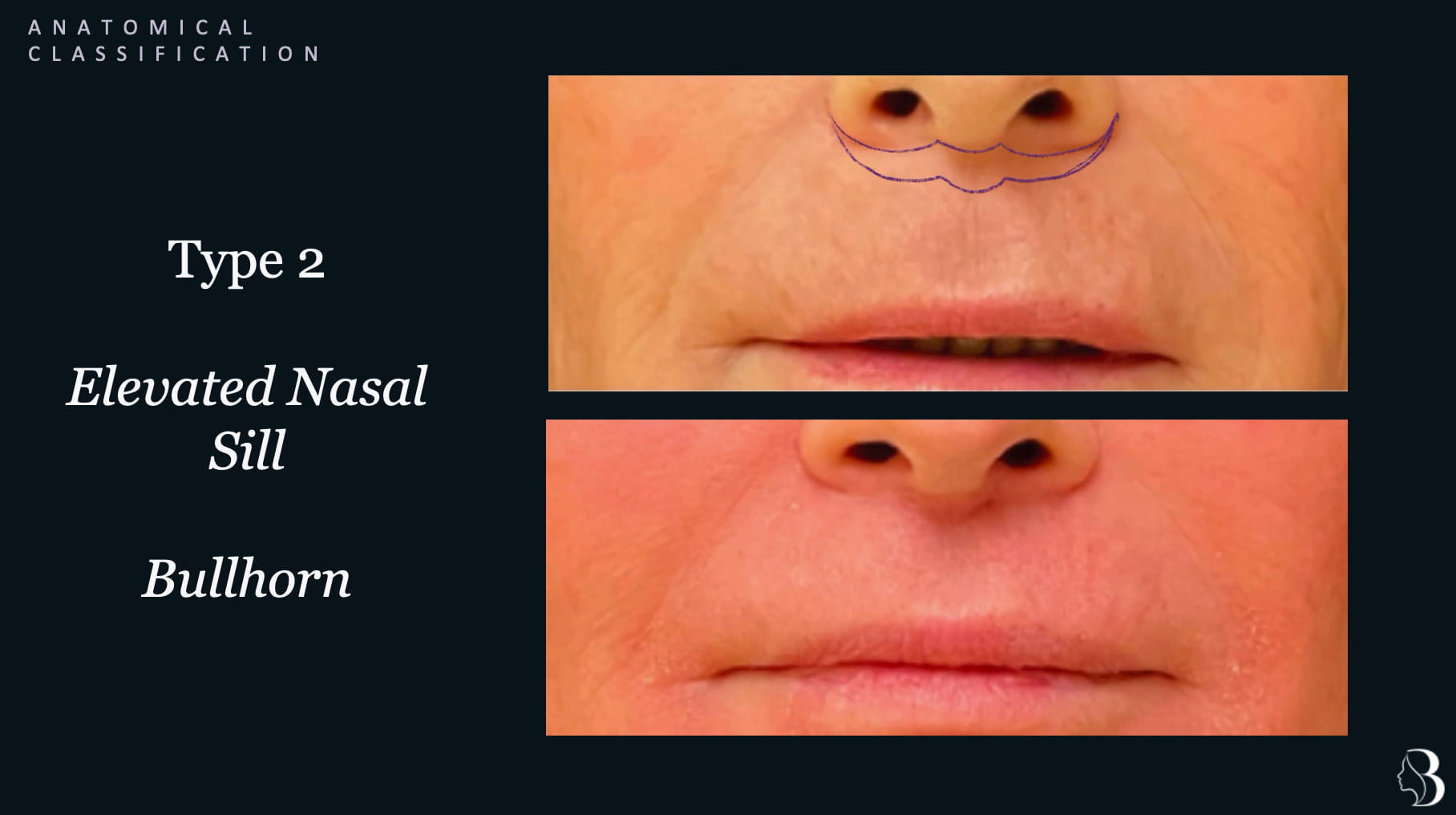
Bullhorn incision
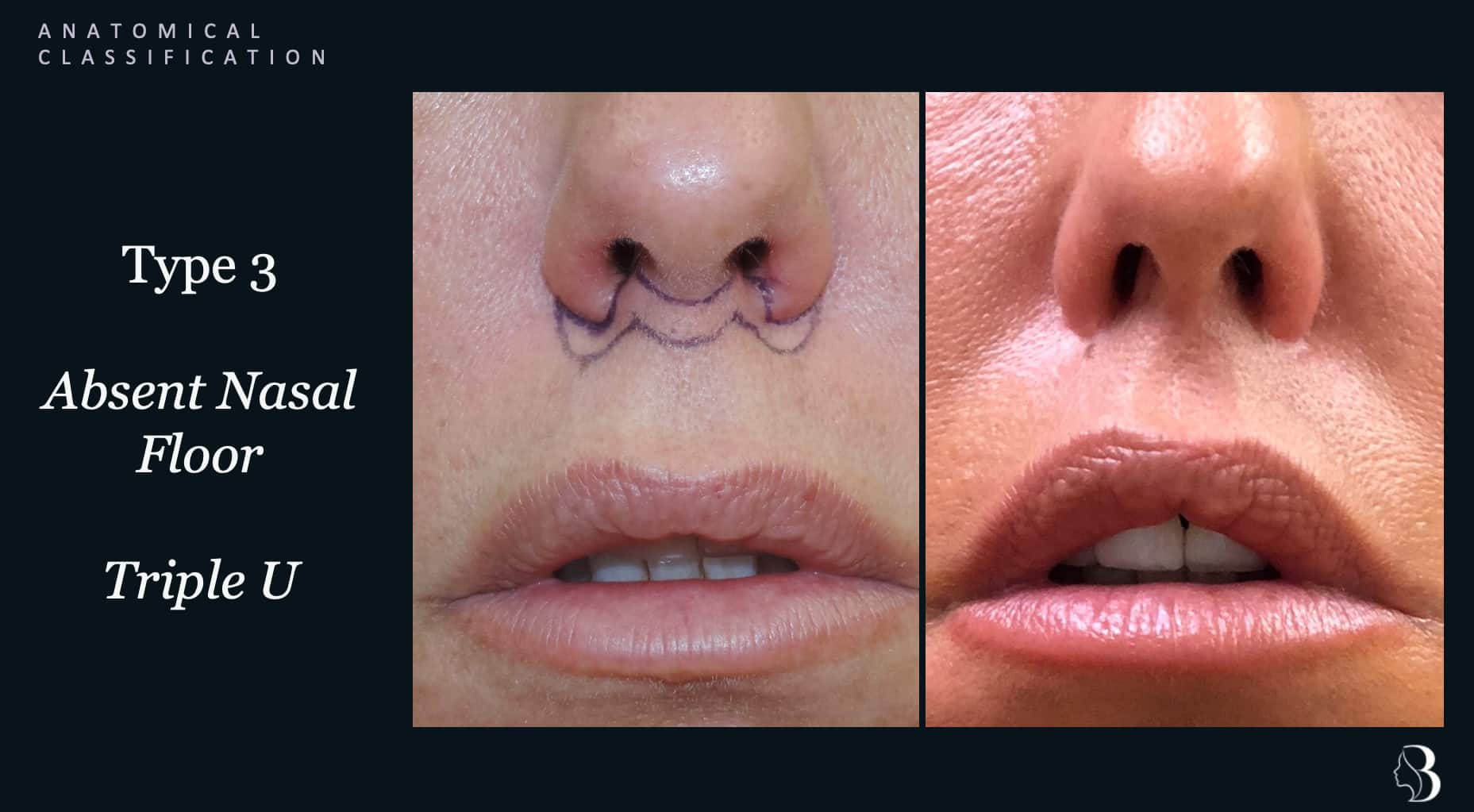
Triple-U incision
Photographic analysis. Standardized frontal and oblique photographs are reviewed and the projected outcome is discussed. If you are also a candidate for a corner lip lift to address downturned commissures, this is planned and priced together in the same consultation session.
Scheduling for NJ and NYC patients. Consultations are available in-person at our Morristown, NJ office (101 Madison Ave, Suite 105) or via virtual video consultation for patients who prefer to begin remotely before traveling to New Jersey. The office is easily accessible from I-287 and Route 24, with free on-site parking. For NJ Transit riders, the Morris & Essex Line stops at Morristown Station approximately a 10-minute walk away. Call (973) 267-0928 or use our Contact page to schedule.
Lip Lift Experience & Volume in New Jersey
When evaluating lip lift surgeons in New Jersey, the single most important factor is how often they perform the procedure — not just whether they offer it. Lip lifts are technically demanding operations that require consistent repetition to master: incision geometry, resection depth, nasal sill classification, suture tension, and scar placement all interact in ways that only reveal themselves across hundreds of cases. A surgeon who does two or three lip lifts per year has not developed the pattern recognition needed to handle anatomical edge cases, minimize revision rates, or optimize scar concealment for each patient's specific nasal architecture.
Dr. Rafizadeh began performing lip lifts in New Jersey in 2012 — years before the procedure became widely requested and before most NJ plastic surgeons had added it to their practice. That early adoption matters: he encountered all the learning-curve challenges of early technique development, refined his nostril-concealment approach over time, and built a reputation that consistently attracts patients from across New Jersey, New York City, and other states who have already researched and rejected lower-volume alternatives. When a patient from Bergen County, Essex County, or Manhattan finds Dr. Rafizadeh after researching lip lift surgeons across the entire metro area, it's because volume and specialization — not geography — determine outcomes.
What high case volume means in practice: Patients with unusual nasal sill anatomy (very flat columellar bases, wide alar insertions, or prior rhinoplasty that changed the base-of-nose architecture) benefit most from a surgeon who has seen that presentation before and knows how to adapt the incision. Patients with darker Fitzpatrick skin types or keloid risk benefit from a surgeon who has developed consistent scar-management protocols, including early steroid injection protocols when needed. Combination cases — subnasal lip lift performed at the same session as rhinoplasty or facelift — require familiarity with how simultaneous procedures affect tissue perfusion and healing. These edge cases are the ones that distinguish a specialist from a generalist.
If you are searching for a lip lift surgeon in New Jersey, the most productive questions to ask any prospective surgeon are:
- How many lip lifts have you performed in the past 12 months?
- Do you classify nasal sill morphology before surgery?
- What is your protocol when a patient develops a hypertrophic scar?
- How do you modify the incision for patients who've had prior rhinoplasty?
The answers will quickly reveal whether the surgeon treats the lip lift as a core specialty or an occasional add-on service. Dr. Rafizadeh has clear, specific answers to all of these questions — built from over a decade of dedicated practice at his Morristown, New Jersey office.
→ Schedule a ConsultationMeet with Dr. Rafizadeh personally to discuss your goals and a personalized plan. Call (973) 267-0928 or request a consultation online.
Lip Lift Recovery Timeline
Because the procedure is performed under local anesthesia, most patients are comfortable traveling home the same day — including those arriving from New York City or other parts of the tri-state area.
What to Expect on the Day of Surgery in Morristown, NJ
For most patients researching a lip lift in New Jersey, the surgery day itself is far less involved than expected. The subnasal lip lift is a short outpatient procedure performed under local anesthesia at Dr. Rafizadeh’s Morristown office — there is no general anesthesia, no overnight stay, and no lengthy fasting protocol for an isolated lip lift. Knowing the sequence ahead of time helps patients arriving from across North Jersey and the New York metro area plan their travel and their return home.
- Arrival and final marking. You check in at 101 Madison Ave, Suite 105, where Dr. Rafizadeh re-measures your philtrum and re-confirms the proposed resection in millimeters against the plan agreed at consultation. The excision zone is marked precisely while you are seated upright, so the markings reflect your lip at rest rather than while reclined — an important detail for symmetry. You review the markings in a mirror and confirm before anything proceeds.
- Anesthesia and the procedure. A local anesthetic is injected to numb the base of the nose and upper lip. Once the area is fully numb, the marked strip of skin is removed and the incision is closed in layers with fine sutures positioned within the nostril sills using Dr. Rafizadeh’s nostril-concealment technique. The active surgical time is typically about 45 minutes. Patients remain awake and comfortable throughout; many describe the experience as closer to a dental visit than to major surgery.
- Recovery room and discharge. After a brief observation period you are discharged the same day with written aftercare instructions, cold-compress guidance, and a scheduled one-week suture-removal appointment. Because no sedation is required for an isolated lip lift, the recovery is quick — though you will still need someone to drive you home. Patients traveling back to Manhattan, Hoboken, Jersey City, or elsewhere in the tri-state area routinely make the trip the same afternoon. For those combining the lip lift with a sedation procedure such as a facelift or rhinoplasty, the day-of protocol and anesthesia plan differ and are reviewed in detail at consultation.
Lip Lift and the Gummy Smile
One of the most common questions Dr. Rafizadeh hears from New Jersey patients researching the procedure is whether a lip lift will create or worsen a gummy smile — the appearance of excessive upper-gum show when smiling broadly. It is an important question, because a lip lift and a gummy smile both involve the relationship between the upper lip, the teeth, and the gums — but they are not the same thing, and understanding the distinction is central to planning a natural result.
- What a lip lift actually changes. A subnasal lip lift increases upper-tooth show at rest — how much of the upper teeth and pink vermilion are visible when the face is relaxed and the lips are gently parted. A youthful mouth shows a few millimeters of upper-incisor edge at rest; an aged or naturally long philtrum shows little or none. The lift restores that resting display. Critically, the change is most pronounced in repose, not at the peak of a full smile, because the muscles that elevate the lip during smiling are not altered by the skin excision.
- Why most patients do not develop a gummy smile. A true gummy smile is usually driven by factors a lip lift does not touch: a hyperactive levator muscle that pulls the lip up too far when smiling, altered tooth-to-gum proportions, or vertical maxillary excess (the way the upper jaw sits relative to the lip). A well-measured lip lift removes only 3–6 mm of skin — an amount calibrated to the patient’s philtrum length — and is designed to bring resting tooth show into the ideal range, not to maximize gum display when smiling. In patients with a normal smile line, a properly dosed lift increases resting tooth show without producing a gummy smile.
- When extra caution is warranted. Patients who already show a moderate amount of gum when they smile, or who have a naturally hyperactive upper lip, need conservative planning. In these cases Dr. Rafizadeh measures resting and dynamic tooth show separately, may recommend a smaller resection, and sometimes advises pairing the lift with a small dose of a neuromodulator to relax an over-active lip elevator — or, for a primarily dynamic gummy smile, treating that concern first and reassessing. This is precisely the kind of judgment that comes from high case volume: the goal is a balanced, natural mouth at rest and in motion, not simply a shorter philtrum measured in millimeters. These distinctions are evaluated individually at consultation in Morristown, NJ, where resting and smiling tooth show are both photographed and measured before any surgical plan is finalized.
Lip Lift Aftercare: A Week-by-Week Healing Roadmap
New Jersey patients researching a lip lift often want to know exactly what they will need to do after surgery, not just how long recovery takes. Good aftercare is straightforward, but following it closely is the single biggest factor patients themselves control in producing a clean, well-hidden scar. Dr. Rafizadeh sends every patient home with written instructions; the roadmap below summarizes what the days and weeks after a Morristown lip lift typically involve.
- The first 48 hours. Keep your head elevated — sleep on two pillows or in a recliner to limit swelling at the base of the nose and upper lip. Apply cold compresses gently around (not directly pressing on) the incision in 15-minute intervals for the first day or two. Expect mild swelling and tightness; most patients manage discomfort with acetaminophen rather than prescription pain medication. Keep the incision clean and apply any prescribed ointment with a light touch. Avoid bending, lifting, and strenuous activity, all of which raise blood pressure in the face.
- Eating, drinking, and oral care. Stick to soft foods and avoid wide mouth-opening for the first several days — large bites, hard or crunchy foods, and exaggerated facial expressions put tension directly across the healing incision. Use a straw sparingly. Stay hydrated, and keep the area clean after meals by dabbing gently rather than wiping. Do not pick at scabs or sutures, and resist the urge to stretch or examine the lift by pulling the lip downward.
- Week one and suture removal. Fine sutures are typically removed at your one-week visit. Swelling subsides noticeably during this period and most patients feel comfortable returning to desk work and quiet social settings within five to seven days. The incision will still be pink. Continue to avoid strenuous exercise, alcohol, and anything that significantly raises facial blood pressure until cleared.
- Weeks two through six. Light exercise can usually resume around two weeks, with a gradual return to full workouts by four to six weeks as advised. The most important long-term step begins now: daily sun protection. Apply a broad-spectrum SPF 30+ to the healing scar every day, and consider a wide-brim hat outdoors — ultraviolet exposure is the leading cause of a scar darkening permanently. Some patients are advised to begin gentle scar massage or silicone gel/sheeting once the incision is fully closed to encourage a flat, pale result.
- Months three to twelve. The scar continues to mature, fading and flattening so that by six to twelve months it sits invisibly within the natural shadow of the nostril sill for the vast majority of patients. Keep up sun protection throughout the first year. If a small raised ridge appears early on, it usually resolves on its own or with a single in-office steroid injection — one reason Dr. Rafizadeh schedules follow-up visits rather than discharging patients after suture removal. Out-of-town patients traveling from New York City or elsewhere in North Jersey can complete most follow-up by photo with one or two in-person visits coordinated around the suture-removal appointment.
Related Reading from Our Blog
Dr. Rafizadeh answers real patient questions about the lip lift on the blog. These recent articles go deeper on the topics New Jersey and NYC-area patients ask about most:
→ Should You Get a Lip Lift Now or Wait for a Facelift?How to sequence a lip lift with a future facelift — why the lip lift rarely needs to wait, and how the two procedures interact. → Lip Lift Scars: Preventing Cross-Hatching & Fixing a Bad ScarWhat causes the deep “stitch-mark” scar after a lip lift, how careful closure prevents it, and whether a poor scar can be revised. → Lip Lift & Rhinoplasty Together: Philtrum Length and Tooth ShowCan the two be done in one session to shorten the philtrum and improve tooth show? How the base of the nose ties them together. → Lip Lift Surgery in NJ: What You Need to KnowA plain-English overview of the procedure for New Jersey and NYC-area patients — candidacy, technique, recovery, and what makes results natural. → Why Upper-Lip Shortening Is Key to Facial BeautificationHow shortening a long upper lip restores youthful proportion and tooth show — the aesthetic principles behind why the lip lift works. → Why Botox & Filler Don’t Erase Deep Upper-Lip LinesVertical “smoker’s lines” are an etched-skin problem, not a volume problem — why resurfacing, and sometimes a lip lift, does what injectables cannot.