
Of the more than 1,500 questions Dr. Farhad Rafizadeh has answered on RealSelf, a recurring theme is the relationship between the nose and the upper lip. Patients considering rhinoplasty frequently ask whether a nose job will also improve their philtrum — the vertical distance between the base of the nose and the red of the upper lip. The honest answer, which many surgeons overlook, is that rhinoplasty and philtrum length are not independent. They pull in opposite directions.
“Could lip lift & rhinoplasty together reduce my philtrum length?”
This is a surgical question with more nuance than most patients realize. Understanding the answer — and its implications for planning both procedures — is one of the things that distinguishes an experienced facial plastic surgeon from one who is technically capable but aesthetically incomplete.
Dr. Rafizadeh’s Direct Answer
A lip lift procedure shortens the philtrum, while a rhinoplasty tends to have the opposite effect. If you go to an experienced and talented plastic surgeon, they will consider that fact, and do your lip lift accordingly. The other issue is that you have considerable teeth showing despite a very long philtrum. One has to keep that in mind and plan the lip lift accordingly.
Two critical surgical facts are packed into that answer. First, the directional conflict: a rhinoplasty that rotates or projects the nasal tip upward will tend to increase the apparent length of the philtrum, while a lip lift is designed to decrease it. A surgeon who does not account for this will either under-lift the lip (leaving the philtrum still too long after both procedures heal) or over-lift it (creating an unnatural appearance if the nose settles differently than expected). Second, the individual anatomy caveat: patients who already show significant upper teeth at rest require a conservative approach to the lip lift regardless of their philtrum length, because shortening the philtrum further increases tooth show — sometimes attractively, sometimes not.
Why Rhinoplasty Affects the Apparent Philtrum Length
This is one of the most frequently misunderstood relationships in facial anatomy. The rhinoplasty does not stretch the upper lip skin. The philtrum does not literally grow longer after a nose job. What changes is the visual relationship between the nose and the lip.
When a surgeon rotates the nasal tip upward during a rhinoplasty — a very common aesthetic goal — the columella (the tissue between the nostrils) lifts slightly. The base of the nose is now positioned higher relative to the lip. The distance between where the nose ends and the lip begins is unchanged in absolute millimeters, but it looks longer because the reference point has moved up.
Research confirms this. A 2020 study in Aesthetic Plastic Surgery found that most rhinoplasty maneuvers that increase nasolabial angle (the angle between the nose and lip) were associated with a measurable increase in apparent upper lip length. The effect is clinically significant enough that surgeons who routinely combine rhinoplasty with lip lift must build it into their pre-operative planning.
For patients in Morristown, Summit, Chatham, and across Northern New Jersey considering rhinoplasty: if your philtrum is already at the upper edge of aesthetically ideal — typically defined as 11–13 mm from the base of the nose to the red of the lip — a rhinoplasty that rotates the tip upward could push it into territory that would benefit from a lip lift. The better approach is to plan both procedures together from the start.
Combining Lip Lift and Rhinoplasty: What the Research Shows
The surgical question of whether to perform both procedures simultaneously or stage them months apart is genuinely debated among plastic surgeons. Both approaches have clinical support.
The concern with performing them simultaneously is theoretical: both procedures involve incisions near the base of the nose, and some surgeons worry about the cumulative effect on blood supply to the intervening skin. In practice, this concern has not materialized in the clinical literature. A 2024 study published in PMC examining the aesthetic and functional outcomes of simultaneous open rhinoplasty and lip lift found that both could be performed safely together with no increase in vascular complications, necrosis, or scarring compared to staged procedures.
The concern with staging — rhinoplasty first, lip lift months later — is that the surgeon must predict how much the nose will affect the philtrum after final healing, and then calibrate the lip lift against a baseline that is still evolving. Surgeons who stage routinely recommend waiting at least three to six months after rhinoplasty before performing the lip lift, allowing the nasal tissues to soften, the tip to settle, and the full extent of the philtrum change to become visible.
Dr. Rafizadeh’s approach is to evaluate each patient individually. When both procedures are planned together from the initial consultation, they can often be performed in the same operative session under local anesthesia with moderate sedation, combining the recovery into a single healing period. When a patient has already had a rhinoplasty elsewhere and is now considering a lip lift to address the aftermath, the philtrum is evaluated after the nasal result has fully matured.
The Philtrum-to-Chin Ratio: Why Proportion Matters More Than Millimeters
A number surgeons often cite is the ideal philtrum length of 11–13 mm. That number is useful as a reference, but it misses something more important: the ratio between the philtrum length and the distance from the lower lip border to the chin.
The classical aesthetic proportion calls for the philtrum (nose base to upper lip red border) to occupy approximately one-third of the lower face, and the lower lip to chin distance to occupy the remaining two-thirds. When this ratio is off — when the philtrum is too long — the lower face looks heavy, the lips appear thin even if they are full, and the chin appears recessed even when it is structurally adequate.
A rhinoplasty that shortens and refines a prominent nose without addressing the philtrum can inadvertently worsen this ratio by making the nose smaller and drawing more visual attention to the now-proportionally longer philtrum. Surgeons who think about the face in terms of ratios — rather than individual feature modifications — recognize this before they operate, not after.
What a Lip Lift Actually Does to the Philtrum
The subnasal lip lift — the technique Dr. Rafizadeh has been performing since 2012 as part of his facial rejuvenation practice in Morristown — removes a carefully measured ellipse of skin from directly beneath the nose. The resulting scar sits in the natural crease at the nasal base, where it is well hidden and heals to near-invisibility in most patients who are good healers.
The procedure accomplishes several things simultaneously: it shortens the philtrum, it rolls the upper lip slightly outward, it increases tooth show (the amount of upper incisors visible at rest), and it subtly lifts and shapes the Cupid’s bow. In patients who are also having rhinoplasty, the surgeon must pre-calculate each of these effects against the expected nasal result to arrive at an incision pattern that produces harmony rather than overcorrection.
A critical technical point from Dr. Rafizadeh’s practice: the lip lift, performed correctly, does not significantly increase the size of the vermillion (the red, visible part of the lip). Patients who worry that a lip lift will make their lips look “done” or overfilled are thinking of before-and-after photos that include lip filler applied on top of the lift. A standalone subnasal lip lift creates a more youthful lip position and proportion — not an artificially large lip.
Tooth Show: The Constraint That Changes the Calculation
The second point in Dr. Rafizadeh’s RealSelf answer is worth examining in detail. When a patient already shows considerable upper teeth at rest, the lip lift planning must account for this because any further shortening of the philtrum will increase that tooth exposure.
The aesthetically ideal tooth show at rest is approximately 1–3 mm of upper incisors in most women, and slightly less or none in most men. Patients who already show 5–7 mm of tooth at rest have less margin for a lip lift, even if their philtrum is objectively long. The surgeon must weigh the benefit of a more proportional philtrum against the risk of over-exposing the teeth in a way that reads as unnatural or gummy.
For patients considering rhinoplasty and a lip lift together, tooth show at rest is one of the first measurements in Dr. Rafizadeh’s consultation. It directly informs how aggressively the philtrum can be shortened, which in turn informs how much room there is to compensate for the rhinoplasty’s expected lengthening effect.
What North Jersey Patients Considering Both Procedures Should Ask
If you are researching rhinoplasty and lip lift in Morristown, Summit, Chatham, Madison, Short Hills, Bernardsville, or anywhere across Northern New Jersey, these are the questions worth raising at your consultation:
- Based on the rhinoplasty plan you have in mind for my nose, how much will that likely change the apparent length of my philtrum?
- What is my current philtrum length in millimeters, and what would my ideal range be after accounting for the rhinoplasty?
- How much upper tooth show do I currently have at rest, and does that constrain what we can do with a lip lift?
- Is performing both procedures in the same session the right choice for my anatomy, or is staging them safer?
- What would happen if we do the rhinoplasty now and revisit the lip lift decision once the nose has fully healed?
A surgeon who is comfortable combining these procedures will answer each of these questions with specificity, ideally using measurements taken at the consultation and a visual simulation of the planned result. A surgeon who has not thought carefully about the interaction between the two procedures will often give a vague answer — or will decline to discuss the lip-nose relationship at all.
Lip Lift Patient Before & After
View Full Gallery →
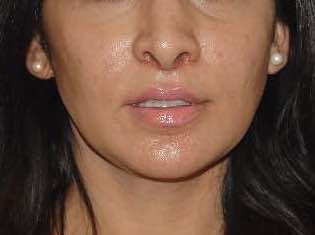
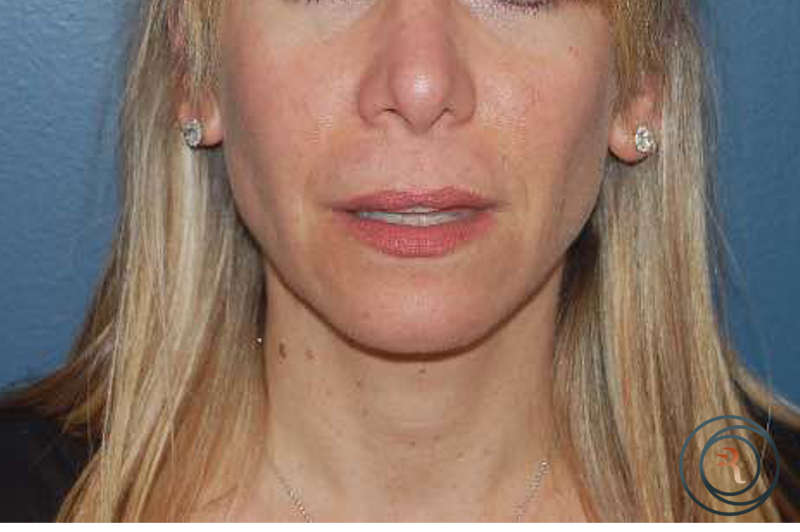

Both procedures above were performed in Morristown under local anesthesia. Note how the shortened philtrum improves overall lip-to-nose proportion without making the lip appear artificially large.
Common Questions Patients Search About Lip Lift & Rhinoplasty
Should I get a lip lift or rhinoplasty first?
Many surgeons recommend staging these procedures — rhinoplasty first, then lip lift at least three to six months later once the nasal tissues have fully settled. This lets the surgeon calibrate the lip lift against the final nasal result rather than a moving target. However, an experienced surgeon who is comfortable combining both can often perform them safely in one operative session, eliminating a second recovery. Dr. Rafizadeh evaluates this on a case-by-case basis based on each patient’s anatomy, tooth show, and philtrum measurements.
Is simultaneous lip lift and open rhinoplasty safe?
Yes. A 2024 study in PMC reviewed the outcomes of patients who had both procedures simultaneously and found no significant increase in vascular complications, necrosis, or scarring compared to staged procedures. The theoretical concern about blood supply to the skin between the two incision sites has not materialized in clinical practice when performed by surgeons experienced in both techniques.
Can a nose job shorten the philtrum?
No. Rhinoplasty does not shorten the philtrum — it does not remove any skin between the nose and the lip. In fact, certain rhinoplasty maneuvers (particularly rotating the tip upward) can make the philtrum appear longer by changing the visual relationship between the nose base and the upper lip. The procedure specifically designed to shorten the philtrum is the subnasal lip lift.
Does rhinoplasty lengthen the philtrum?
Rhinoplasty does not physically lengthen the skin of the upper lip, but tip rotation and projection changes alter the visual nose-to-lip relationship in a way that can make the philtrum look longer. Patients who already have a long philtrum should discuss this with their surgeon before rhinoplasty — and should consider whether a simultaneous or staged lip lift makes sense for their anatomy.
How do you fix an elongated philtrum after rhinoplasty?
A subnasal lip lift is the most effective correction for a philtrum that appears too long, whether the cause is natural anatomy or a rhinoplasty that altered the nose-to-lip relationship. The procedure removes a small ellipse of skin at the base of the nose, permanently shortening the philtrum. It is performed under local anesthesia in about 45–60 minutes and leaves a scar that sits in the natural crease beneath the nose, where it is well concealed as it heals.
Can lip lift and rhinoplasty be done together?
Yes. Many board-certified plastic surgeons, including Dr. Rafizadeh in Morristown, NJ, perform both procedures in the same operative session. The key is that the surgeon must account for how the rhinoplasty will affect the apparent philtrum length when planning the amount of skin to remove during the lip lift. Without this calculation, the combined result may be aesthetically unbalanced even if both individual procedures are technically correct.
How long does combined lip lift and rhinoplasty surgery take?
When performed together under local anesthesia with moderate sedation, rhinoplasty and lip lift typically take two to three hours total depending on the complexity of the nasal work. Because Dr. Rafizadeh performs both procedures under light sedation rather than general anesthesia, the combined anesthetic burden is lower than a general anesthesia approach, and patients recover from a gentler physiologic baseline.
Sources & References
- Alnami R, et al. “Aesthetic and Functional Outcomes of Simultaneous Rhinoplasty and Lip Lift.” PMC / NCBI. 2024. PubMed Central
- Saman M, et al. “The Safety and Outcomes of Simultaneous Open Rhinoplasty and Lip Lift.” PMC / NCBI. 2024. PubMed Central
- Tosan F, et al. “Effects of Open Rhinoplasty on Upper Lip Position in Profile and En Face Views.” Aesthetic Plastic Surgery. 2020. PubMed Central
- American Board of Plastic Surgery. Certification Verification. abplasticsurgery.org
- Dr. Farhad Rafizadeh, MD FACS. RealSelf Q&A — “Could lip lift & rhinoplasty together reducing my philtrum length?” realself.com
Related Reading From Dr. Rafizadeh’s Blog
- Should I Get a Lip Lift Before My Facelift? Timing and Planning in North Jersey
- Lip Lift in NJ: Philtrum Reduction for a More Youthful Upper Lip
- Rhinoplasty in Morristown, NJ — What to Expect
- Safest Anesthesia for Older Patients: Facelift, Eyelid & Brow Lift Without Dementia Risk
- Neck Lift With Facelift: Do I Need Both? A North Jersey Surgeon’s Answer
Bottom Line
Patients in Northern New Jersey researching rhinoplasty or a lip lift as separate procedures should understand from the start that these two operations are not independent. A rhinoplasty that does not account for the philtrum can leave a patient with a proportionally longer upper lip than they had before surgery — a result that looks incomplete even when technically correct. And a lip lift planned in isolation from a prior or planned rhinoplasty may either under- or over-correct for a philtrum whose length is still being determined by a nose that has not finished healing.
The solution is a surgeon who thinks about the face as a system of proportions, not a collection of individual features — and who is fluent in both lip lift surgery and rhinoplasty in the same hands. If you are considering either or both procedures and are based in Morristown, Summit, Chatham, Madison, Short Hills, or anywhere across Northern New Jersey, Dr. Rafizadeh is glad to evaluate the relationship between your nose, your philtrum, your tooth show, and your overall facial proportions during a consultation — and to walk you through what a combined or staged approach would look like for your specific anatomy.
Ready to schedule a consultation in Morristown, NJ?
Book a ConsultationConsultations are also available with Dr. Andre Rafizadeh, a fellowship-trained plastic surgeon now practicing at the Morristown office.