Face  ·  Morristown, NJ

Rhinoplasty New Jersey

Experience30+ Years
TechniqueOpen & Closed
Recovery6–12 Months
ResultsPermanent

The Art of Rhinoplasty

Dr. Rafizadeh, a board certified plastic surgeon in NJ, has been one of New Jersey's most prominent rhinoplasty specialists for over 30 years. He is mindful of both what the patient wants to achieve and what is safely achievable — and he is always baffled when he sees someone send a photo showing only the nose, without considering the rest of the face.

The nose is an integral part of the face. Any change in the shape of the nose must relate to the surrounding features — the chin, the upper lip philtrum, the width of the face. A tip that appears wide in a narrow face might look perfectly acceptable in a wider face. Dr. Rafizadeh evaluates the nose in complete harmony with the full facial structure before recommending any change.

“The rhinoplasty procedure is one of the most interesting and challenging in plastic surgery. It takes experience, precision, and artistry to achieve great results — and respect for the structures of the nose, especially the tip cartilages, is essential for long-term success.”
Rhinoplasty Before & After

View Full Gallery →
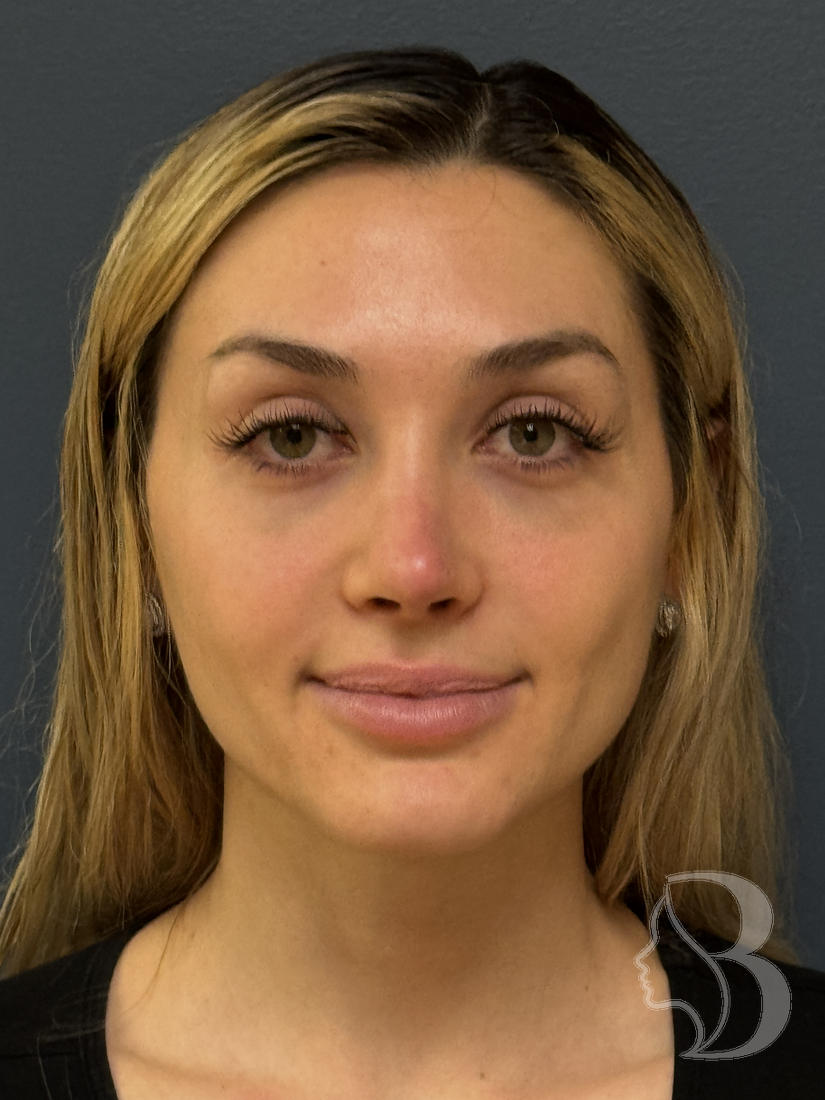
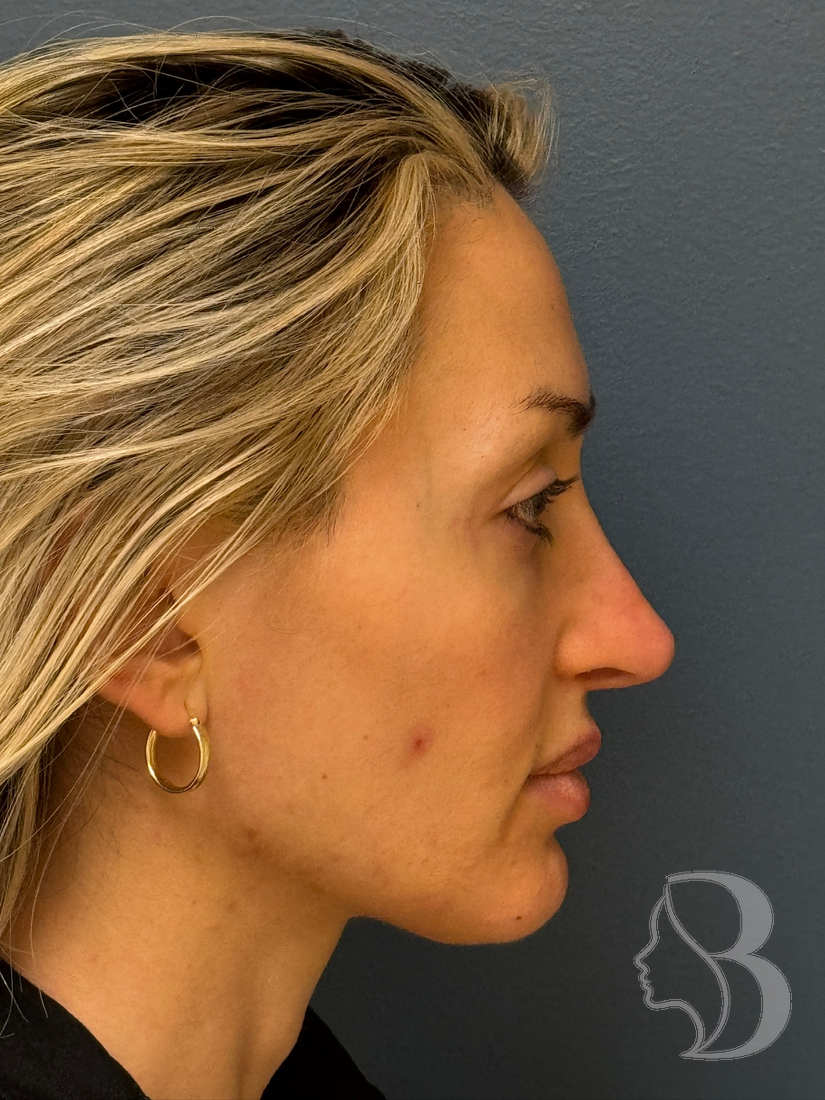
BeforeOpen rhinoplasty before
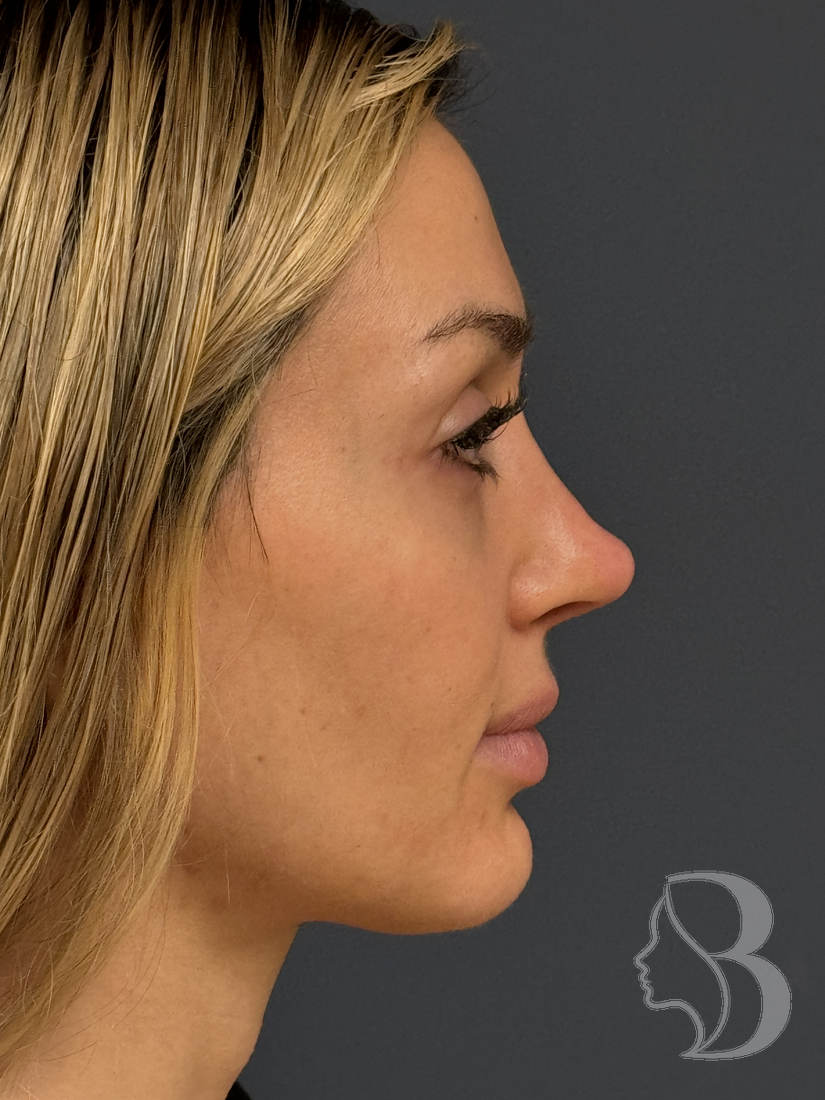
AfterOpen rhinoplasty after
Open RhinoplastyAge 33 · Female
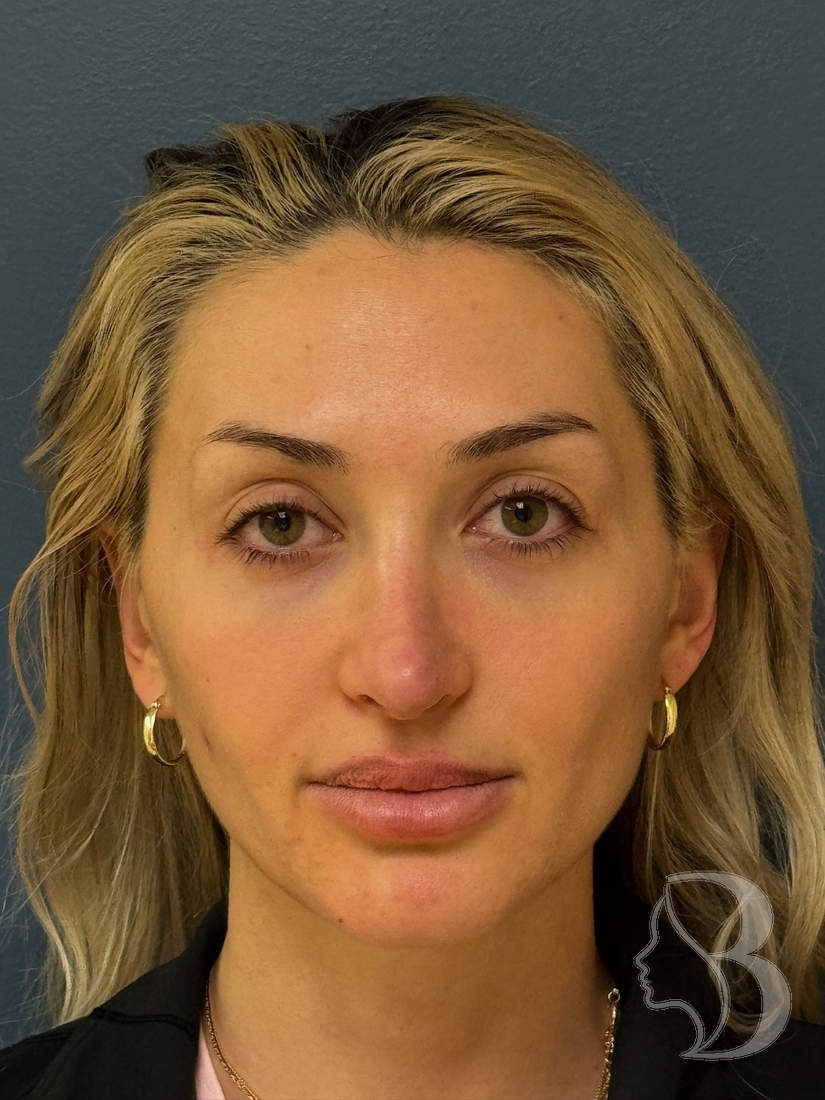
BeforeRhinoplasty before
AfterRhinoplasty after
RhinoplastyFemale

Open vs. Closed Rhinoplasty

Dr. Rafizadeh conceptually divides the nose into an upper bony part and a lower cartilaginous part. He selects either an open rhinoplasty (with a small incision across the columella for maximum visibility) or a closed rhinoplasty (with all incisions inside the nostrils, leaving no visible scars) based on the complexity of correction required and each patient's anatomy.

What Can Rhinoplasty Address?

Common concerns Dr. Rafizadeh addresses include: dorsal humps or bumps on the bridge, a wide or bulbous nasal tip, asymmetry, a drooping or upturned tip, wide nostrils, a deviated septum affecting breathing, and overall disproportion to the rest of the face. Secondary (revision) rhinoplasty for patients dissatisfied with prior surgeries is also performed.

Submental Liposuction

Dr. Rafizadeh often combines rhinoplasty with submental liposuction — removing a small amount of fat under the chin — when appropriate. This combination establishes balance and harmony across the profile in a way that rhinoplasty alone cannot always achieve. A chin implant is also occasionally added to improve the chin-nose relationship on profile view, and a lip lift may be considered when the philtrum length and tooth show are part of the aesthetic plan.
Rhinoplasty · Better Plastic Surgery “Architecture meeting autobiography. We don’t rewrite the story — we make sure it reads the way you meant it to.

Recovery & Timeline

Days 1–7Nasal splint worn. Swelling and bruising peak around day 2–3 then begin to subside. Most patients are comfortable at home.
Week 1–2Splint removed. Presentable for limited social activity. Tip remains swollen.
Weeks 3–6Return to most normal activities. The nose looks dramatically improved though still refining.
Months 6–12Final result emerges as residual tip swelling fully resolves. Rhinoplasty is judged at six months to one year.

How Dr. Rafizadeh Approaches the Nose

The nose is an integral part of the face — any change in its shape must relate to the rest of the face. The tip that looks wide in a narrow face could look perfectly acceptable in a wider face. On the profile view, the chin and nose relate closely; the upper lip philtrum height relates to the nose as well. The technical aspects of rhinoplasty are well understood, but the artistic understanding of how the nose relates to the rest of the face is far less appreciated.

Dr. Rafizadeh divides the nose into an upper bony part and a lower cartilaginous part. The bone forms an arch making the nasal bridge; below this the upper lateral cartilages continue that arch. The shape of the tip is determined by the lower lateral cartilages — a pair shaped like an inverted U. He has particular respect for these tip cartilages, since careful handling is key for long-term results.

Functional Rhinoplasty & the Airway

When the septum deviates and the turbinates are enlarged, breathing becomes difficult. In many patients — especially those with a previous rhinoplasty — the lower lateral cartilages collapse against the septum, obstructing the airway. Dr. Rafizadeh takes a reconstructive approach, placing spreader grafts to open this area, improving both breathing and the pinching appearance above the tip simultaneously. When a dorsal hump is removed and the nasal bones are brought together, the lower half of the nose needs internal support — without it the upper lateral cartilages can collapse, creating an internal valve obstruction. Spreader grafts made from harvested septal cartilage prevent this collapse.

Computer Imaging & the Consultation

Dr. Rafizadeh uses computer imaging to show patients exactly what he has in mind and confirm alignment before surgery. A typical rhinoplasty involves reducing the dorsal hump, bringing the nasal bones together to recreate the arch, and in many cases refining the tip. The best long-term results are achieved when the tip is left unmodified unless necessary. After surgery, a splint is worn for one week. Ninety-five percent of swelling resolves within a month; the final 5 percent can take six months to one year.

Rhinoplasty in New Jersey

Dr. Rafizadeh has performed rhinoplasty in New Jersey for over 30 years, making him one of the most experienced nose surgeons in the state. Patients travel from throughout New Jersey — Morristown, Short Hills, Summit, Chatham, Westfield, Princeton, and across Morris, Essex, Somerset, and Union counties — as well as from New York City and beyond. Common concerns include dorsal humps, wide or bulbous nasal tips, and breathing problems from a deviated septum or collapsed nasal valves.

Patients comparing rhinoplasty doctors in NJ should weigh more than proximity. The nose is the most technically unforgiving operation in plastic surgery, so the surgeon's depth of rhinoplasty experience, board certification by the American Board of Plastic Surgery, and a portfolio of natural before-and-after results matter far more than any single credential or marketing claim. Among rhinoplasty doctors in New Jersey, Dr. Rafizadeh stands out for treating the nose as part of the whole face, for handling primary, functional, revision, and ethnic cases under one roof, and for using computer imaging so every patient sees and agrees on the plan before surgery. For a deeper look at specific rhinoplasty topics, see Dr. Rafizadeh's articles on dorsal hump rhinoplasty, hanging columella correction, and nasal collapse after rhinoplasty.

Schedule a ConsultationMeet with Dr. Rafizadeh personally to discuss your goals and a personalized plan. Call (973) 267-0928 or request a consultation online.

Top Rhinoplasty Doctors in New Jersey

When patients search for the top rhinoplasty doctors in New Jersey, they often find a mix of ENT and facial-plastics specialists. What sets Dr. Rafizadeh apart among the best rhinoplasty surgeons in NJ is a full plastic-surgery perspective: he plans every nose in proportion with the brow, eyes, chin, lip, and overall facial frame, rather than in isolation. That whole-face judgment is what separates a result that simply removes a hump from one that genuinely improves the face.

Use a short, honest checklist to compare any of the rhinoplasty doctors in NJ you are considering: board certification by the American Board of Plastic Surgery, a high annual volume of nose surgery, before-and-after galleries showing noses and skin types like yours, comfort with both open and closed technique, a clear plan to protect your breathing, and a real revision policy. Dr. Rafizadeh meets each of these — ABPS board certified, ACS Fellow (FACS), more than 30 years of rhinoplasty in Morristown, and experience spanning primary, functional, revision, and ethnic cases — which is why patients across northern and central New Jersey and the greater New York area choose his practice for nose surgery.

Rhinoplasty Techniques

Not every rhinoplasty is the same operation. Dr. Rafizadeh selects the approach that best fits each patient's anatomy, degree of correction required, and long-term structural goals. Understanding the options helps you arrive at your consultation with the right questions.

Preservation Rhinoplasty

Preservation rhinoplasty represents the most significant technical advance in rhinoplasty in the last two decades. Rather than removing cartilage and bone to reshape the nose, preservation technique keeps the native dorsum intact and repositions it — either via a push-down or let-down maneuver — to reduce a hump while maintaining the natural continuity of the nasal ligaments and soft tissue. The result is a smoother, more natural-looking dorsum with less post-operative swelling, fewer grafts, and a lower risk of the over-operated appearance that can occur with traditional structural approaches.

Patients searching for preservation rhinoplasty in New Jersey will find that Dr. Rafizadeh's anatomic approach prioritizes structure, longevity, and natural proportion above all. The ideal candidate has a dorsal hump, good tip support, and skin that can accommodate the repositioned framework. Learn more about preservation rhinoplasty →

Preservation RhinoplastyPreservation rhinoplasty in New Jersey by Dr. Rafizadeh — push-down and let-down technique for natural dorsum reduction without removing cartilage.

Open vs. Closed Rhinoplasty

The choice between open rhinoplasty and closed rhinoplasty is one of the most common questions patients ask before their consultation. In the open approach, a small incision across the columella gives Dr. Rafizadeh direct visibility into the entire nasal framework — ideal for complex reshaping, tip refinement, or revision cases where precision is critical. In the closed approach, all incisions remain inside the nostrils, leaving no external scar and reducing operating time and swelling for straightforward procedures.

Dr. Rafizadeh selects the approach based on each patient's anatomy and the complexity of the correction required — not personal preference or habit. Both open rhinoplasty in NJ and closed rhinoplasty in NJ are performed at his Morristown practice. Learn more about open vs. closed rhinoplasty →

Open vs. Closed RhinoplastyOpen vs closed rhinoplasty in New Jersey — Dr. Rafizadeh explains the difference, when each is used, and how the choice affects your result.

Revision Rhinoplasty

Revision rhinoplasty — also called secondary rhinoplasty — corrects problems that persist or develop after a prior nose surgery. It is among the most technically demanding procedures in plastic surgery: scar tissue has disrupted normal anatomy, cartilage may have been over-resected, and familiar landmarks are altered. Dr. Rafizadeh is one of the few surgeons in the region with extensive experience in complex revision cases, and regularly sees patients from across New Jersey and New York City who are seeking a fix for a bad nose job in NJ.

Common revision concerns include a nose that appears pinched or over-reduced, a collapsed internal or external nasal valve causing breathing difficulty, residual humps or asymmetry, or a tip that has drooped or stiffened with time. Cartilage grafting — often harvested from the septum, ear, or rib — is frequently required to rebuild a stable framework. Learn more about revision rhinoplasty →

Revision RhinoplastySecondary nose surgery to correct over-reduction, asymmetry, collapsed valves, or an unsatisfying prior result.

Ethnic Rhinoplasty

Ethnic rhinoplasty refers to rhinoplasty performed with explicit attention to preserving the patient's cultural identity and ethnic facial features. The goal is not to make every nose look the same, but to refine the specific concerns a patient has — a wide tip, a high dorsum, nostril asymmetry — while maintaining the characteristics that make their face recognizably theirs. Dr. Rafizadeh has extensive experience with Middle Eastern rhinoplasty in New Jersey, Persian rhinoplasty NJ, and rhinoplasty for patients of diverse backgrounds across the region.

Respecting ethnic anatomy is not a compromise — it is superior surgical judgment. Over-Westernized results that erase a patient's background are the most common cause of regret in rhinoplasty. Dr. Rafizadeh's goal is always a nose that fits the individual face, not a template. Learn more about ethnic rhinoplasty →

“The technique I choose is the one that best serves your anatomy and your goals — not the one I happen to prefer. Every nose is different, and the plan should be too.”

— Dr. Farhad Rafizadeh, MD FACS

Ethnic RhinoplastyEthnic rhinoplasty in New Jersey by Dr. Rafizadeh — natural nose reshaping that honors your cultural identity. Teen RhinoplastyTeenage nose surgery in New Jersey — safe, natural rhinoplasty performed once facial growth is complete, with honest, parent-focused consultations.

Rhinoplasty FAQs

How do I choose the best rhinoplasty surgeon in New Jersey?+

Look for a surgeon who is board certified by the American Board of Plastic Surgery, performs rhinoplasty regularly, and can show consistent before-and-after results across noses similar to yours. Rhinoplasty is widely regarded as one of the most technically demanding operations in plastic surgery, so experience matters enormously — the best results come from surgeons who treat the nose in harmony with the whole face rather than in isolation. Dr. Rafizadeh is a board-certified plastic surgeon (ABPS) and ACS Fellow (FACS) who has performed rhinoplasty in New Jersey for over 30 years, handling primary, functional, revision, and ethnic cases. During your consultation he uses computer imaging so you can see and agree on the planned changes before surgery.

Am I a good candidate for rhinoplasty?+

Rhinoplasty should take care of the problems you have with your nose — things like a hump, a wide or boxy tip, or asymmetry — while keeping your overall appearance the same. If rhinoplasty is done by an experienced surgeon with expertise in this procedure, the results should be completely natural. During the consultation, Dr. Rafizadeh discusses the changes that are mandatory to get the best results. He uses computer simulation to make sure you agree with the proposed changes before proceeding. — Dr. Rafizadeh, RealSelf

Will I still look like myself after rhinoplasty?+

Many patients feel that they still look like themselves, even after a substantial rhinoplasty — if done conservatively and appropriately. Dr. Rafizadeh's goal is to remove the distracting elements of the nose (a hump, a bulbous tip, asymmetry) and allow the more beautiful features of the face — the eyes, the smile — to come forward. There is, however, a period of adjustment after any cosmetic surgery. — Dr. Rafizadeh, RealSelf

What is the difference between open and closed rhinoplasty?+

In a closed rhinoplasty, all incisions are made inside the nostrils, leaving no visible external scar. In an open rhinoplasty, a small incision is made across the columella (the strip of skin between the nostrils) to allow the skin to be lifted and the internal structures to be viewed directly. Open rhinoplasty is generally used for more complex reshaping. Dr. Rafizadeh selects the approach based on each patient's anatomy and the degree of correction required.

When will I see my final rhinoplasty result?+

Rhinoplasty results are not fully visible for six months to one year after surgery. Photos taken in the operating room can show a general improvement in shape, but the nose changes significantly over the following weeks, months, and even years as residual swelling resolves — especially in the nasal tip, which is the last area to fully refine. One can see the nose continue to change even up to two years after surgery. — Dr. Rafizadeh, RealSelf

Can rhinoplasty be combined with other procedures?+

Yes. Dr. Rafizadeh commonly combines rhinoplasty with submental liposuction (under the chin) to establish profile balance and harmony. Rhinoplasty can also be performed in conjunction with a facelift or other facial procedures when clinically appropriate. Combinations are discussed and planned during your personal consultation.

What is the recovery timeline after rhinoplasty?+

Days 1–7: A nasal splint is worn. Swelling and bruising peak around day 2–3.
Week 2: Splint removed. Most patients feel presentable for limited social activity with makeup.
Weeks 3–6: Return to most normal activities. The nose looks dramatically improved but is still refining.
Months 6–12: Final result becomes visible as all residual swelling resolves. Tip swelling is the last to go.

How much is rhinoplasty in NJ?+

In the New Jersey and greater New York metro area, cosmetic rhinoplasty commonly ranges from about $10,000 to $18,000 all-in, including the surgeon's fee, anesthesia, and accredited-facility fees. The exact price depends on whether the procedure is open or closed, the complexity of correction (a primary tip refinement costs less than a complex revision or functional case), and whether other procedures are combined. Functional surgery to correct a deviated septum or breathing obstruction may be partially covered by insurance, which can lower your out-of-pocket cost. Pricing is finalized during your personal consultation with Dr. Rafizadeh after he evaluates your anatomy and goals. For a personalized estimate, schedule a consultation or call (973) 267-0928.

Does insurance cover functional rhinoplasty in New Jersey?+

When rhinoplasty is performed to correct a documented breathing obstruction — such as a deviated septum, collapsed nasal valves, or turbinate hypertrophy — the functional component of the surgery may be partially covered by insurance. The cosmetic portion is never covered. Dr. Rafizadeh performs both cosmetic and functional rhinoplasty, and his office can assist with documentation for insurance purposes when a functional diagnosis is present. A field of vision or airflow study may be requested by the insurer to confirm medical necessity.

How long do rhinoplasty results last?+

Rhinoplasty results are permanent — the structural changes made to the bone and cartilage do not reverse. However, the nose continues to age with the rest of the face over decades, and very subtle changes in tip position or skin thickness can occur over many years. The vast majority of patients find their result stable and satisfying long-term. This is why conservative, anatomy-respecting technique matters: noses that are over-reduced or over-refined tend to show more change with time than those modified in harmony with the patient's natural structure.

Can Dr. Rafizadeh perform revision rhinoplasty?+

Yes. Revision (secondary) rhinoplasty is performed for patients who are dissatisfied with a prior rhinoplasty — whether from over-reduction, asymmetry, a collapsed nasal valve, or a result that simply doesn't fit the face. Revision rhinoplasty is technically more demanding than primary rhinoplasty because the anatomy has been altered and scar tissue is present. Dr. Rafizadeh has extensive experience in revision cases and frequently sees patients who have traveled from across New Jersey and New York specifically for corrective nose surgery.

Is non-surgical (liquid) rhinoplasty an option in New Jersey?+

Non-surgical rhinoplasty uses injectable filler to camouflage a small dorsal hump or smooth a minor contour irregularity — it can only add volume, never reduce or narrow the nose, and the effect is temporary (typically 9–18 months). It also cannot improve breathing. For most patients seeking a meaningful, lasting change in nasal shape or function, surgical rhinoplasty remains the gold standard because it actually reshapes the underlying bone and cartilage. Dr. Rafizadeh will tell you honestly whether filler or surgery is the better fit for your goals — and will not recommend a temporary fix when a permanent, more natural result is achievable.

What is the right age for rhinoplasty?+

Rhinoplasty is generally not performed until the nose has finished growing — usually around 15–16 for girls and 16–17 for boys. Operating before facial growth is complete risks an unpredictable result as the nose continues to develop. Equally important is emotional maturity: the patient (not a parent) should want the change and have realistic expectations. There is no upper age limit — healthy adults in their 50s, 60s and beyond undergo rhinoplasty successfully, often combined with a facelift or eyelid surgery for overall facial rejuvenation. Dr. Rafizadeh evaluates each patient individually during consultation.

What questions should I ask rhinoplasty doctors in NJ before surgery?+

When comparing rhinoplasty doctors in NJ, ask each surgeon: Are you board certified by the American Board of Plastic Surgery? How many rhinoplasties do you perform each year, and is the nose a core focus of your practice? Can I see before-and-after photos of patients whose noses and skin type resemble mine? Will you use an open or closed approach for my anatomy, and why? How do you protect or improve my breathing during reshaping? What is your revision policy if the result needs refinement? And where is the surgery performed, and is the facility accredited? Dr. Rafizadeh welcomes every one of these questions, is ABPS board certified, has performed rhinoplasty in New Jersey for over 30 years, operates at accredited Morristown facilities, and uses computer imaging so you can preview and approve the plan before committing.

Where is rhinoplasty performed, and what anesthesia is used?+

Dr. Rafizadeh performs rhinoplasty in Morristown, NJ at accredited surgical facilities, typically under general anesthesia administered by a board-certified anesthesiologist, so you are comfortable and asleep throughout. Most rhinoplasties take roughly two to three hours and are done as an outpatient procedure — you go home the same day with a small splint on the nose. Choosing a surgeon who operates in an accredited facility with professional anesthesia care is one of the most important safety factors when comparing rhinoplasty doctors in NJ. The practice is located at 101 Madison Avenue, Suite 105, Morristown, and serves patients across Morris, Essex, Somerset, and Union counties as well as New York City.

What are the do's and don'ts during rhinoplasty recovery?+

Do sleep on your back with your head elevated on two or three pillows for the first few weeks to limit swelling, keep the splint clean and dry, use cold compresses on the cheeks (not directly on the nose) in the first 48 hours, and walk gently to keep circulation up. Don't blow your nose, bend over with your head below your heart, lift anything heavy, or do strenuous exercise for about three weeks. Avoid resting glasses or sunglasses on the bridge for four to six weeks while the bones knit — tape them to your forehead or use a cheek rest instead. Stay out of direct sun and wear SPF on the nose, since fresh scars and skin pigment more easily for up to a year. Don't return to contact sports for six to eight weeks. Dr. Rafizadeh's office gives every NJ rhinoplasty patient detailed written aftercare instructions and sees you at scheduled follow-ups to monitor healing.

I searched “rhinoplasty near me” — should I choose a local NJ surgeon or travel?+

For most patients in northern and central New Jersey, the best rhinoplasty surgeon is comfortably within driving distance, so there is rarely a need to travel to New York City or beyond. What matters far more than the few miles to the office is the surgeon's rhinoplasty experience, board certification, and natural before-and-after results — the nose is the most technically unforgiving operation in plastic surgery, and follow-up visits over the first year make a nearby, accessible surgeon a real advantage. Dr. Rafizadeh's Morristown practice is an easy drive from Short Hills, Summit, Chatham, Westfield, Morris and Essex counties, and is reachable from across the tri-state area, with many patients traveling in for primary, revision, and ethnic rhinoplasty. If you are searching “rhinoplasty near me” in New Jersey, weigh the surgeon's depth of nose experience first, then convenience — ideally you get both. Call (973) 267-0928 to arrange a consultation.

What is the difference between a septoplasty and a rhinoplasty?+

A septoplasty is a functional operation that straightens the septum — the wall of cartilage and bone dividing the two nasal passages — purely to improve breathing, and it does not change the external shape of the nose. A rhinoplasty reshapes the visible nose (the bridge, tip, and nostrils) for aesthetic balance. The two are frequently combined as a septorhinoplasty when a patient has both a breathing obstruction and a cosmetic concern, which lets Dr. Rafizadeh correct the airway and refine the shape in a single operation and recovery. Because a septoplasty is medically necessary, its cost is often partially covered by insurance even when the cosmetic rhinoplasty portion is not. Dr. Rafizadeh performs septoplasty, rhinoplasty, and combined septorhinoplasty in Morristown, NJ.

Does rhinoplasty hurt, and is it a safe procedure?+

Rhinoplasty is performed under general anesthesia, so you feel nothing during the surgery itself. Afterward, most patients are surprised by how little actual pain there is — the nose feels congested and stuffy from internal swelling more than it feels truly painful, and the discomfort is usually mild and well controlled, often with just Tylenol after the first day or two. The splint comes off at about one week. On safety, rhinoplasty performed by a board-certified plastic surgeon in an accredited facility is a very safe, routine outpatient operation with a low complication rate. Dr. Rafizadeh operates at accredited Morristown facilities alongside a board-certified anesthesiologist and has performed rhinoplasty for over 30 years. The two factors that most affect safety are the surgeon's training and where the surgery is done — which is exactly why it pays to compare the credentials of rhinoplasty doctors in NJ, not just the price.

Will rhinoplasty leave a visible scar?+

For most patients, no. In a closed rhinoplasty, every incision is hidden inside the nostrils, so there is no external scar at all. In an open rhinoplasty, the only external incision is a tiny zigzag across the columella — the narrow strip of skin between the nostrils — and in experienced hands it typically heals into a hairline mark that is essentially invisible within a few months, hidden on the underside of the nose where no one looks. Cases that narrow flared nostrils (alar base reduction) add small incisions tucked into the natural crease where the nostril meets the cheek. Scar quality depends heavily on precise closure technique and aftercare — keeping the incision protected from sun with SPF during the first year matters. Dr. Rafizadeh selects the least-invasive approach that can achieve your goals and reviews exactly where any incisions would be placed during your Morristown consultation, using computer imaging so you know what to expect before surgery.

Does Dr. Rafizadeh perform male rhinoplasty (nose jobs for men)?+

Yes — male rhinoplasty is a routine part of the practice, and men now make up a meaningful share of nose-surgery patients in New Jersey. The surgical steps are the same, but the aesthetic goals are different: a male nose job preserves a strong, straight profile and stops short of the softer, more scooped bridge that can look feminized on a man. Dr. Rafizadeh typically keeps the dorsum straight, maintains a slightly stronger nasal tip projection, and keeps a nasolabial angle closer to 90–95° so the result reads masculine and natural. Men also tend to have thicker, more sebaceous skin, which can hold swelling longer and calls for careful management of tip definition. Because so many men come in for a straighter breathing nose after an old injury, male cases frequently combine cosmetic reshaping with functional septal work. The aim is a nose that looks like it was always yours — not an obvious “nose job.” Male rhinoplasty is reviewed with computer imaging at your Morristown consultation so you can see the planned change before committing.

Should I get rhinoplasty? How do I decide if it's right for me?+

Deciding whether to get a nose job comes down to three honest questions. First, does the shape of your nose genuinely bother you when you look in the mirror or at photos — not because someone else pointed it out, but because it's something you have wanted to change for yourself for a long time? Rhinoplasty tends to be most rewarding for patients whose concern is longstanding and specific (a dorsal hump, a wide or drooping tip, asymmetry, a nose that feels too big for the face) rather than a passing whim. Second, are your expectations realistic? The goal is a natural, balanced nose that suits your face — not a “perfect” or celebrity nose, and not a fix for unrelated dissatisfaction. Third, is there also a breathing problem? Many patients who are on the fence about cosmetic surgery move forward once they realize a deviated septum or nasal obstruction can be corrected in the same operation. The best way to decide is a consultation: Dr. Rafizadeh listens to what bothers you, examines your anatomy inside and out, and uses computer imaging to show you a realistic preview of the result — so you can make the decision seeing exactly what is achievable before you commit to anything. If you are weighing whether rhinoplasty is worth it, comparing experienced rhinoplasty approaches and surgeons in NJ during a no-pressure consult is the right first step. Call (973) 267-0928.

How long after rhinoplasty can I fly or travel home?+

Most patients can fly again about one to two weeks after rhinoplasty, once the splint is removed and the surgeon has confirmed healing is on track at the first follow-up. Short car trips home are fine within a day or two. The concerns with early air travel are not the cabin pressure itself — a healed nose tolerates it well — but rather being far from your surgeon during the window when swelling peaks and rare issues like a nosebleed or infection would show up. For out-of-town and tri-state patients, Dr. Rafizadeh generally recommends staying local for the first 5 to 7 days so the splint comes off and he can examine the nose before you travel any distance. On longer flights, stay hydrated, keep your head elevated, use a saline spray for the dry cabin air, and avoid bending or heavy lifting with carry-on bags for the first few weeks. The practice sees rhinoplasty patients who travel in from across New Jersey, New York, and beyond, and coordinates the timing of surgery and follow-up around your travel plans — see our out-of-town patient guide for details. Call (973) 267-0928 to plan your visit.

Rhinoplasty Patient Reviews

All Reviews →
★★★★★
Natural Result — No One Knew

Dr. Rafizadeh is a true artist. His understanding of how the nose relates to the face is unlike anything I experienced elsewhere. I look like myself, just better.

★★★★★
Exceeded My Expectations

I was nervous about changing my nose, but Dr. Rafizadeh took so much time explaining exactly what he would do and why. The result is balanced, natural, and exactly what I wanted.

★★★★★
Truly Skilled Surgeon

From consultation to final result, the experience was exceptional. Dr. Rafizadeh has an incredible eye for facial proportion. I couldn't be happier.

BPS

Ready to Discuss
Your Rhinoplasty?

Dr. Rafizadeh personally evaluates every patient and tailors each rhinoplasty to their unique facial anatomy and aesthetic goals. No two noses are the same — and no two surgical plans should be either.

Book Consultation (973) 267-0928