
One of the most frequent questions Dr. Farhad Rafizadeh receives, both in his Morristown consultation room and on his RealSelf Q&A page — comes from patients who are troubled by two specific signs of lower-face aging: marionette lines (the vertical creases running from the corners of the mouth down toward the chin) and jowls (the small pouches of descended tissue that blur the jawline). A patient put it plainly:
“I’m 66 and a happy person. But I look sad because of the lines going down from the corners of my mouth to each side of my chin. I also have little pockets of fat on each side along my jaw line. I’m tired of hiding behind my long hair. I’m afraid of a facelift, and have read that a lower face lift does not take care of the marionette lines anyway. What to do?”
It is a question that captures the anxiety many North Jersey patients feel: they know what bothers them, they’re wary of surgery, and they’ve heard conflicting things about whether a facelift even addresses marionette lines. Dr. Rafizadeh’s answer cuts through the noise.
Dr. Rafizadeh’s Direct Answer
Facelift addresses the jowls, the neck, and the mid-face. It improves the marionette line but it may not eliminate them. Additional procedures like fat grafting or a corner-of-mouth lift can further improve the marionette creases. As we get older the tissues relax and move down to the lower face, causing the jowls. Sometimes putting filler in front and behind the jowls can make them less visible, but repositioning the tissues to where they came from is the best way to treat these areas, and a facelift can do that. Don’t be afraid of a facelift. It can be done in a minimally invasive way with quicker recovery and great results under local anesthesia with some sedation.
That answer, direct, realistic, and grounded in decades of North Jersey facelift experience, is the framework this article expands on. The short version: a facelift is not the only answer, but for most patients with moderate or significant jowling and deep marionette creases, it is the best answer.
What Are Marionette Lines and Jowls, Exactly?
Understanding the anatomy behind these two concerns helps clarify why different treatments work, and why some do not.
Marionette lines are the vertical skin folds that descend from the corners of the mouth toward the chin. They are named for the marionette puppet because, when prominent, they give the face a hinged, downturned appearance. They form for two reasons: first, as the facial fat compartments lose volume with age, the tissue around the mouth deflates and the crease deepens; second, as the SMAS layer and skin lax, the corners of the mouth pull downward, dragging those creases with them.
Jowls are formed when the platysma and SMAS, the deep connective tissue layer of the face, descend from the mid-cheek region toward the lower jawline. Gravity, skin laxity, and volume loss all contribute. The jowl is not primarily a fat deposit. It is a descended structure, tissue that was once higher and has migrated down, obscuring what was once a clean jaw angle.
This distinction matters enormously when choosing a treatment: you cannot effectively reposition a descended structure with a filler. You can only mask it.
When Fillers Are the Right Answer
Dermal fillers have a genuine and useful role in lower-face rejuvenation, and Dr. Rafizadeh uses them in his Morristown practice for the right cases.
For patients in their 40s or early 50s with mild, early jowling and shallow marionette lines, especially patients who have also lost volume in the cheeks or lateral jaw, strategically placed hyaluronic acid filler can produce a meaningful improvement. The logic is architectural: by adding volume to the pre-jowl sulcus (the hollow in front of the jowl) and the lateral cheek, the jowl appears less pronounced against its background, and the marionette trough is softened from beneath. Done well, this approach can delay the need for surgery by several years.
The limits of fillers become apparent quickly when the degree of tissue descent is significant. A large jowl reflects a structural problem, tissue that has moved too far down to be masked by volume alone. Placing large volumes of filler into the lower face of a patient with significant laxity and jowling does not lift; it adds weight to an area that is already heavy. Over time, excessive lower-face filler in aging skin contributes to a swollen, unnatural appearance that experienced surgeons refer to as “filler face.”
Dr. Rafizadeh pioneered the deep plane facelift in the New York–New Jersey region. See his approach, recovery details, and real results.
Explore Facelift Surgery or call (973) 267-0928What a Facelift Actually Does for Jowls and Marionette Lines
The key insight in Dr. Rafizadeh’s answer is a phrase that is easy to overlook: repositioning the tissues to where they came from. A well-executed facelift — whether a lower facelift, a full SMAS facelift, or a deep plane technique — does not remove tissue and does not simply tighten skin. It dissects the SMAS layer free from the overlying skin and the underlying structures, and physically re-suspends it in its original, younger anatomical position. The skin follows the repositioned SMAS, and the excess is redistributed and trimmed rather than simply pulled taut.
What this means for jowls: the tissue that descended to form the jowl is lifted back to the mid-cheek region. The jaw angle is restored. The transition from cheek to neck becomes a clean line again.
What this means for marionette lines: because the descended tissue is repositioned superiorly, it pulls the corners of the mouth slightly upward and reduces the tethering that creates the vertical crease. A well-placed facelift substantially softens marionette lines, but it is important to be realistic with patients in Morristown, Summit, Chatham, and across Northern New Jersey: the deepest marionette lines may not disappear entirely. The underlying anatomical groove remains. What the facelift does is remove the weight of descended tissue pulling against it, which softens the crease significantly without eliminating its shadow in every light.
Two Procedures That Complete the Result: Fat Grafting and the Corner-of-Mouth Lift
Dr. Rafizadeh mentions two adjunct procedures that can further improve marionette lines in patients where the facelift alone leaves residual depth: fat grafting and the corner-of-mouth lift.
Fat Grafting to the Marionette Area
Fat grafting, harvesting the patient’s own fat from a small donor site, processing it, and re-injecting it in precise micro-droplets, addresses the volume loss component of the marionette line that a facelift cannot fully correct. The facelift lifts and repositions; fat grafting fills in the residual trough. Because the fat comes from the patient’s own body, there is no foreign material, and a meaningful percentage of the transferred cells survive long-term. The result is volume that ages with the patient rather than dissolving over months like hyaluronic acid filler.
In Dr. Rafizadeh’s Morristown practice, fat grafting to the marionette area and corners of the mouth is frequently performed at the same time as the facelift, adding only modestly to operative time and recovery.
Corner-of-Mouth Lift (Commissuroplasty)
Deeply downturned corners of the mouth, where the angle of the mouth has descended below the lower lip margin, giving a perpetually sad or stern expression, represent a distinct problem that neither a facelift nor fillers address well in isolation. The corner-of-mouth lift (commissuroplasty) removes a small triangular segment of skin at each corner and re-suspends the commissure to a slightly elevated position. The scar, in experienced hands, falls within the natural skin crease of the commissure and is nearly imperceptible within months.
This procedure is not appropriate for every patient, but for patients with a downturned commissure and deep lateral marionette creases, it can provide a finishing correction that no amount of filler volume produces naturally.
Don’t Be Afraid of a Facelift
The patient in the original question expressed fear of a facelift, a concern Dr. Rafizadeh hears from virtually every consultation patient who walks into his Morristown office. Some of that fear comes from outdated cultural images of windswept, tight, over-operated faces. Some comes from the assumption that a facelift requires general anesthesia and a long, difficult recovery. Neither is accurate for the kind of facelift Dr. Rafizadeh performs.
All facial procedures in Dr. Rafizadeh’s practice are performed under local anesthesia with light moderate sedation — not general anesthesia. The patient breathes on their own, requires no breathing tube, wakes clear-headed, and typically goes home within a couple of hours. For patients over 60 in particular, the demographic most concerned about the risks of surgery, this approach carries meaningfully less physiologic and cognitive burden than full general anesthesia. Recovery after a facelift under local anesthesia and sedation is substantially gentler than patients imagine: most are presentable in public within 10 to 14 days.
The results Dr. Rafizadeh designs for his Northern New Jersey patients are not dramatic transformations. They are precise corrections, lifting what has descended, filling what has deflated, and leaving the patient looking like a younger, rested version of themselves rather than someone who has had work done.
Patient Before & After
View Full Gallery →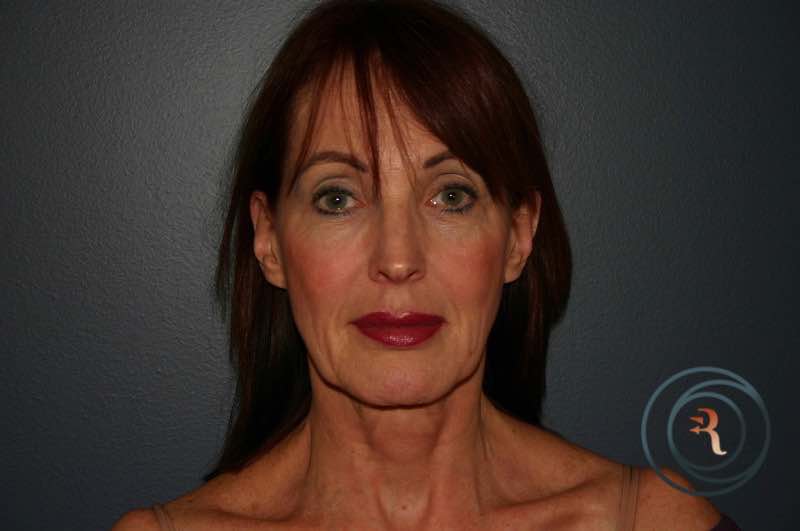


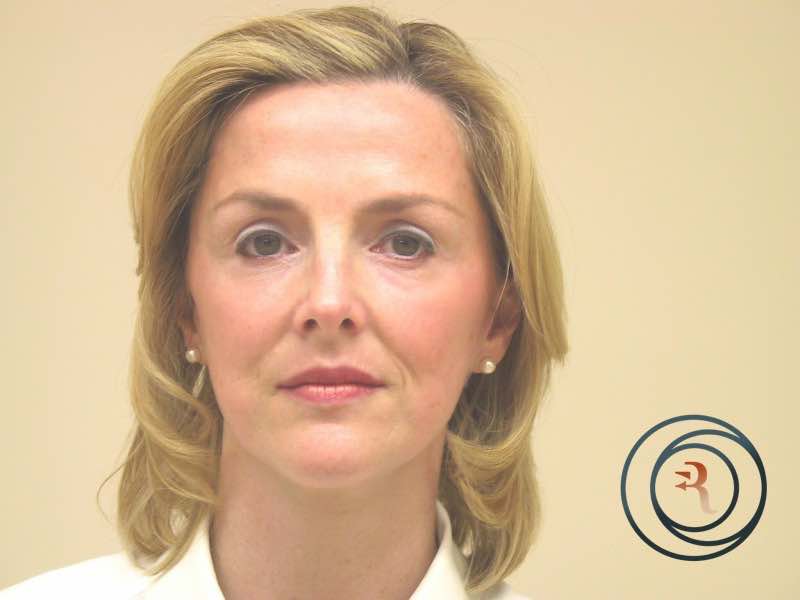
Both patients above were treated in Morristown, NJ under local anesthesia with light sedation. Jowling and lower-face descent were addressed surgically by repositioning the SMAS to its original anatomical position.
Questions to Ask Before Choosing a Treatment in North Jersey
For patients in Morristown, Summit, Chatham, Madison, Short Hills, Mendham, Bernardsville, Florham Park, or anywhere in Northern New Jersey who are weighing their options, a few questions are worth clarifying with any surgeon you consult:
- What degree of jowling and marionette line depth do I actually have, and at what point do you recommend surgery over fillers?
- If I do fillers now, how will that affect the outcome of a facelift later if I decide to pursue one?
- Do you perform facelifts under local anesthesia with sedation, or only under general anesthesia?
- If I opt for a facelift, would you also recommend fat grafting or a corner-of-mouth lift based on my anatomy?
- What are your results for patients my age and at my stage of facial aging?
A surgeon who sees jowls and immediately recommends fillers may be thinking about what is easiest to offer in the office, not what is best for the patient. A surgeon who sees mild early changes and immediately schedules a full facelift is not calibrating either. The right recommendation depends on honest assessment of the anatomy, how far the tissues have descended, how much volume has been lost, and what the patient’s goals and tolerance actually are.
Common Questions About Marionette Lines, Jowls & Facelift in New Jersey
What is the best treatment for sagging jowls and marionette lines?
For mild early changes, strategically placed dermal fillers can soften lines and reduce the contrast of small jowls. For moderate to severe descent, a facelift, particularly a deep plane or SMAS technique, is the gold standard. It repositions the tissues structurally rather than masking the descent. Fat grafting to the corners of the mouth or marionette area, and occasionally a corner-of-mouth lift, can complement the facelift for patients with very deep creases or downturned corners.
Is it better to get a facelift or fillers?
It depends on the severity of the changes. In the early stages, well-placed fillers can provide real improvement and delay the need for surgery. When jowls are clearly visible and the marionette lines are deep, a facelift produces results that fillers cannot replicate, and those results last 8 to 12 years or more. Attempting to correct moderate to severe jowling with repeated filler sessions tends to produce a heavy, unnatural lower face over time rather than a genuinely refreshed one.
How long does it take to recover from a jowl lift?
Most patients in Dr. Rafizadeh’s Morristown practice are presentable in public within 10 to 14 days. Bruising and swelling peak around days 3 to 5 and resolve substantially by the end of week two. Because Dr. Rafizadeh performs facelifts under local anesthesia with light sedation rather than general anesthesia, patients tend to recover faster and with less cognitive and physical fog than with deeper anesthetic approaches.
What is the average cost of a facelift in NJ?
In Northern New Jersey, a facelift typically ranges from roughly $8,000 to $18,000 or more, depending on the extent of the procedure (mini, lower, full, or deep plane), whether a neck lift or fat grafting is included, and the surgeon’s experience. A consultation with a board-certified plastic surgeon is the only reliable way to get an accurate estimate based on your specific anatomy and goals.
Should a 70 year old get a facelift?
Age alone is not a disqualifier. Patients in their late 60s and 70s routinely undergo facelift surgery with excellent results when they are in good general health. Dr. Rafizadeh performs all facial procedures under local anesthesia with light sedation, an approach that is meaningfully gentler for older patients than general anesthesia, and that results in faster mental and physical recovery.
What procedure takes 10 years off your face?
A deep plane facelift combined with fat grafting to restore lost volume is the most reliable way to achieve a meaningful reversal of visible facial age. When the structural tissues are repositioned and lost volume is replaced, patients achieve a rested, refreshed appearance without a pulled or windswept look. The goal is not to look dramatically different, it is to look like yourself from 10 years ago.
Can fillers eliminate jowls?
Fillers can reduce the visible contrast of early jowls by restoring volume in front of and behind the jowl, making the bulge appear less pronounced. However, they cannot remove excess skin, tighten descended SMAS tissue, or reposition the anatomy that causes jowling. For moderate to severe cases, fillers are a temporary cosmetic workaround, effective and appropriate for the right patient, but not a substitute for a structural surgical correction.
Sources & References
- Hamra ST. “The deep-plane rhytidectomy.” Plastic and Reconstructive Surgery. 1990;86(1):53–61. PubMed
- Rohrich RJ, Pessa JE. “The fat compartments of the face: anatomy and clinical implications for cosmetic surgery.” Plastic and Reconstructive Surgery. 2007;119(7):2219–2227. PubMed
- Mess SA, Nahai F. “Lower face rejuvenation with injections: Botox, Juvederm and Kybella.” Gland Surgery. 2017;6(Suppl 1):S56–S64. PMC
- American Society of Plastic Surgeons. “Facelift Surgery.” plasticsurgery.org
- Jacono AA, Rousso JJ. “The Minimal Access Deep Plane Extended Vertical Facelift.” Aesthetic Surgery Journal. 2021;41(6):629–644. PubMed
- Dr. Farhad Rafizadeh, MD FACS. Answer to “Is a Facelift the Only Answer for Marionette Lines and Jowls?” RealSelf Q&A
Related Reading From Dr. Rafizadeh’s Blog
Patients exploring lower-face rejuvenation options in Northern New Jersey may also find these articles useful:
- How Long Does a Facelift Last? Longevity and Maintenance in North Jersey
- Deep Plane Facelift in NJ — Dr. Rafizadeh’s Approach
- Facelift in Older Patients: What’s Needed in Northern New Jersey
- The Safest Anesthesia for Older Facelift Patients: Local Anesthesia With Sedation
- How to Make a Facelift Effective With a Quick Recovery in New Jersey
The Bottom Line
Marionette lines and jowls are two of the most common and emotionally significant signs of lower-face aging. Fillers have a real and appropriate role in early cases; they are fast, reversible, and require no downtime. But for patients with moderate or significant tissue descent — the majority of patients who present to Dr. Rafizadeh’s Morristown office in their late 50s and 60s — the structural correction that only a facelift provides is the approach that produces lasting, natural results. Fat grafting and a corner-of-mouth lift can refine what the facelift alone cannot fully address. And none of this requires general anesthesia, a prolonged hospital stay, or a long exile from social life.
If you are considering lower-face rejuvenation in Morristown, Summit, Chatham, Madison, Short Hills, or anywhere across Northern New Jersey, Dr. Rafizadeh is happy to assess your anatomy honestly during a consultation and walk you through the range of options appropriate for your specific situation.
Ready to schedule a consultation in Morristown, NJ?
Book a Consultation