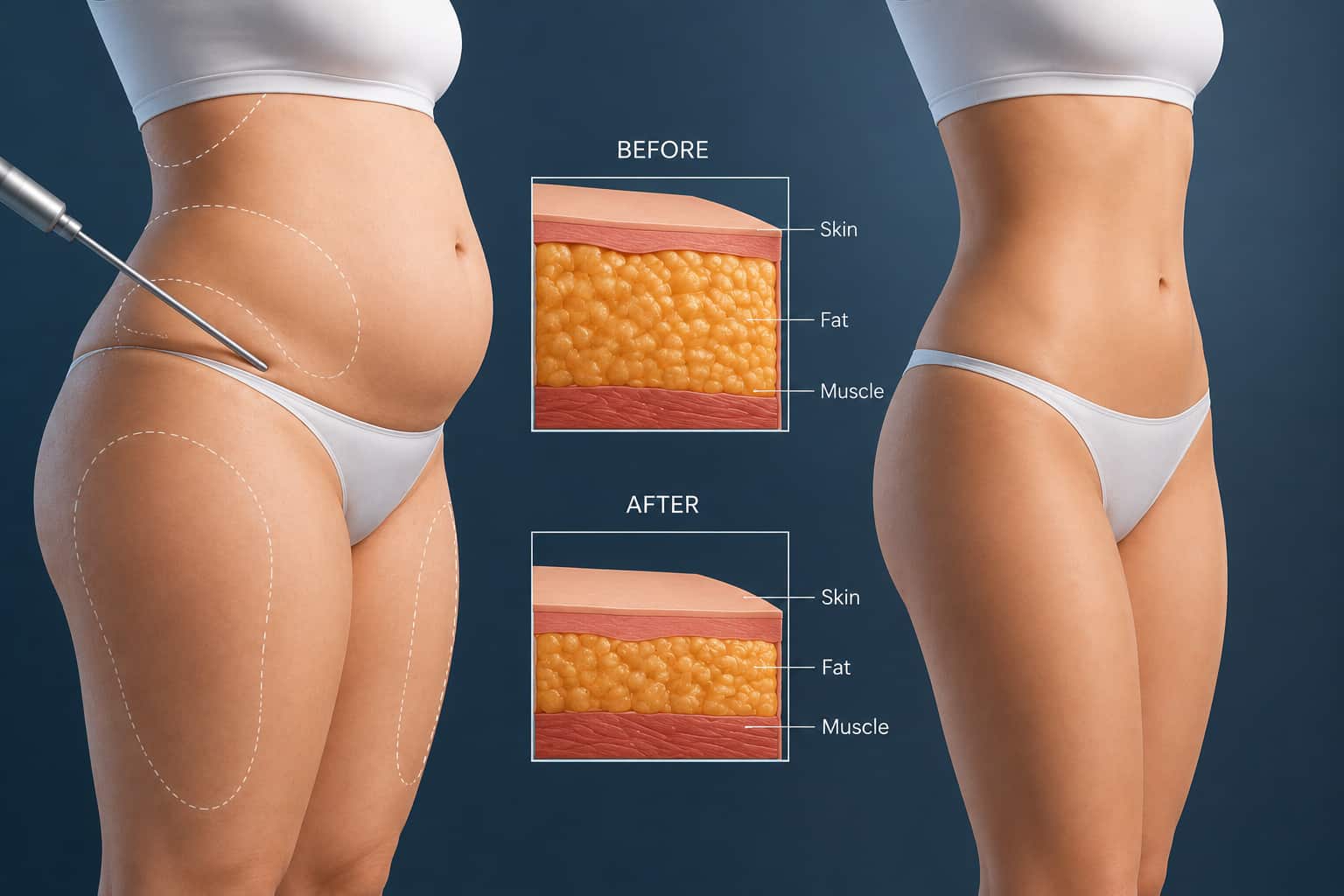
A patient came to Dr. Farhad Rafizadeh’s RealSelf Q&A with a concern that shows up in consultation rooms across Northern New Jersey every week:
“I was thinking about getting lipo done on my stomach and back, but I made the mistake of watching a liposuction procedure on one of those educational TV shows, and now I’m scared. All that hacking around and suctioning under the skin looked really risky and painful. Are there any alternatives to liposuction that will help me get rid of fat in those tricky areas?”
It is a question worth taking seriously — both the fear and the search for alternatives. Dr. Rafizadeh’s answer was direct:
The best alternative to liposuction is weight loss. Liposuction may appear barbaric, but it can be done with smaller cannulae and in a gentle way. It is more effective, safer, and with a better track record than any other procedure designed to remove fat.
That answer cuts to the core of how a 40-year surgical veteran in Morristown, NJ, thinks about body contouring. It is not dismissive of patient anxiety — it is honest about what works. If a patient has watched a TV surgeon work with heavy instruments on a deeply sedated patient and concluded that all liposuction looks like that, they have been given an inaccurate picture of the procedure. And if they have been told that CoolSculpting, ultrasound fat disruption, or injectable fat dissolvers are comparable alternatives, they have been given an equally inaccurate picture.
Why the TV Version of Liposuction Looks Nothing Like a Careful Surgeon’s Work
Educational television and surgical documentaries share a common problem: they select footage that is visually dramatic. Aggressive, high-volume liposuction cases — liters of fat removed from multiple areas in a single session — make for compelling video. The same kind of precise, low-trauma single-area liposuction that the majority of North Jersey patients actually undergo does not look like that at all.
In Dr. Rafizadeh’s practice, liposuction uses small, thin cannulas that create far less tissue disruption than what patients typically imagine from TV. The tumescent fluid technique — which involves injecting a dilute solution of local anesthetic and epinephrine into the treatment area before any suctioning begins — substantially reduces blood loss, bruising, and discomfort both during and after the procedure. The patient is comfortable. The movements are methodical and deliberate, not aggressive. Recovery is faster than patients expect.
The fear is understandable. But the fear is based on a misrepresentation of what most patients actually experience.
The Honest Assessment of Non-Surgical Fat Removal
For North Jersey patients who genuinely want to avoid surgery, it is worth understanding what non-surgical fat reduction can actually accomplish — and what it cannot.
CoolSculpting (Cryolipolysis)
CoolSculpting uses controlled cooling to damage fat cells, which the body then gradually eliminates over two to three months. The procedure requires no incisions and no recovery time. It is the most clinically validated non-surgical fat reduction technology on the market, with a large body of published research behind it.
The limitation is the magnitude of the result. Clinical studies consistently show a 20–25% reduction in the fat layer within the treated area per session. For a patient who is very close to their aesthetic goal and has a small, well-defined deposit — a modest lower abdomen roll, a small bra bulge, mild submental fullness — that level of reduction may be meaningful. For a patient with significant love handles, a prominent belly, or post-pregnancy body changes, it will produce a result that is underwhelming relative to the investment of time and money.
Multiple sessions are often required to achieve noticeable improvement. The cost of two to four CoolSculpting sessions on a single area often approaches or exceeds the cost of liposuction on that same area — but with a fraction of the result.
SculpSure, TruSculpt, and Radiofrequency/Laser Technologies
Laser lipolysis and radiofrequency-based fat treatments use heat to damage fat cells rather than cold. The clinical results are similar to CoolSculpting in magnitude — incremental improvement in patients who start close to their goal. These technologies are not meaningfully better than cryolipolysis for most patients, and the long-term data is thinner.
Kybella (Deoxycholic Acid Injections)
Kybella is an injectable fat dissolver approved specifically for submental (under-chin) fat. It works, but it requires multiple treatment sessions, carries a meaningful risk of swelling and discomfort, and in the neck region is largely outcompeted by the combination of chin liposuction and neck lift surgery for patients whose anatomy warrants a surgical approach. For a genuinely small chin fat pad in a young patient with excellent skin tone, it has a role. For everything else, it is not a comparable substitute.
Body Contouring Devices: EMSCULPT, Vanquish, Ultrasound
A range of devices marketed under names like EMSCULPT (muscle stimulation), Vanquish (radiofrequency heating at a distance), and various ultrasound platforms make claims that range from mildly supported to substantially unsupported by peer-reviewed literature. The honest summary is that none of these technologies come close to surgical liposuction for fat removal, and most are most appropriate for patients who are already at or near a healthy weight and looking for mild toning or subtle refinement.
When Non-Surgical Fat Reduction Is the Right Choice
Dr. Rafizadeh is not dismissive of non-surgical options categorically. They have a place — just a much narrower place than their marketing suggests.
Non-surgical fat reduction makes sense for:
- Patients who are genuinely close to their goal and have one very small, isolated fat deposit they want modestly reduced.
- Patients who, for medical or personal reasons, cannot or prefer not to have any procedure involving incisions.
- Patients who have already had liposuction and want light maintenance on a small recurrent deposit years later.
- Very young patients with excellent skin elasticity and minimal fat to address, for whom the downtime of even a brief surgical procedure is genuinely prohibitive.
For anyone outside this narrow band — anyone who watches a friend’s liposuction result and thinks “I want that” — non-surgical alternatives will not get them to the same place.
What Liposuction in a Careful Surgeon’s Hands Actually Looks Like
For the right patient, liposuction remains one of the highest-satisfaction body contouring procedures in plastic surgery. Here is what the process looks like in Dr. Rafizadeh’s Morristown office for a typical single or two-area case:
- Anesthesia: Most cases are performed under light IV sedation (twilight) with local tumescent anesthesia injected directly into the treatment area. No general anesthesia, no breathing tube. The patient is relaxed and comfortable throughout.
- Incisions: Small entry points — typically 3 to 5mm — placed in natural skin folds or inconspicuous locations. No significant scarring.
- Cannula work: Thin cannulas (3–4mm) are used in a deliberate, fan-pattern technique that sculpts the area with precision. The goal is smooth, natural contouring — not maximum fat volume removal.
- Recovery: Most patients are mobile within hours, driving within several days, and back to light activity within a week. A compression garment is worn for several weeks to support the healing tissue.
- Timeline: Initial results are visible within a few weeks as swelling subsides. Final results are typically apparent at three to four months.
The gap between what patients fear from TV and what they actually experience in a careful surgeon’s office is considerable. Patients who have had liposuction with Dr. Rafizadeh consistently describe recovery as significantly easier than they anticipated.
What the Research Says About Long-Term Liposuction Results
The published literature on liposuction outcomes is consistently reassuring. A large multicenter retrospective study published in Aesthetic Surgery Journal found a complication rate below 0.5% in elective liposuction cases performed by board-certified plastic surgeons in accredited outpatient facilities — lower than the complication rates of many common dental procedures. Long-term patient satisfaction rates in the literature are high, with most patients reporting maintained results and continued satisfaction at follow-up intervals of five years and beyond.
The critical variable is patient selection: the patients who do best are those with good skin tone, stable weight, and localized fat deposits. Those who fare less well are patients with significant skin laxity, who may be better candidates for a tummy tuck that addresses both fat and loose skin simultaneously, or a combined approach.
Patient Before & After: Liposuction Results in Morristown
The cases below are representative of liposuction results from Dr. Rafizadeh’s Morristown practice. Both were performed under light sedation with tumescent technique, without general anesthesia.
Patient Before & After
View Full Gallery →


Both patients above had liposuction performed in Morristown under light sedation with tumescent technique — no general anesthesia, and a return to normal activities within one week.
Questions to Ask Before Committing to Any Fat Reduction Procedure
Whether you are considering surgery or a non-surgical option in Morristown, Summit, Chatham, Madison, Short Hills, Bernards Township, or anywhere across Northern New Jersey, these questions are worth asking any provider:
- What percentage of fat reduction should I realistically expect from this procedure in my specific area?
- How many sessions or treatments will I likely need to achieve that result, and what is the total cost?
- What is the peer-reviewed evidence for this technology at the volume I want to treat?
- What does the before-and-after gallery for your patients who started with anatomy similar to mine actually show?
- If I am not satisfied with the result, what are my options?
The answers to these questions, honestly given, will clarify whether a non-surgical option is genuinely appropriate for your goals or whether a surgical conversation makes more sense. Dr. Rafizadeh is explicit in consultations: if a patient’s goal is achievable non-surgically, he will say so. If it is not, the consultation is the right time to find out — not after several rounds of CoolSculpting.
Common Questions Patients Search About Liposuction & Non-Surgical Alternatives
Should I get lipo or CoolSculpting?
For most patients who want a meaningful, visible change in body contour, liposuction delivers more complete results in a single procedure. CoolSculpting reduces a treated fat layer by about 20–25% per session — useful for very small, isolated deposits in patients already close to their goal. Liposuction removes 50–70% of targeted fat with precise contouring, often in a single outpatient session. The right choice depends on the magnitude of the change you want, your skin tone, and your willingness to undergo a brief surgical procedure.
Does liposuction really work to lose belly fat?
Yes — though it is important to understand that liposuction is a contouring tool, not a weight-loss procedure. It permanently removes targeted fat cells from the abdomen, flanks, and lower back, producing a measurably improved silhouette. The best candidates have good skin elasticity and localized fat deposits that resist diet and exercise. Patients with significant abdominal skin laxity often benefit more from a tummy tuck, which addresses both the fat and the loose skin simultaneously.
What happens 10 years after liposuction?
The fat cells removed during liposuction do not regenerate — they are permanently gone. Patients who maintain a stable weight typically enjoy durable results well beyond 10 years. If significant weight is gained after surgery, remaining fat cells in the treated and untreated areas can expand, partially diminishing the original improvement. The long-term results of liposuction are directly tied to the patient’s lifestyle after surgery.
How much does liposuction cost in NJ?
Liposuction costs in New Jersey vary by the number of areas treated, the surgeon’s experience, facility fees, and anesthesia. A single-area procedure in North Jersey typically ranges from $3,500 to $7,000 all-in, with multi-area cases ranging higher. At Dr. Rafizadeh’s Morristown office, patients receive a personalized estimate during consultation based on their specific anatomy and goals. A $100 consultation fee is credited toward any procedure booked.
Is liposuction painful?
Liposuction is performed under anesthesia, so there is no pain during the procedure. Post-operatively, most patients describe soreness and tightness similar to intense muscle soreness — not sharp pain. Most patients manage comfortably with prescription medication for two to three days and then over-the-counter options. Significant pain is uncommon when small cannulas and tumescent technique are used. Most patients are surprised by how manageable the recovery is relative to their expectations.
Is CoolSculpting effective for the stomach?
CoolSculpting can modestly reduce a small, isolated abdominal fat deposit — typically by 20–25% per treatment cycle, often requiring multiple sessions. For patients with significant abdominal volume, prominent love handles, or post-pregnancy body changes, the degree of improvement will likely be underwhelming relative to the cost and time invested. Liposuction produces more complete and visible abdominal contouring in a single procedure. A consultation with a board-certified plastic surgeon helps clarify which approach is actually appropriate for your anatomy.
Is liposuction permanent?
The fat cells removed by liposuction are permanently gone — the body cannot regenerate fat cells in adulthood. The contour improvement is therefore durable, and in patients who maintain a stable weight, it is often permanent. However, remaining fat cells (in both treated and untreated areas) can still expand with weight gain. The permanence of liposuction results is directly tied to the patient’s post-surgical lifestyle.
Sources & References
- American Society of Plastic Surgeons. 2023 Plastic Surgery Statistics Report. plasticsurgery.org
- Manstein D, Laubach H, Watanabe K, et al. “Selective cryolysis: a novel method of non-invasive fat removal.” Lasers Surg Med. 2008;40(9):595–604. PubMed
- Stevens WG, Vath SD, Stoker DA. “Overcoming ‘Placebo Surgery’: Controlled Studies in Liposuction—Fact or Fiction?” Aesthet Surg J. 2003;23(2):93–97. PubMed
- American Society for Aesthetic Plastic Surgery (ASAPS). Liposuction Patient Safety. surgery.org
- Klein JA. “Tumescent technique for regional anesthesia permits lidocaine doses of 35 mg/kg for liposuction.” J Dermatol Surg Oncol. 1990;16(3):248–263. PubMed
- Dr. Farhad Rafizadeh, MD. RealSelf expert answer: “Liposuction Alternatives — What Are the Options?” realself.com
Related Reading From Dr. Rafizadeh’s Blog
North Jersey patients researching body contouring options may also find these posts helpful:
- Post-Liposuction Fibrosis & Skin Dimpling: When Fat Grafting Is the Fix
- Does Liposuction Create Tunnels Under the Skin? What Really Happens
- Ozempic and Plastic Surgery: The Pros, Cons, and Why Tummy Tucks Are Surging in NJ
- Why Do I Need a Mons Pubis Lift With My Tummy Tuck? Monsplasty Explained — North Jersey
Bottom Line
The patient who scared themselves watching a TV liposuction and came to RealSelf looking for alternatives is asking a legitimate question. The honest answer is that the alternatives — CoolSculpting, radiofrequency devices, injectable fat dissolvers — have a real but narrow role. For the patient who wants the kind of change that shows in before-and-after photos and in how their clothes fit, liposuction remains what it has been for decades: the most effective, safest, and best-studied fat removal procedure available.
The surgical version of liposuction that patients encounter in a careful surgeon’s hands in Morristown looks nothing like what plays on TV. If fear of the procedure is what is holding you back, a consultation with Dr. Rafizadeh is the right first step — not to be talked into surgery, but to have an honest conversation about what your options actually are and what each of them can realistically achieve.
If you are considering liposuction, a tummy tuck, or any body contouring procedure in Morristown, Summit, Chatham, Madison, Short Hills, or the greater Northern New Jersey area, Dr. Rafizadeh welcomes consultations at his 101 Madison Avenue office in Morristown.
Ready to schedule a consultation in Morristown, NJ?
Book a Consultation