
One of the questions Dr. Farhad Rafizadeh receives regularly — both in his Morristown consultation room and on his RealSelf Q&A page — comes from patients who are a few weeks out from their facelift and are alarmed by something they see in the mirror: their eyes look uneven, or the outer corners appear pulled and stretched in a way that wasn’t there before.
“My eyes are uneven and stretched after a facelift. Should I be concerned? Photos attached.”
It is an understandable concern. You have just been through surgery, you are watching your face carefully, and something does not look quite right. The reassuring news, which Dr. Rafizadeh explains to his Northern New Jersey facelift patients at every follow-up visit: asymmetric swelling and a temporarily altered appearance around the eyes are almost never a sign that something went wrong. They are a normal, well-documented feature of facelift healing.
Dr. Rafizadeh’s Direct Answer
It takes at least four to six weeks for all the swelling to go away so that you can judge the final result. At this time you should be in close communication with your surgeon. Asymmetric swelling is normal — one side almost always heals differently from the other, and the tissues near the outer corner of the eye are often among the last to fully settle.
That answer is worth unpacking in detail, because the physiology behind it is exactly what makes early facelift recovery so counterintuitive. Patients who understand what is happening biologically worry far less during the first six weeks. And patients who know specifically which signs would warrant a call to their surgeon can rest easy when none of those signs are present.
Why Asymmetric Swelling Is Expected After a Facelift
The face is not a perfectly symmetrical structure even before surgery. Blood flow, lymphatic drainage, soft tissue thickness, and bone prominence all differ from one side to the other. When surgery is performed — even by the most experienced hand — both sides respond to the same incisions and tissue manipulation in their own individual way. Add to this the fact that most people sleep preferentially on one side, which causes post-operative fluid to settle differently, and asymmetric healing becomes essentially inevitable during the recovery period.
For patients who have had their facelift combined with other procedures — a brow lift, eyelid surgery (blepharoplasty), or fat grafting — there are additional layers of tissue that are simultaneously healing on their own timelines. The eye area, in particular, tends to hold swelling longer than the mid-face or neck.
The Week-by-Week Facelift Recovery Timeline
Northern New Jersey patients planning a facelift in Morristown consistently tell Dr. Rafizadeh that having a clear, realistic week-by-week picture of recovery reduced their anxiety dramatically. Here is what to expect:
Swelling and bruising are at their most dramatic. The face will appear significantly puffy, often asymmetrically. Dressings or a compression garment are in place. This is the period when the mirror is most alarming and least informative — the final result is entirely hidden beneath acute surgical swelling.
Swelling peaks and begins to decline. Bruising often looks worse before it looks better as it migrates downward (a normal gravitational process). Stitches or staples are typically removed. Patients begin to see hints of their eventual result.
The most visible bruising fades significantly. Social swelling — the swelling detectable by others at a normal conversational distance — begins to resolve. Many patients return to non-public activities at home. Asymmetry between the two sides remains common.
This is the window Dr. Rafizadeh refers to when he says “at least four to six weeks.” Most patients are comfortable returning to social activities. The eye area, lower cheek, and neck are visibly improved but may still carry some residual fullness. Asymmetry typically narrows substantially during this period.
Deep tissue swelling continues to resolve. Patients who were still bothered by lingering tightness or subtle asymmetry at six weeks usually see significant normalization by this point. The face begins to look, move, and feel much more like itself.
Final results are visible. Scars have continued to mature and fade. Residual numbness around the ears and along the jawline — a normal consequence of nerves regenerating — resolves for most patients in this window. The six-month mark is when photographs reliably capture the full outcome.
Why the Eye Area Is the Last to Settle
When a facelift is performed, the incisions run from the hairline above the ear, around the ear, and behind it into the scalp. Tissue is elevated from the face and repositioned. Even when the eyelids themselves are not directly operated on, the temporal (outer) area of the eye — the lateral canthus and lower eyelid region — lies adjacent to this zone of dissection.
The lower eyelid skin is among the thinnest in the body, and thin skin retains and displays swelling more visibly than thicker tissue. Fluid that accumulates in the cheek and temple during the early post-operative period tends to drain slowly, partly because the lymphatic channels in this area were disrupted by the surgery. This is physiologically normal and self-resolving. It does not require intervention.
Patients who have combined their facelift with lower blepharoplasty — in which the lower eyelid fat pads are addressed directly — may experience more prolonged lower eyelid swelling. This is also expected and resolves with time.
What Does “Stretched” Look Like — And Why Does It Happen?
A stretched or widened appearance at the outer corner of the eye is one of the most frequently reported early post-operative observations from facelift patients. In almost every case, what the patient is observing is not a permanently altered eye shape. It is swelling in the temple and lateral orbital region that pulls gently on the outer corner of the eyelid, making it appear slightly more open or stretched than usual.
This effect is transient. As the swelling in the temporal area decreases over the first four to eight weeks, the outer corner of the eyelid returns to its pre-operative position and appearance. Dr. Rafizadeh advises his Morristown and Northern New Jersey patients not to evaluate the eye area at all before the four-week visit — and if any question arises, to bring photographs to the appointment rather than to draw conclusions from the mirror alone.
Dr. Rafizadeh pioneered the deep plane facelift in the New York–New Jersey region. See his approach, recovery details, and real results.
Explore Facelift Surgery or call (973) 267-0928Staying in Close Communication With Your Surgeon
Dr. Rafizadeh’s RealSelf answer emphasizes not only patience but communication: “at this time you should be in close communication with your surgeon.” This matters because the early post-operative period is when questions multiply fastest and anxiety peaks. A board-certified plastic surgeon with a strong recovery protocol will have you in the office at one week, two to three weeks, six weeks, and three months — with open lines between those appointments.
Patients who are concerned about what they are seeing should always call the office rather than consult search engines or online forums, where the range of outcomes described can be alarming and rarely applies to a well-performed facelift by an experienced surgeon. If something doesn’t feel right, the call costs nothing and the reassurance is worth everything.
What the Result Looks Like After Full Recovery
View Full Gallery →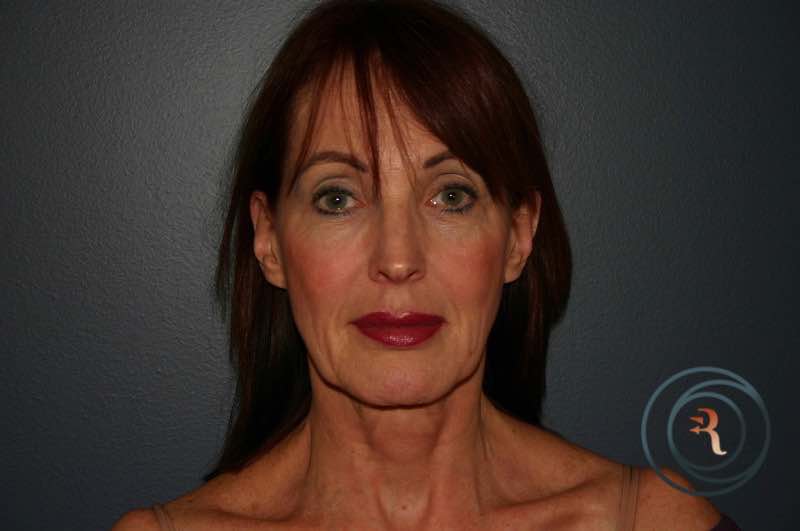


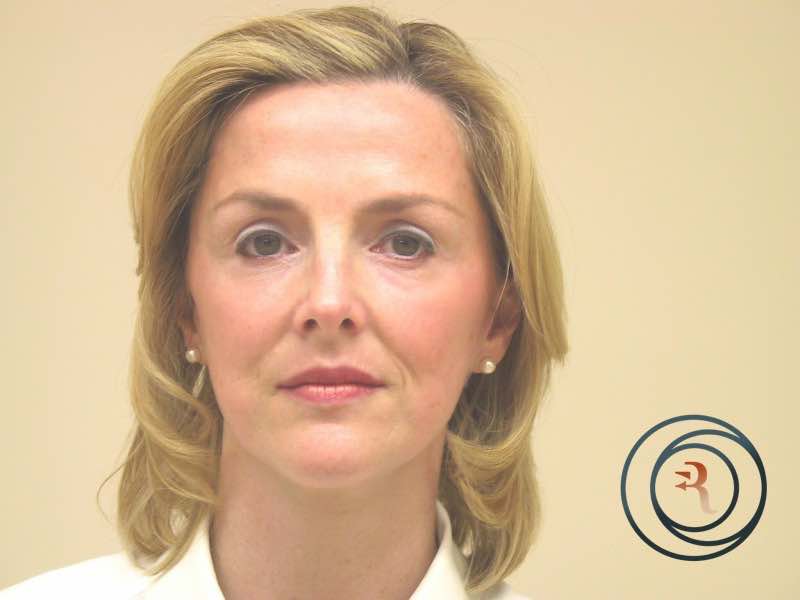
Both of these results were photographed after full recovery. During the first six weeks, both patients experienced the asymmetric swelling and subtle changes around the eyes that are described in this article. Final symmetry and natural contour emerged with time — not intervention.
Warning Signs That Actually Warrant a Call to Your Surgeon
Asymmetric swelling on its own, particularly when it is gradually improving over days and weeks, is not a warning sign. The signs that do warrant a prompt call — or in some cases, an emergency visit — are different in character:
Sudden, rapidly increasing swelling on one side — particularly if it appears in the first 24–72 hours and is significantly larger than the other side. This is the profile of a hematoma (blood collection beneath the skin), which is the most common early facelift complication and requires prompt drainage.
Warmth, redness, or a feeling of heat in the surgical area after the first week, which can indicate infection.
Fever above 101°F / 38.3°C more than 48 hours after surgery.
Sudden new weakness in the face — difficulty closing the eye, an asymmetric smile, or drooping of one side of the mouth. These are signs that could suggest nerve involvement and should be evaluated immediately.
Drainage from incisions that is cloudy, foul-smelling, or copious after the first two days.
Any concern you cannot resolve by looking at it for 24 hours. When in doubt, call.
Practical Tips for Reducing Swelling During Facelift Recovery in North Jersey
While the timeline is primarily biology-driven and patience is the most important factor, there are practical steps that reduce swelling meaningfully during facelift recovery:
- Head elevation: Sleep with your head elevated at 30–45 degrees for the first two weeks. This single step does more to reduce facial swelling than almost anything else.
- Gentle walking: Short walks beginning the day after surgery promote circulation and lymphatic drainage without elevating blood pressure enough to increase swelling.
- Cold compresses: Cool (not ice-cold) compresses applied gently to the cheeks and temples in the first 48 hours help with fluid management.
- Avoid sodium: A low-sodium diet in the first two weeks reduces fluid retention throughout the body, including the face.
- No caffeine or alcohol for at least one to two weeks. Both can raise blood pressure and interfere with healing.
- No strenuous exercise for four to six weeks. Elevated heart rate drives blood pressure up and prolongs swelling.
- Sun protection: UV exposure to healing incisions causes hyperpigmentation. Cover or use SPF 50+ on incision lines for the first six months.
Questions You Should Ask Any Facelift Surgeon in North Jersey
If you are researching a facelift in Morristown, Summit, Chatham, Madison, Short Hills, Bernardsville, Mendham, Florham Park, or across Northern New Jersey, the recovery conversation is as important as the surgical plan itself. Useful questions to ask at your consultation:
- What is your typical follow-up schedule in the first six weeks, and who do I call if something concerns me between visits?
- How do you manage asymmetric swelling, and at what point would you be concerned about what I’m seeing?
- What is your hematoma rate, and what is the protocol if one occurs?
- How long, specifically, should I plan to be away from work and social activities?
- Will I have numbness around my ears, and when does that typically resolve?
- At what point after surgery can I realistically evaluate my final result?
A surgeon who has spent decades performing facelifts in Northern New Jersey — and who has answered these questions hundreds of times — will give you specific, experience-grounded answers. Dr. Rafizadeh has been in practice in Morristown since 1984 and is board certified by the American Board of Plastic Surgery. Out-of-town patients traveling from Manhattan, Bergen County, Essex County, and Westchester can review the out-of-town patient page for logistics and planning information.
Common Questions Patients Search About Facelift Swelling & Recovery
How long is the face swollen after a facelift?
Swelling peaks between days two and four and begins declining meaningfully by the end of the first week. Most social swelling — the puffiness others can detect at normal conversation distance — resolves within three to four weeks. Residual deep tissue swelling, which only the patient and surgeon notice, can take three to six months to fully clear. Final results are best evaluated at the six-month mark.
What is asymmetrical healing after facelift?
Asymmetrical healing means that the two sides of the face recover at different rates after surgery. It is caused by natural differences in tissue density, blood flow, and lymphatic drainage between the two sides — differences that exist before surgery and are simply revealed by the healing process. One side may be more swollen, more bruised, or feel more tight than the other. This almost always equalizes by the four-to-six-week mark and is rarely a sign of any surgical problem.
Can uneven eyes go back to normal after a facelift?
Yes — in virtually all cases, the answer is yes. Uneven or stretched-looking eyes after a facelift are nearly always caused by asymmetric swelling in the temple and lateral orbital region, not by a change in the actual anatomy of the eye. As the swelling resolves over four to eight weeks, the outer corner of the eyelid returns to its natural position. Dr. Rafizadeh advises patients not to evaluate the eye area before the six-week visit.
Can a facelift change your eye shape?
A well-planned facelift is not designed to change the shape of the eye. However, because the incision runs near the outer corner of the eye, temporary swelling in that area can make the eye look more open, stretched, or asymmetric during recovery. This effect resolves as the tissue settles. If a patient wants a permanent, intentional change in eye shape — a lifted upper lid or reduced lower eyelid fullness — that is achieved with a blepharoplasty, which can be done at the same time as a facelift.
Does walking help swelling after a facelift?
Yes. Gentle walking starting the day after surgery promotes circulation, keeps blood pressure stable, and supports lymphatic drainage — all of which help the body clear post-surgical fluid faster. Dr. Rafizadeh encourages short daily walks from day one of recovery. The key qualifier is “gentle”: brisk walking, hiking, cycling, or anything that significantly raises heart rate should be avoided for four to six weeks, as elevated blood pressure prolongs swelling.
Why no caffeine after facelift?
Caffeine is a vasoconstrictor that also raises blood pressure transiently, both of which can interfere with optimal healing in the very early post-operative period. In the first one to two weeks, keeping blood pressure calm and circulation steady is the goal. After the first two weeks, moderate caffeine intake is generally fine. Patients who are heavy coffee or tea drinkers should taper gradually before surgery to avoid withdrawal headaches during the first few post-operative days.
What is the average cost of a facelift in NJ?
Facelift costs in New Jersey depend on the technique (SMAS vs. deep plane), the extent of neck work, facility fees, and anesthesia. All-inclusive costs in Northern New Jersey typically range from $12,000 to $25,000 or more for a complete facelift and neck lift. Dr. Rafizadeh provides personalized quotes during consultation at his Morristown office — (973) 267-0928 — based on your specific anatomy and goals.
Is swelling and asymmetry normal after a facelift?
Yes. Asymmetric swelling is one of the most common findings in the first four to six weeks after facelift surgery. Each side of the face has its own blood supply, lymphatic drainage pattern, and tissue characteristics, so one side almost always heals faster than the other. This is not a sign that the surgery went wrong. It is a sign that healing is underway. The asymmetry typically resolves on its own as swelling decreases.
How long does swelling last after a facelift?
Most of the visible swelling after a facelift resolves within four to six weeks. The majority of patients feel comfortable returning to social activities within two to three weeks. However, deep tissue swelling - which only you and your surgeon will notice - can persist for three to six months. Final results are best judged at the six-month mark.
Why do my eyes look stretched or pulled after a facelift?
In the first few weeks after facelift surgery, swelling near the outer corners of the eyes and in the lower eyelid region can create a temporarily stretched or widened appearance. This is related to post-surgical tissue swelling, not to the surgical technique itself. As the swelling resolves - typically over four to eight weeks - the eye shape returns to its natural appearance.
When should I be concerned about asymmetry after a facelift?
You should contact your surgeon if swelling suddenly increases on one side, becomes painful, feels warm to the touch, is accompanied by redness or fever, or if you notice any new weakness in your facial muscles. Sudden unilateral swelling that comes on quickly can be a sign of hematoma (blood collection) and requires prompt evaluation. Gradual, stable asymmetry that is slowly improving is almost always normal.
Can uneven eyes go back to normal after facelift?
Yes. In virtually all cases, uneven or stretched-looking eyes after a facelift are caused by asymmetric swelling and resolve completely as the swelling subsides. Dr. Rafizadeh advises patients not to evaluate their final eye appearance before six weeks post-operatively, and in some cases, the eyelid region can take three to four months to fully settle.
Sources & References
- American Society of Plastic Surgeons. “Your Facelift Recovery Explained from Day 1 to Day 30.” plasticsurgery.org
- Shiffman MA, Di Giuseppe A. “Complications in Facelift Surgery.” Facial Plastic Surgery Clinics of North America. 2013;21(4):551–558. facialplastic.theclinics.com
- Davison SP, Swanson M, Sher SR. “Evolution of Superficial Muscular Aponeurotic System Facelift Techniques: A Comprehensive Systematic Review of Complications and Outcomes.” PMC / Aesthetic Surgery Journal. 2024. PubMed Central
- American Board of Plastic Surgery. Verification of Board Certification — Dr. Farhad Rafizadeh. abplasticsurgery.org
- RealSelf Q&A. “My eyes are uneven and stretched after a facelift, should I be concerned?” realself.com
Related Reading From Dr. Rafizadeh’s Blog
- How Long After a Facelift Can I Exercise? — Northern New Jersey
- How to Make a Facelift Effective With a Quick Recovery in New Jersey
- Deep Plane Facelift in NJ — Dr. Rafizadeh’s Approach
- Facelift in Older Patients: What’s Needed in Northern New Jersey
- The Safest Anesthesia for Older Patients: Facelift Without Dementia Risk
- How Long Does a Facelift Last? The Three T’s That Determine Your Results
Bottom Line
Uneven eyes and a stretched appearance after a facelift are among the most common things patients notice in the first four to six weeks of recovery — and among the most reliably self-resolving. The biology of healing is asymmetric by nature. The face is not a uniform structure, and it does not repair itself uniformly.
What matters in the early weeks is not what the mirror shows, but what the trend line shows: gradual, steady improvement from one week to the next. If you are seeing that — less bruising, less puffiness, more recognizable contour returning week by week — you are healing exactly as expected.
If you are considering a facelift, eyelid surgery, brow lift, or any combination in Morristown, Summit, Chatham, Madison, Short Hills, or anywhere across Northern New Jersey, Dr. Rafizadeh is happy to walk through your specific goals, anatomy, and recovery expectations during a consultation.
Questions about facelift recovery? Schedule a consultation in Morristown, NJ.
Book a Consultation