
A recurring question on Dr. Farhad Rafizadeh’s RealSelf Q&A page — and one he hears often in his Morristown consultation room — comes from women who don’t want to be larger, they want to be fuller on top. The version below, from a patient in Essex Fells, NJ, captures the situation almost perfectly.
“I had a breast reduction and lift a few years ago and ended up smaller, but flat on top with no upper fullness. I want perkier breasts and some cleavage back — without going to implants. I also have raised scars from the first surgery that never fully healed. What are my options?”
This is one of the most satisfying problems in breast surgery to solve, because the answer is almost always yes — and yes without an implant. The key is understanding what “upper pole fullness” really is, which of your own tissues can be used to rebuild it, and how to handle the scar history that a revision patient brings to the table.
Dr. Rafizadeh’s Short Answer
A lift restores the shape and lifts the nipple, but a lift alone gives a soft, natural slope — not a rounded shelf on top. To put fullness back into the upper pole without an implant, I use the patient’s own tissue: an auto-augmentation lift that repositions the lower-pole tissue higher, and fat grafting to refine the cleavage and upper roundness. In a revision after a reduction, this is frequently the ideal solution. The scars need a careful plan, but raised scars are manageable — we work within the old incisions and treat them aggressively.
In other words: the implant is not the only way to get fullness on top, and for a woman who is happy with her size and simply wants a perkier, more youthful shape, it is often the wrong way.
What “Upper Pole Fullness” Actually Means
The breast is divided, conceptually, into an upper pole (above the nipple) and a lower pole (below it). In a youthful breast, the upper pole has a gentle, rounded fullness and most of the volume sits at or just above the nipple line. That fullness is what creates cleavage in a bra and a lifted look in a fitted top.
As breasts age, deflate after weight loss or breastfeeding, or settle after a previous reduction, that volume drifts downward. The nipple may stay put while the tissue below it sags, or the whole breast may simply “bottom out.” The upper pole goes flat or hollow. The patient looks — and feels — deflated on top, even if her overall size hasn’t changed much. Restoring upper pole fullness is about moving or adding volume back to that upper zone, not about making the breast bigger.
Implant-Free Ways to Rebuild the Upper Pole
1. The Lift Itself (Mastopexy)
A breast lift removes excess skin, re-tightens the envelope, and raises the nipple to a more youthful position. By tightening and re-supporting the breast, a lift redistributes some volume upward and immediately makes the breast look perkier. For a patient whose main complaint is sag, a well-designed lift may be all that’s needed. But a conventional lift produces a soft, sloping upper pole — not a pronounced, rounded one.
2. Auto-Augmentation Mastopexy
This is the technique that separates a routine lift from a fullness-restoring lift. Instead of discarding lower-pole tissue, the surgeon preserves it, folds it on itself, and anchors it higher on the chest wall — effectively using your own tissue as a built-in “implant.” The skin envelope is then tightened over the new, fuller shape. Because the volume is yours, the result feels completely natural and there is no device to maintain. Auto-augmentation works best when there is still reasonable breast tissue to redistribute, which is exactly the situation for many revision-after-reduction patients.
3. Fat Transfer (Fat Grafting)
For the finishing touch — cleavage and that last bit of upper roundness — fat transfer is ideal. Fat is harvested by gentle liposuction from the abdomen, flanks, or thighs, purified, and injected in small amounts into the upper pole and cleavage. As a bonus, the donor area is contoured at the same time. The realistic gain is about half a cup to a full cup per session, since some grafted fat is naturally reabsorbed over the first few months. Fat transfer is a refinement tool, not a size-increase tool — and paired with a lift, it’s a powerful one.
In practice, Dr. Rafizadeh frequently combines all three in a single operation: the lift sets the position, the auto-augmentation builds the core upper fullness, and fat grafting refines the cleavage. The result is a perkier, fuller, natural breast — with no implant.
What This Looks Like in Real Patients
The cases below are Morristown breast lift patients. They illustrate the shift these techniques create — a lower, deflated breast repositioned into a higher, rounder, more youthful shape using the patient’s own tissue.
Patient Before & After
View Full Gallery →
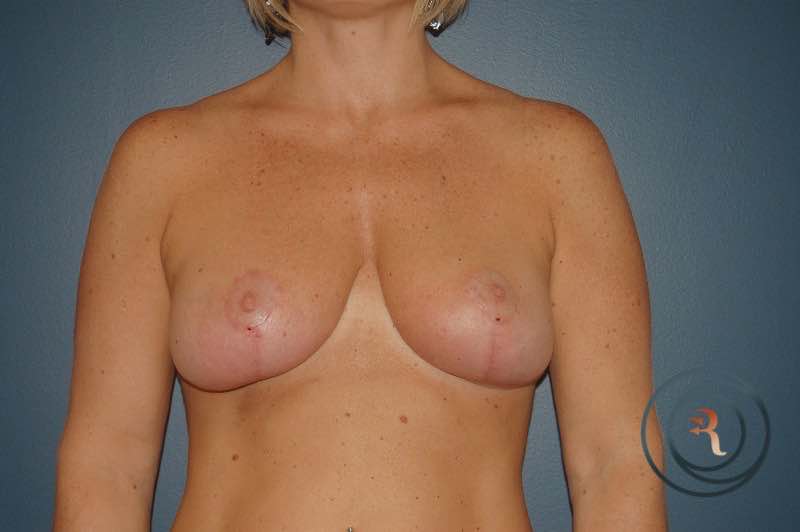
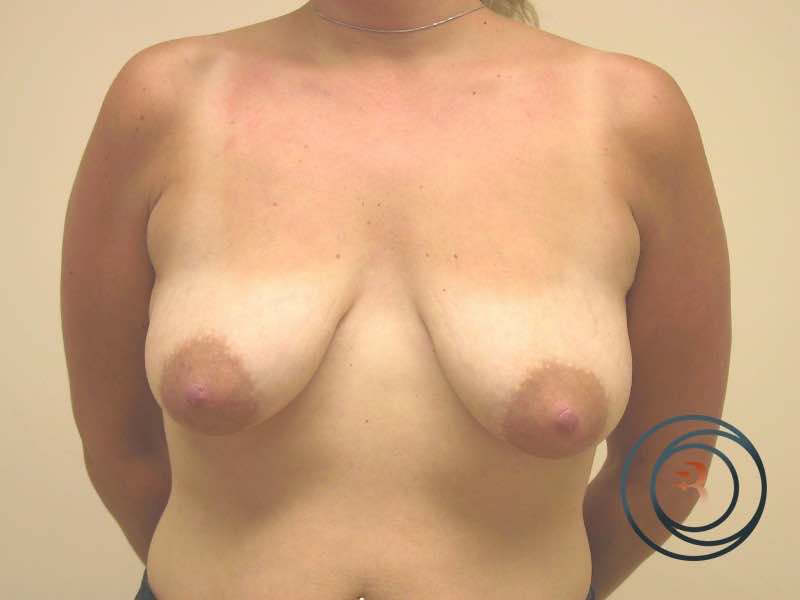
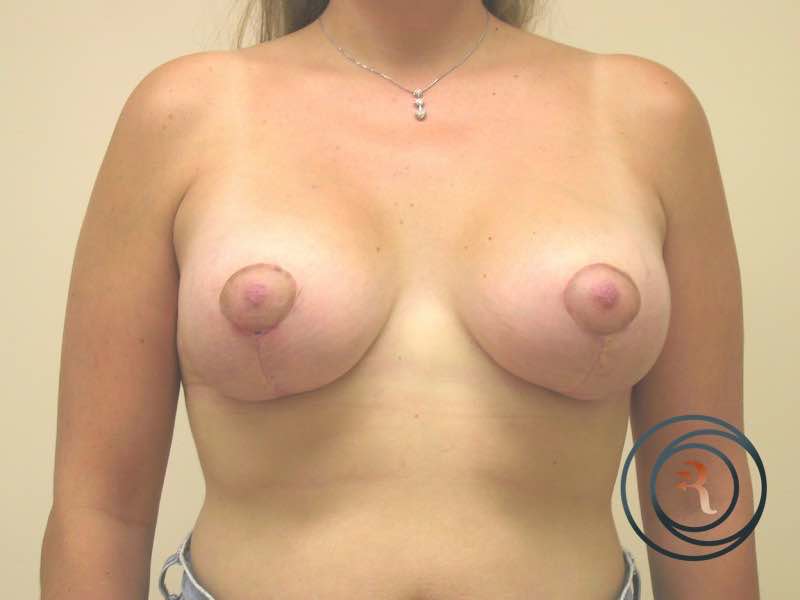
Both patients above were lifted and reshaped in Morristown without implants. Click either pair to view the before-and-after full screen.
See how Dr. Rafizadeh restores shape and position — with or without implants — and what real results look like.
Explore Breast Lift Surgery or call (973) 267-0928Revising a Previous Reduction or Lift
Many women who ask this question had a breast reduction or lift years ago and have since “settled.” Over time, tissue descends, the upper pole empties, and the breast bottoms out below the original scar. The good news is that this is very revisable: the skin can be re-tightened, the tissue re-suspended higher, and fat grafted into the upper pole — all without adding an implant.
Revision surgery does demand more planning than a first-time lift. The surgeon must respect the blood supply that the previous operation established, work with (not against) the existing scars, and account for how the tissue has changed. This is why a revision belongs with an experienced surgeon who will take the time to understand your original procedure. Dr. Rafizadeh has performed breast surgery in Morristown for more than four decades and sees revision patients from across Northern New Jersey.
What About the Scars That Never Healed?
A patient with raised, thickened scars from a first breast surgery has a legitimate concern about a second operation. The first step is distinguishing a true keloid (a scar that grows beyond the original incision and tends to recur) from a hypertrophic scar (a raised scar that stays within the incision line and usually improves over time). They look similar but behave very differently.
For revision in a scar-prone patient, the strategy is to keep new incisions within the existing scar lines whenever possible and to pair surgery with active scar control: silicone sheeting or gel, well-timed steroid injections, pressure, and — for stubborn true keloids — sometimes low-dose radiation or other adjuncts. None of this guarantees a perfect scar, but a thoughtful plan meaningfully improves the odds, and it’s a conversation to have openly at consultation rather than a reason to avoid surgery altogether.
The “Ozempic Breast” Version of This Question
A newer but very common variation comes from women who’ve lost a great deal of weight on GLP-1 medications like Ozempic or Wegovy. The breast deflates rapidly while the skin stays stretched, leaving a flat, low, empty-on-top breast — sometimes called an “Ozempic breast.” The solution is the same toolkit: a lift to remove the excess skin and re-suspend the tissue, frequently combined with fat grafting to restore the upper-pole fullness the weight loss took away. For a fuller discussion of body changes after major weight loss, see Dr. Rafizadeh’s related article on Ozempic and plastic surgery in NJ.
Questions to Ask Any Plastic Surgeon About a No-Implant Lift
If you’re interviewing surgeons in Morristown, Summit, Chatham, Madison, Short Hills, or anywhere in Northern New Jersey, these questions will quickly reveal who is comfortable with implant-free fullness techniques:
- Do you perform auto-augmentation mastopexy, or only standard lifts and implant augmentations?
- Given my anatomy, how much upper-pole fullness can I realistically expect without an implant?
- Would you add fat grafting, and how much volume do you expect to survive long-term?
- How will you plan the incisions and the revision around my existing scars?
- If I’m keloid-prone, what scar-control plan will we follow before and after surgery?
- Can you show me before-and-after cases of no-implant lifts similar to mine?
Common Questions Patients Search About Breast Lifts Without Implants
How to get upper pole fullness without implants?
Two implant-free techniques build upper-pole fullness. The first is an auto-augmentation breast lift, which repositions your own lower-pole tissue up behind the upper pole and anchors it there. The second is fat grafting, which moves purified fat from your abdomen or thighs into the upper breast and cleavage. They are frequently combined — the lift sets the shape and the fat refines the roundness. Both depend on your own anatomy, so results are natural and modest rather than dramatic.
What does upper pole fullness look like?
Upper pole fullness is the rounded volume of the breast above the nipple line — the part that creates cleavage and a youthful, lifted appearance in a bra or fitted top. A youthful breast has a gentle, sloping upper pole with most of the volume sitting at or above the nipple. As breasts age or deflate, that volume drops below the nipple and the upper pole goes flat or hollow, which is exactly what a lift and fat grafting aim to restore.
Can you do fat transfer breast augmentation without implants?
Yes. Fat transfer breast augmentation uses liposuction to harvest your own fat, purifies it, and injects it into the breasts to add volume — no implant involved. It gives a natural look and feel and contours the donor area as a bonus, but the size increase per session is modest (about half to one cup) and some fat reabsorbs. It is ideal for women who want a subtle, natural enhancement, or who are restoring fullness after an explant, weight loss, or a prior reduction.
Is a breast lift better with or without fat transfer?
It depends on your goal. A lift alone is the right choice when your main concern is sagging and nipple position and you’re content with your volume. Adding fat transfer makes sense when, after the lift, you still want more roundness in the upper pole or cleavage. For a patient revising an old reduction who feels flat on top, a lift plus fat grafting usually gives the most complete, natural result in one operation.
What are Ozempic breasts?
“Ozempic breasts” is an informal term for the deflated, sagging appearance some women develop after rapid weight loss on GLP-1 medications such as Ozempic or Wegovy. The breast loses fat volume quickly while the skin envelope stays stretched, leaving it flatter and lower with an empty upper pole. It’s a classic indication for an implant-free solution: a lift to remove the excess skin and re-suspend the tissue, often combined with fat transfer to restore lost upper-pole fullness.
How much does a breast lift without implants cost in New Jersey?
Cost depends on whether it’s a primary lift or a revision, whether fat transfer is added, and the operating time involved, so a precise figure comes only after an in-person consultation. Because a no-implant lift avoids the cost of the implant device itself, it can be comparable to or less than a lift with augmentation. Dr. Rafizadeh’s office provides clear, itemized pricing at consultation, and financing options are available for Northern New Jersey patients.
Can you get upper pole fullness with just a lift?
A standard lift improves shape and projection and gives some upper-pole improvement by repositioning tissue, but a conventional lift alone produces a soft, natural slope rather than a pronounced, rounded upper pole. To create more definite upper-pole fullness without an implant, the lift is combined with auto-augmentation tissue rearrangement and/or fat grafting. How much fullness is achievable depends on how much of your own tissue is available to reposition or graft.
Sources & References
- American Society of Plastic Surgeons. “Breast Lift (Mastopexy).” plasticsurgery.org
- Coleman SR, Saboeiro AP. “Fat Grafting to the Breast Revisited: Safety and Efficacy.” Plastic and Reconstructive Surgery. 2007;119(3):775-785. PubMed
- Gutowski KA; ASPS Fat Graft Task Force. “Current Applications and Safety of Autologous Fat Grafts: A Report of the ASPS Fat Graft Task Force.” Plastic and Reconstructive Surgery. 2009;124(1):272-280. PubMed
- American Society of Plastic Surgeons. “Fat Transfer Breast Augmentation.” plasticsurgery.org
- American Academy of Dermatology. “Keloids: Diagnosis and Treatment.” aad.org
- American Board of Plastic Surgery. “Verify Certification.” abplasticsurgery.org
- Dr. Farhad Rafizadeh, RealSelf Q&A. realself.com
Related Reading From Dr. Rafizadeh’s Blog
Women researching breast lift options without implants in Northern New Jersey may find these articles useful:
- Different Patterns of Breast Lift (Mastopexy) and Reduction — NJ
- Do Breast Implants Lift the Breast? A New Jersey Perspective
- Breast Lift, Fat Transfer & Tummy Tuck at the Same Time — North Jersey
- Peri-Areolar (Benelli) Breast Lift in Morristown, NJ
- The Vertical Breast Lift (Mastopexy) in New Jersey
- Breast Ptosis: Grades of Sagging and the Right Lift in Morristown
Bottom Line
If you’re happy with your size but flat on top — after a reduction, after weight loss, or just from time — you do not need an implant to look fuller and perkier. A well-designed lift, an auto-augmentation that repositions your own tissue, and a measured fat transfer can restore upper-pole fullness and cleavage using nothing but you. And a history of difficult scars is a planning consideration, not a dealbreaker.
If you’re considering a breast lift, fat transfer, or a revision of a previous reduction in Morristown, Summit, Chatham, Madison, Short Hills, or anywhere across Northern New Jersey, Dr. Rafizadeh is happy to evaluate your tissue, review your goals and scar history, and walk you through what’s realistically achievable without an implant.
Ready to schedule a consultation in Morristown, NJ?
Book a Consultation