
Few treatments are marketed as aggressively as the thread lift. Search “non-surgical facelift” anywhere around Morristown and you’ll find spas and offices promising a lunchtime lift with no downtime. It’s one of the questions Dr. Farhad Rafizadeh hears most often in consultation — and it appears regularly on his RealSelf Q&A page.
“I’m in my late 40s and starting to see jowls. A med spa near me offers a PDO thread lift and says it’s like a facelift without surgery. Do thread lifts actually work, or should I just save for a facelift?”
It’s exactly the right question, because the marketing and the medical reality don’t always match. A thread lift is a genuine procedure with a genuine (if modest) effect — but calling it “a facelift without surgery” sets up most patients to be disappointed. The useful way to think about it isn’t threads or facelift in the abstract; it’s how much lifting your face actually needs, and how long you want the result to last.
Dr. Rafizadeh’s Short Answer
A thread lift can give a young face with very mild laxity a subtle, short-lived lift. What it cannot do is act like a facelift. Threads don’t remove skin and they don’t reposition the deep tissues that cause jowls and a heavy neck — they tug on the surface, and within a year or two that tug is gone. When someone has real sagging, I’d rather do the operation once and give them a result that lasts than sell them a treatment they’ll keep paying to repeat.
What a Thread Lift Actually Is
A thread lift uses dissolvable barbed sutures — most commonly PDO (polydioxanone) — that are threaded under the skin through tiny entry points and then gently drawn upward so the barbs catch and lift the tissue. The procedure is done in the office under local anesthesia and usually takes under an hour. There are two claimed mechanisms: an immediate mechanical lift as the barbs grip, and a slower collagen-stimulating effect as the body reacts to the dissolving threads over roughly four to six months.
The mechanical part is real but limited — a thread can only hold what it grips, from a handful of anchor points, without removing any tissue. The collagen part is modest and slow. Neither approaches what surgery does, and understanding that difference is the whole point.
What a Facelift Does That a Thread Lift Cannot
A modern facelift — whether a SMAS or a deep plane technique — works at the layer that actually causes facial aging. Instead of pulling on skin, the surgeon repositions the deep SMAS layer and the retaining ligaments, then redrapes and removes the excess skin. That’s why the correction is structural and long-lasting rather than a temporary surface tug. A thread lift never touches that layer.
| Thread Lift | Facelift | |
|---|---|---|
| What it does | Tugs skin & superficial fat from a few anchor points | Repositions the deep SMAS & ligaments, removes excess skin |
| Anesthesia | Local, in office | Local with light sedation (in Dr. Rafizadeh’s practice) |
| Downtime | Little to none (a few days of soreness) | About two weeks for the initial recovery |
| Result | Subtle | Dramatic, natural |
| How long it lasts | ~1–3 years (often 12–18 months) | 10–15 years or more |
| Best for | Mild, early laxity in younger patients | Moderate-to-significant jowls, neck & folds |
How Long Thread Lifts Really Last
This is where expectations most often break down. Across the medical literature and manufacturer guidance, thread lift results run about one to three years, and in practice many patients notice the visible lift fading within 12 to 18 months as the threads dissolve and are absorbed. A long-term study of thread lifting found that the rejuvenation effect tends to decrease over the first year before the residual collagen benefit stabilizes at a much subtler level. A well-performed facelift, by contrast, is measured in a decade or more.
The longevity gap is why the cost comparison is misleading. A single thread session costs far less than a facelift, but threads have to be repeated. Over five to ten years of maintenance, the running total can quietly approach — or exceed — a one-time surgical result that would have looked better the whole time.
The Risks Nobody Advertises
Thread lifts are generally safe, and serious complications are uncommon. But minor ones are common enough to matter, and the published complication reviews are consistent about which: swelling and bruising, and — most characteristically — skin dimpling or puckering where a thread gathers tissue, along with visible or palpable threads, asymmetry, thread migration, and occasional infection or extrusion. Studies report skin dimpling as one of the most frequent complications, largely driven by superficial placement and technique. Most resolve on their own, but a visibly dimpled cheek can outlast the lift itself — which is exactly the wrong trade for an elective, appearance-driven treatment.
Dr. Rafizadeh pioneered the deep plane facelift in the New York–New Jersey region. See his approach, recovery details, and real results.
Explore Facelift Surgery or call (973) 267-0928Who Threads Actually Suit — and Who They Don’t
There is a patient for whom a thread lift is reasonable: someone younger — often in their 30s or early 40s — with mild, early laxity who wants a subtle refresh and truly cannot take downtime. For that person, threads may buy a year or two of a slightly crisper jawline.
The mismatch happens when a patient with real sagging — jowls, a loose neck, deep folds, excess skin — is sold threads as a facelift substitute. That anatomy is caused by descent of the deep tissues and skin excess, neither of which a thread can hold. The result is a brief, disappointing lift and, often, a second consultation months later for the surgery they needed in the first place. If loose neck skin is the main concern, a neck lift with a facelift is the durable answer, not threads.
Where Energy Devices Fit In
Patients who want to avoid surgery but need more than threads sometimes do better with an energy-based skin-tightening device than with sutures. Treatments like Ultherapy and Renuvion address mild laxity through a different mechanism, and Dr. Rafizadeh will talk through where each fits — and, just as often, where none of them will meet the goal and surgery is the honest recommendation.
What Real, Lasting Results Look Like
The cases below are surgical facelift results — not thread lifts — performed by Dr. Rafizadeh in Morristown under local anesthesia with light sedation. They are shown to illustrate the degree of change that repositioning the deep tissues achieves, which is the standard a thread lift is often measured against but cannot reach.
Patient Before & After — Surgical Facelift
View Full Gallery →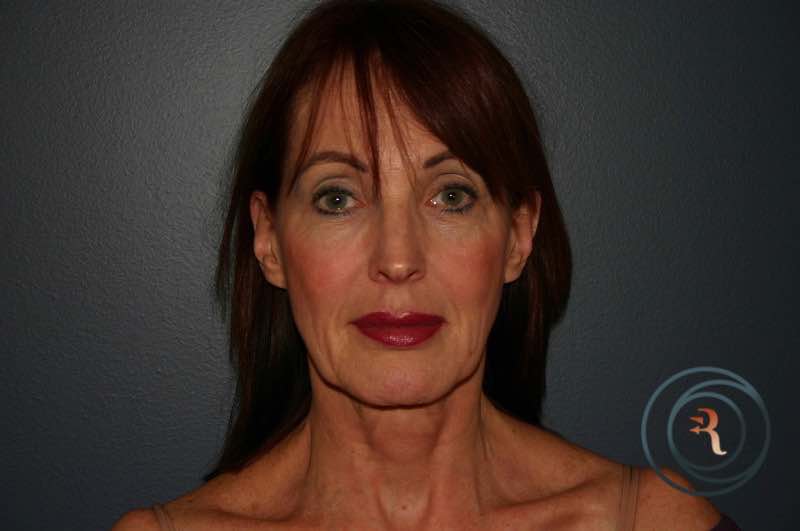


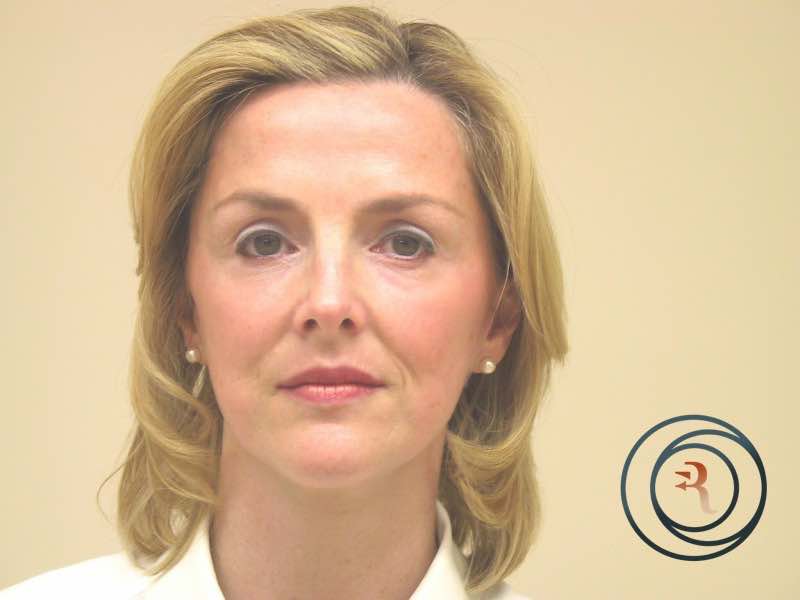
These are surgical facelift results, shown for comparison. A thread lift produces a far more subtle, temporary change and would not achieve the correction seen here.
Questions to Ask Before You Book a Thread Lift in North Jersey
If a Morristown, Summit, Chatham, Madison, or Short Hills provider is recommending threads, a few questions will tell you whether it’s the right call:
- Given my degree of laxity, honestly — will threads do enough, or am I a facelift candidate?
- How long should I realistically expect this to last before I’d need it repeated?
- Who is performing it, and how many thread lifts do they do — and how do they handle dimpling or a visible thread if it happens?
- Over five years, how does the repeat cost of threads compare to a one-time facelift?
- Is there an energy-based option that would suit me better than sutures?
A provider confident in the treatment will answer all of these plainly. If the honest answer to the first question is “you really need a facelift,” a thread lift is money spent postponing the inevitable.
Common Questions Patients Search About Thread Lifts
Why do plastic surgeons not like thread lifts?
Many plastic surgeons are cautious about thread lifts because the results are subtle and short-lived, while the marketing often promises a “non-surgical facelift” the procedure cannot deliver. Surgeons also see the downstream problems — dimpling, palpable or extruding threads, asymmetry — and patients who spent significant money for an effect that faded within a year. The concern is not that threads are dangerous; it is that they are frequently oversold for the degree of laxity they can actually treat.
What are the disadvantages of a thread lift?
The main disadvantages are limited, temporary results (typically one to three years), no removal of excess skin, and a real rate of minor complications such as dimpling, puckering, visible threads, and asymmetry. Results also depend heavily on the injector’s skill and vary from patient to patient. For anything beyond very mild sagging, the effect is often too subtle to justify the repeat cost.
Are thread lifts worth the money?
For the right patient — young, with very mild laxity, wanting a subtle lift and zero downtime — a thread lift can be worth it as a short-term refresh. For patients with moderate or advanced sagging it usually is not: the modest, temporary result means paying repeatedly, and those costs can eventually approach or exceed a one-time facelift that would have lasted far longer. Dr. Rafizadeh encourages North Jersey patients to weigh the lifetime cost, not just the upfront price.
Is 60 too old for a thread lift?
Age itself is not the disqualifier — degree of laxity is. By 60, most patients have moderate to significant skin and tissue descent that threads simply cannot hold, so the result tends to be disappointing and brief. Older patients are generally far better candidates for a facelift, which Dr. Rafizadeh performs under local anesthesia with light sedation, sparing them the heavier recovery they often fear.
What happens when a thread lift wears off?
As the threads dissolve, the mechanical lift gradually releases and the tissue settles back toward its pre-treatment position; the small amount of collagen that formed offers only a slight lasting benefit. The face does not “drop” suddenly or look worse than before — it simply returns to its natural baseline as aging continues. At that point the patient decides whether to repeat the threads or move on to a more definitive procedure.
How much does a thread lift cost?
Cost varies with the number of threads, the areas treated, and the provider, and it is typically far less per session than a facelift. The number that matters, though, is the lifetime cost: because threads last only one to three years, repeated treatments accumulate. Dr. Rafizadeh’s office reviews the full financial and clinical picture at consultation so North Jersey patients can compare a recurring expense against a single, longer-lasting surgical result.
How many times can you get a thread lift?
Thread lifts can generally be repeated once the previous threads have dissolved, and many patients do so every one to two years to maintain the effect. There is no fixed lifetime limit, but repeated placement can build scar tissue, and the results often diminish as underlying laxity progresses. For patients who keep repeating threads to chase a fading result, that is usually the signal to consider a facelift instead.
Common Questions About Thread Lifts & Facelifts
What is a thread lift, and how does a PDO thread lift work?
A thread lift is a minimally invasive treatment in which dissolvable barbed sutures — most commonly PDO (polydioxanone) — are passed under the skin and gently drawn upward to reposition mildly sagging tissue in the cheeks, jowls, brows, or neck. It works two ways: an immediate mechanical lift as the barbs grip tissue, and a slower collagen-stimulating effect as the threads dissolve over about four to six months. It is an in-office procedure performed under local anesthesia, not surgery.
How is a thread lift different from a facelift?
A facelift is surgery that repositions the deep SMAS layer and retaining ligaments and removes excess skin, so the correction is structural and long-lasting. A thread lift only tugs on skin and superficial fat from a few anchor points — it does not remove skin or address the deeper anatomy. The trade-off is real: a thread lift has almost no downtime but a subtle, temporary effect, while a facelift requires recovery but delivers a dramatic result that lasts a decade or more.
How long do thread lift results last?
Most peer-reviewed data and manufacturer guidance put thread lift results at roughly one to three years, and many patients see the visible lift fade within 12 to 18 months as the threads dissolve and are absorbed. By comparison, a well-performed facelift lasts 10 to 15 years or longer. Because thread lifts have to be repeated, their cost and inconvenience add up over time.
Who is a good candidate for a thread lift versus a facelift?
Thread lifts are best for younger patients — often in their 30s or early 40s — with mild, early laxity who want a subtle refresh and cannot accept downtime. Patients with moderate to significant jowling, a loose neck, or deep folds will be disappointed by threads and are far better served by a facelift or neck lift. In Dr. Rafizadeh’s Morristown consultations, matching the procedure to the actual degree of laxity is the single most important step.
Do thread lifts work for sagging jowls or a loose neck?
Only marginally, and not for long. Jowls and neck laxity are driven by descent of the deep tissues and, often, excess skin — neither of which a thread can hold. Threads may create a brief, modest improvement, but the jowl or neck band typically returns within months. A lower facelift combined with a neck lift is the reliable answer for that anatomy.
Is a thread lift safe? What are the risks?
Serious complications are uncommon, but minor ones are not rare. Published reviews report swelling, bruising, and — most characteristically — skin dimpling or puckering, along with visible or palpable threads, asymmetry, thread migration, and occasional infection or extrusion. Most issues are temporary and highly technique-dependent, which is why provider skill matters enormously. A poorly placed thread can leave a visible irregularity that outlasts the lift itself.
Can I get a facelift later if I’ve already had thread lifts?
Yes, and many patients eventually do. Prior threads usually do not prevent a facelift, though residual thread material and scar tissue can add a small amount of complexity to the dissection. This is one reason Dr. Rafizadeh counsels patients not to spend years and repeated fees chasing a temporary result when surgery is the eventual goal.
Does Dr. Rafizadeh recommend a thread lift or a facelift for lasting results?
For genuine, lasting facial rejuvenation, Dr. Rafizadeh favors surgery — a deep plane or SMAS facelift — because it corrects the underlying anatomy rather than temporarily tenting the skin. He is candid with North Jersey patients that a thread lift is, at best, a short-term touch-up for very mild laxity, and that money spent repeating threads is often better invested once in a result that lasts. His philosophy has always been to use the least intervention that actually solves the problem — and for real sagging, that is a facelift, not a thread.
Sources & References
- Fukaya M. “Long-term effect of the insoluble thread-lifting technique.” Clinical, Cosmetic and Investigational Dermatology. 2017. PMC5697446
- Wang C-K, et al. “Complications of thread lift about skin dimpling and thread extrusion.” Journal of Cosmetic Dermatology. 2020. PMC7507174
- American Society of Plastic Surgeons. “What you need to know about thread lifts.” plasticsurgery.org
- Cleveland Clinic. “Thread Lift: What to Expect, Benefits & Complications.” my.clevelandclinic.org
- American Board of Plastic Surgery. “Verify Certification.” abplasticsurgery.org
- RealSelf. “Dr. Farhad Rafizadeh — Morristown, NJ.” realself.com
Related Reading From Dr. Rafizadeh’s Blog
If you’re weighing your facial rejuvenation options in Northern New Jersey, these articles go deeper:
- Mini Facelift vs. Full Facelift: Which Do You Need?
- Deep Plane Facelift in NJ — Dr. Rafizadeh’s Approach
- How Long Does a Facelift Last?
- Does Ultherapy Work? Ultrasound Skin Tightening vs. Facelift
- Neck Lift With a Facelift: Do I Need Both?
Bottom Line
A thread lift is a real procedure with a real, but small and short-lived, effect. For a younger patient with mild laxity who wants a subtle refresh and no downtime, it can be a reasonable choice. For anyone with true jowling, a heavy neck, or excess skin, it is not a facelift substitute — and being sold one usually ends in a repeat fee and a delayed surgery. Dr. Rafizadeh’s guidance to North Jersey patients is the same one that has shaped four decades of practice: use the least intervention that actually solves the problem, and for real sagging, that is a facelift, not a thread.
If you’re considering a facelift, a thread lift, or a non-surgical option in Morristown, Summit, Chatham, Madison, Short Hills, or anywhere across Northern New Jersey, Dr. Rafizadeh will give you a candid assessment of what your face actually needs — and show you, on a personalized simulation, what your result could look like.
Ready to schedule a consultation in Morristown, NJ?
Book a Consultation