
A 66-year-old patient wrote in to Dr. Farhad Rafizadeh on his RealSelf Q&A page with a question that perfectly captures how many patients in their 60s and 70s feel when they look in the mirror. She described herself as a happy person who looked sad because of the deep lines running from the corners of her mouth to her chin, and pockets of fat along her jaw. She was afraid of a facelift — and she had read that a lower facelift wouldn’t even take care of the marionette lines. What, she asked, was she supposed to do?
“Is a facelift the only answer for marionette lines and jowls? I’m 66 and a happy person. But I look sad because of the lines going down from the corners of my mouth to each side of my chin. I also have little pockets of fat on each side along my jaw line. I’m afraid of a face lift, and have read that a lower face lift does not take care of the marionette lines anyway. What to do?”
It is one of the most common questions Dr. Rafizadeh hears in his Morristown consultation room. The honest answer requires unpacking two related but distinct problems — the jowls and the marionette lines — and being specific about what each available tool can and cannot do.
Dr. Rafizadeh’s Short Answer
A facelift addresses the jowls, the neck, and the mid-face. It improves the marionette lines, but it may not eliminate them. Additional procedures like fat grafting or a corner-of-mouth lift can further improve the marionette creases. As we get older, the tissues relax and move down to the lower face, causing the jowls. Sometimes putting filler in front of and behind the jowls can make them less visible, but repositioning the tissues to where they came from is the best way to treat these areas, and a facelift can do that. Don’t be afraid of a facelift. It can be done in a minimally invasive way with quicker recovery and great results, under local anesthesia with some sedation.
That answer captures two ideas worth dwelling on. First, the right framing isn’t “facelift vs. no facelift” — it’s “reposition tissue, refill tissue, or relax muscle,” with surgery being by far the most powerful of the three for established sagging. Second, fear of a facelift is most often fear of general anesthesia, fear of an obviously operated look, and fear of a long recovery — all of which Dr. Rafizadeh’s approach in Morristown is specifically designed to avoid.
Where Marionette Lines and Jowls Come From
Both features have the same root cause: the deep tissues of the face migrate downward over time. The cheek fat pads — which sit high and full in youth — descend along the jawline, where they accumulate as visible fullness in front of and behind the chin. That same descent creates a downward vector at the corner of the mouth, which deepens the natural crease running toward the chin. The skin loses elasticity, the supporting facial ligaments lengthen, and the bone underneath subtly remodels. The visible result is jowls along the jaw and a sad, downturned look at the mouth even when the patient feels nothing of the sort.
This is why “treat the marionette lines” in isolation often disappoints. The crease is downstream of the descent. If the cheek mass that is pressing the corner of the mouth downward isn’t addressed, filling the line on its own can look heavy and unnatural — particularly in patients who already have jowls. Treat the descent, and the crease softens almost on its own.
The Toolkit, Honestly Assessed
1. Facelift — The Most Powerful Single Tool
A modern facelift is not the “wind-tunnel” operation of the 1980s. In Dr. Rafizadeh’s hands, the deep SMAS layer and the underlying tissues are released and repositioned upward and slightly backward, restoring the natural high cheek and clean jawline of a younger face. The skin is then redraped without tension, which is what keeps the result looking natural rather than pulled.
For the combination of jowls + marionette lines, this is the single most effective intervention available. The jowls are eliminated structurally because the descended tissue is put back where it came from. The marionette lines improve dramatically because the corner of the mouth is no longer being pulled downward by a heavy cheek. For most patients with established sagging, no other treatment comes close.
2. Fat Grafting — The Refill
A lift repositions but doesn’t add volume. The aging face also loses fat in specific zones — the lateral cheek, the mid-cheek, the marionette region itself — and refilling those zones with the patient’s own fat softens the remaining crease and restores the youthful curvature of the lower face. Dr. Rafizadeh commonly performs fat grafting at the same time as a facelift; the two procedures complement each other almost perfectly.
3. Corner-of-Mouth Lift — The Finisher
For patients whose mouth corners point distinctly downward at rest — a hallmark of the “I look sad even when I’m happy” complaint — a small corner-of-mouth lift can be added to a facelift, or done on its own. A precise crescent of skin is removed just above each oral commissure, the corner of the mouth lifts a few millimeters, and the marionette crease softens at its origin. The fine scar hides at the border of the red lip.
4. Filler — A Reasonable Bridge for Mild Cases
For patients with early or mild jowls and marionette lines — or for patients who are not yet ready for surgery — hyaluronic acid filler placed strategically in front of and behind the jowl, and into the marionette crease itself, can soften the appearance. The limitation is that filler adds volume; it doesn’t move tissue. Once the jowl is established, piling filler on top of and around it tends to make the lower face look heavier, not lighter.
5. Botox / Dysport / Xeomin — Selective and Subtle
The depressor anguli oris (DAO) is a small muscle that pulls each corner of the mouth downward. A few units of neuromodulator into the DAO can relax it, allowing the corner of the mouth to sit more neutrally and softening the marionette crease slightly. The effect is mild and works best in combination with other treatments, not on its own.
6. Skin-Tightening Devices — Modest in Established Cases
Energy-based devices — radiofrequency, microfocused ultrasound, the various branded names that come and go — can stimulate collagen and produce mild tightening in the right candidate. For early sagging in younger patients, they can be useful. For an established jowl in a 60-something or 70-something patient, the realistic improvement is small relative to expectations.
How Dr. Rafizadeh Sequences These for a Typical North Jersey Patient
For a patient in her mid-60s in Morristown, Summit, Chatham, Madison, or Short Hills with both clear jowls and visible marionette lines, the most common combination Dr. Rafizadeh recommends is:
- Facelift (SMAS or deep plane, depending on anatomy) to reposition the descended cheek and jowl tissue.
- Fat grafting to refill the lateral cheek, mid-cheek, and the marionette zone.
- Corner-of-mouth lift, added selectively when the oral commissures point sharply downward.
- Neck lift or platysmaplasty, when the neck shows comparable changes — which is almost always the case once jowls are present.
All of the above can be performed in a single session under local anesthesia with light moderate sedation in Dr. Rafizadeh’s accredited outpatient facility in Morristown. The patient walks in, walks out, and recovers at home without ever being intubated. For the older patient especially, that anesthesia approach is itself part of the value of choosing this practice — covered in detail in his article on the safest anesthesia for older patients.
Dr. Rafizadeh pioneered the deep plane facelift in the New York–New Jersey region. See his approach, recovery details, and real results.
Explore Facelift Surgery or call (973) 267-0928“I’m Afraid of a Facelift” — What That Fear Usually Means
When patients tell Dr. Rafizadeh they are afraid of a facelift, the fear almost always resolves into one of three concerns when discussed:
- Anesthesia. “Will I be put under?” In Dr. Rafizadeh’s practice, no — facelifts are performed under local anesthesia with light sedation. No breathing tube, no paralytic agents, no long anesthesia hangover.
- Looking pulled or operated. Patients have seen results elsewhere that don’t look like the patient they remember. Dr. Rafizadeh’s approach repositions the deep tissue rather than tensioning the skin — the patient looks like themselves, just rested.
- Long recovery. Patients picture weeks of hiding. In reality, most patients are presentable for socializing at two to three weeks and back to normal life shortly after.
When each concern is addressed in detail, the fear most often turns into a sense of relief. The patient who wrote in had “read” that a lower facelift wouldn’t fix marionette lines — which is half-true at best, and is exactly the kind of internet half-truth a careful in-person consultation is meant to correct.
What This Looks Like in Real Patients
The cases below were each performed in Dr. Rafizadeh’s Morristown facility under local anesthesia with light moderate sedation. The before-and-after photos show how a facelift — with carefully chosen add-ons — treats jowls and marionette lines together as the linked problem they actually are, rather than as two separate things requiring two separate fights.
Patient Before & After
View Full Gallery →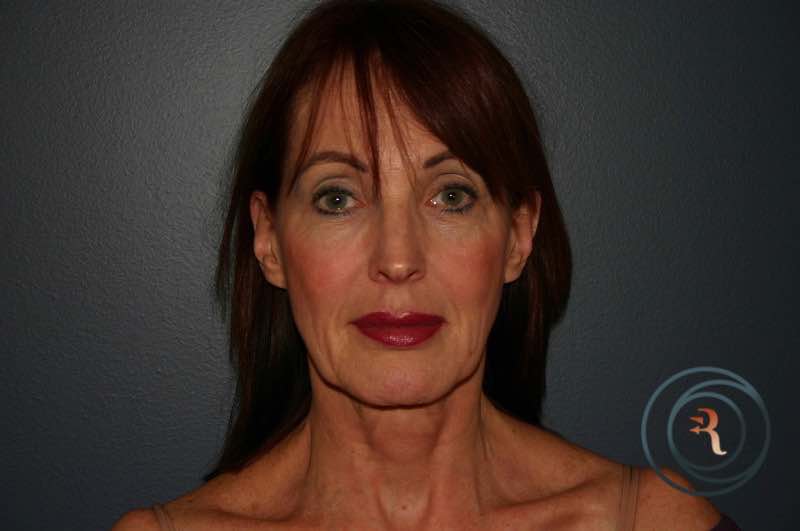


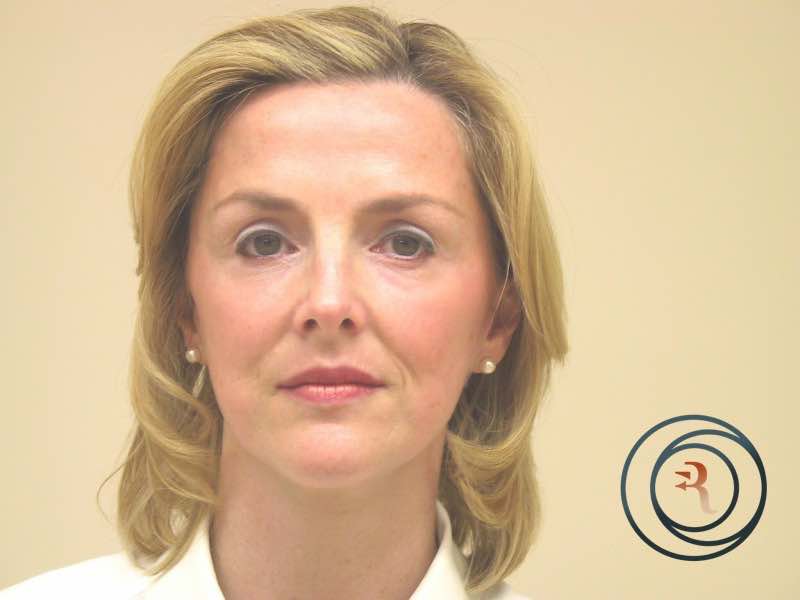
In both cases, the jowls and marionette lines were addressed together by repositioning the descended cheek and jowl tissue upward — not by filling, not by tightening skin, and not under general anesthesia.
What If You Are Not Ready for a Facelift?
For patients with early or mild changes — or who simply aren’t ready to commit to surgery — there is a reasonable non-surgical pathway, even if it is a more modest one. Dr. Rafizadeh will sometimes recommend:
- Hyaluronic acid filler in front of and behind the jowl, and into the marionette crease itself.
- A few units of Botox or Dysport into the DAO muscle to relax the downward pull on the corner of the mouth.
- A small amount of filler along the jawline to define and straighten its contour.
- A medical-grade skincare regimen with retinoids and broad-spectrum SPF, which slows the underlying process even when it can’t reverse it.
This is a maintenance strategy rather than a definitive treatment. For patients who plan to be re-treated every twelve to eighteen months for many years, the cumulative cost of filler often equals or exceeds the cost of a one-time facelift — without ever achieving what a lift achieves. That math matters when planning, and Dr. Rafizadeh will discuss it openly during consultation.
Questions to Ask Any Plastic Surgeon About Marionette Lines and Jowls
If you are interviewing surgeons in Morristown, Summit, Chatham, Madison, Short Hills, Bernardsville, Mendham, Florham Park, or anywhere across Northern New Jersey, the conversation should go beyond “do you do facelifts?” A more useful set of questions:
- Do you treat the marionette lines and the jowls as one problem or two?
- Do you typically add fat grafting at the time of facelift, and where do you place it?
- Under what circumstances would you recommend a corner-of-mouth lift, and what does the scar look like long-term?
- What anesthesia do you use for a facelift, and why?
- If I am 65, 70, or older, what specific adjustments do you make to the plan?
- What does “natural” mean in your hands — can I see a representative before/after gallery?
A surgeon who has performed facial cosmetic surgery in North Jersey for four decades will have specific, concrete answers to all of these. Vague or one-size-fits-all answers are a sign to keep looking.
Common Questions Patients Search About Marionette Lines & Jowls
Will a facelift get rid of marionette lines?
A facelift improves marionette lines significantly because it repositions the sagging cheek and jowl tissue upward and tightens the SMAS layer beneath. The lines almost always look better. For deep, etched marionette creases, a small amount of fat grafting or a corner-of-mouth lift performed at the same time produces a more complete result — which is why Dr. Rafizadeh frequently combines them.
What is the best treatment for sagging jowls and marionette lines?
For both features together, a facelift with SMAS or deep plane repositioning is the most effective single treatment. It addresses the jowls structurally, restores a clean jawline, and improves the marionette area by relieving the downward pull on the corners of the mouth. Add-ons like fat grafting, a corner-of-mouth lift, or selective filler are then used to refine the lower face. Energy devices and thread lifts can help mild cases but do not match a surgical lift for established jowls.
Can you get rid of marionette lines without surgery?
You can soften them. Hyaluronic acid filler in the marionette crease and along the jawline can meaningfully improve mild marionette lines. A few units of Botox or Dysport into the DAO muscle can relax the downward pull on the corner of the mouth. Energy-based skin tightening can offer incremental collagen stimulation. None of these will reposition descended jowl tissue, so for advanced cases a facelift remains the gold standard.
Do marionette lines cause jowls?
No — both are caused by the same underlying process. Jowls and marionette lines both arise from the gradual descent of the cheek fat pads, the loss of skin elasticity, and the lengthening of the facial ligaments. The jowls form along the jawline as tissue collects there, and the marionette crease deepens as the corner of the mouth is pulled downward by the descending mass. Treat the root cause and you address both features at once.
How much does filler for jowls and marionette lines cost?
In Northern New Jersey, hyaluronic acid filler is priced per syringe. Most patients need two to four syringes to make a meaningful difference in the jowl and marionette area, and the result lasts roughly twelve to eighteen months before re-treatment. For patients who plan to re-treat every year or so over many years, the cumulative cost can equal or exceed a one-time facelift — which becomes the more economical long-term option for established jowls.
Should a 70 year old get a face lift?
Yes, when the patient is healthy and motivated. Age alone is not a contraindication. What matters is cardiovascular and pulmonary health, medication profile, and emotional readiness. Dr. Rafizadeh has performed facelifts on many North Jersey patients in their 70s and 80s, and performed under local anesthesia with light sedation, the recovery is gentler than most expect. A standard pre-operative clearance from the patient’s internist or cardiologist is part of the workup.
What is the best non-surgical treatment for jowls and marionette lines?
For mild changes, the most effective non-surgical strategy is a layered one: hyaluronic acid filler placed in front of and behind the jowl and into the marionette crease, Botox or Dysport into the DAO muscle, and a consistent medical-grade skincare regimen with retinoids and SPF. Energy-based skin tightening can be added for incremental collagen stimulation. None of this will undo established sagging, but for early changes, it can extend the patient’s window before surgery becomes the right call.
What causes jowls and marionette lines?
As we age, the deep tissues of the face relax and migrate downward. The fat pads of the cheek descend, the skin loses elasticity, and the supporting ligaments lengthen. The result is fullness along the jawline (jowls) and creases running from the corners of the mouth toward the chin (marionette lines). Genetics, sun exposure, smoking, and significant weight changes accelerate the process.
Can filler alone fix marionette lines and jowls?
For mild cases, hyaluronic acid filler placed strategically along the jawline and into the marionette creases can soften both features and is a reasonable option for patients who are not ready for surgery. For more pronounced jowls, however, adding filler around the heavy tissue can make the lower face look heavier rather than lighter. In Dr. Rafizadeh's practice in Morristown, NJ, filler is reserved for early or mild presentations - once the jowls are established, a facelift gives a substantially better and more durable result.
Does a facelift get rid of marionette lines completely?
A facelift dramatically improves marionette lines by repositioning the descended cheek and jowl tissue upward and tightening the underlying SMAS layer, which takes tension off the corners of the mouth. The lines almost always look significantly better. They may not vanish entirely, particularly in patients with deep, etched creases - for those, adding fat grafting or a corner-of-mouth lift at the same time finishes the result.
What is a corner-of-mouth lift and when is it needed?
A corner-of-mouth lift is a small office procedure that removes a precise crescent of skin just above each corner of the mouth, lifting the downturned corners and softening the marionette crease at its origin. It is an excellent companion to a facelift when the corners of the mouth point downward at rest, giving the face a sad expression even when the patient is happy. Performed under local anesthesia, it leaves a fine scar that hides at the vermillion border.
Can fat grafting improve marionette lines?
Yes. A small amount of the patient's own fat, harvested from the abdomen or thigh and refined, is layered into the marionette crease and the adjacent volume-depleted zones of the lower face. Because the graft is the patient's own tissue, the result is natural and long-lasting. Dr. Rafizadeh commonly combines fat grafting with a facelift - the lift repositions, the fat refills, and together they address both the structural and volume components of facial aging.
Can a facelift for marionette lines and jowls be done under local anesthesia?
Yes. Dr. Rafizadeh performs his facelifts under local anesthesia with light moderate sedation in his accredited outpatient facility in Morristown, NJ. The patient is comfortable and breathing on their own, recovery is faster than with general anesthesia, and the surgical result is the same. This approach is especially valuable for older patients across Northern New Jersey who want to avoid the heavier physiologic and cognitive burden of general anesthesia.
Related Reading From Dr. Rafizadeh’s Blog
Patients in Northern New Jersey researching marionette lines, jowls, and facial rejuvenation may find these articles useful:
- The Safest Anesthesia for Older Patients: Facelift, Eyelid & Brow Lift Without Dementia Risk
- Facelift in Older Patients: What’s Needed in Northern New Jersey
- Deep Plane Facelift in NJ — Dr. Rafizadeh’s Approach
- How to Make a Facelift Effective With a Quick Recovery in New Jersey
- Facelift in Younger Patients: Natural Results in New Jersey
- Facelift Under Local Anesthesia
Bottom Line
A facelift is not the only answer for marionette lines and jowls — but for established sagging, it is by a wide margin the best single answer, particularly when paired with fat grafting and, when needed, a corner-of-mouth lift. Filler, neuromodulators, and energy devices have real but modest roles, mostly reserved for early cases or for patients building a bridge to eventual surgery. And the fear that drives so many patients away from a lift — general anesthesia, an operated look, a long recovery — is largely the fear of an older version of the operation. The way Dr. Rafizadeh performs it in Morristown today, under local anesthesia with light sedation, looks and feels nothing like what patients picture.
If you are weighing your options for facelift, fat grafting, or non-surgical lower-face treatments in Morristown, Summit, Chatham, Madison, Short Hills, or anywhere across Northern New Jersey, Dr. Rafizadeh is happy to walk through your specific anatomy, your medical history, and a realistic computer simulation of what your result could look like — in person, no pressure, no template.
Ready to schedule a consultation in Morristown, NJ?
Book a Consultation