
The lip lift is one of Dr. Farhad Rafizadeh’s super-specialty procedures, and over the years it has also become one of the most-searched. With that popularity comes a predictable worry, and it shows up again and again on his RealSelf Q&A page: what happens if the scar goes wrong? One patient’s question captured the fear exactly.
“Is there anything that can be done to fix this? I had a lip lift just over 2 years ago. The scarring is deep and has got stitch marks all the way round. I’m very self conscious about it and it’s noticeable even whilst wearing makeup.”
“Stitch marks all the way round” is the patient’s description of cross-hatching — the small, rung-like marks that run across a scar and make it look like a tiny railroad track. It is one of the few lip lift complications that is almost entirely preventable, and when it does happen, it is one of the more fixable ones. Here is how Dr. Rafizadeh answered, and what every North Jersey patient considering a lip lift should understand about the scar before they book.
Dr. Rafizadeh’s Answer
As far as your scar cross-hatching, I think the sutures were left in too long, or maybe dissolving sutures were used that stayed too long. I remove my sutures in less than 5 days. The area can be revised to get rid of the cross-hatching. I just did this kind of revision on a patient that was done elsewhere and it worked out great.
Two ideas are doing all the work in that answer, and both matter to anyone weighing a lip lift in Morristown or the surrounding Northern New Jersey towns: cross-hatching comes from sutures that stay in too long, and a scar that already has it can be revised.
What Cross-Hatching Actually Is
A lip lift incision is closed with fine sutures. Each stitch passes through the skin on both sides of the incision, and while it is in place it presses against the skin. If those sutures are removed promptly, the only thing left behind is the thin line of the incision itself. If they stay in too long, each entry and exit point develops its own small scar — and those little scars, lined up on either side of the incision, create the cross-hatched “railroad track” pattern.
The same thing can happen with dissolving (absorbable) sutures placed at the surface if they take too long to break down. They sit in the skin past the point where they are helping, and the skin reacts around them.
Why Removing Sutures Within Five Days Matters
The face heals quickly. A lip lift incision under the nose has usually sealed enough within four to six days that the sutures have done their job. Beyond that window, the stitches stop helping the wound and start leaving marks. This is why Dr. Rafizadeh removes his lip lift sutures in less than five days — early enough to prevent cross-hatching, but not so early that the incision reopens.
It is a small detail with an outsized effect on the final result, and it is one of the things that separates a surgeon who does lip lifts routinely from one who does them occasionally. When you interview surgeons, it is a fair and revealing question to ask directly: how soon do you take the stitches out?
Where the Lip Lift Scar Is Hidden
A subnasal — or “bullhorn” — lip lift places the incision along the base of the nose, following the curve of the nostrils and the columella. That location is deliberate: it sits in the natural crease and shadow where the nose meets the upper lip, so a well-healed line is camouflaged by the anatomy itself. The scar is not on the lip or the visible skin of the philtrum. When placement is correct, closure is tension-free, and sutures come out early, the mature scar is typically a thin, pale line that is genuinely hard to find. You can read more about the procedure itself on Dr. Rafizadeh’s lip lift page and in his article on upper lip shortening as an element of facial beautification.
Dr. Rafizadeh performs lip lift surgery in Morristown with careful attention to scar placement and natural proportion. See candidacy, techniques, and results.
Explore Lip Lift Surgery or call (973) 267-0928How a Lip Lift Scar Heals, Month by Month
Patients are often anxious in the first weeks because a fresh scar looks worse before it looks better. The normal trajectory:
- Week 1: Sutures are removed (under five days in Dr. Rafizadeh’s practice). The line is fresh and slightly raised.
- Weeks 2–6: Redness peaks and then begins to settle. Most patients can be out in public without camouflage makeup within a few weeks.
- Months 3–6: The redness fades to a pale tone and the scar flattens and softens, blending into the nasal-base shadow.
- Up to 12 months: The scar continues to mature and lighten, reaching its final, least-visible appearance.
Because the scar takes a full year to mature, Dr. Rafizadeh generally advises waiting before judging it harshly — and before considering revision — unless something like cross-hatching is clearly present.
Can a Bad Lip Lift Scar Be Fixed?
Yes — and this is the reassuring part of the answer for patients who already have a scar they dislike. A cross-hatched, widened, or poorly placed lip lift scar can usually be improved in one of two ways, sometimes both:
- Surgical scar revision. The old scar is precisely re-excised and closed with fine technique and, critically, early suture removal. This is what Dr. Rafizadeh referenced when he noted he had recently revised a lip lift scar done elsewhere with a good outcome.
- Resurfacing and surface treatments. Fractional CO2 or erbium laser, and adjuncts like silicone gel or sheeting, can soften residual texture and even out color once the scar is mature.
The right plan depends on the depth and width of the scar, how much upper-lip skin remains, and the patient’s before photos. That last point matters: judging a revision means comparing the current scar to the starting point, not to an imagined ideal. A consultation — in person — is the only way to map the correct approach.
A Note on Removing Too Much Skin
The patient who wrote that question also worried she had too much tooth show and trouble closing her mouth, which points to a separate issue: over-resection. This is why, before any lip lift, Dr. Rafizadeh has a careful discussion about exactly how much skin to remove based on the patient’s tooth position and upper-lip length. When some upper lip remains, it tends to lengthen and relax over time, and gentle daily downward stretching of the lip can help it settle. Conservative, individualized planning is the best protection against this outcome — another reason experience with the procedure counts.
What a Well-Healed Lip Lift Looks Like
The cases below were performed by Dr. Rafizadeh in Morristown. They are representative of the natural, balanced upper-lip results he designs around — and of the hidden, well-placed scars that make the procedure worth doing.
Patient Before & After
View Full Gallery →
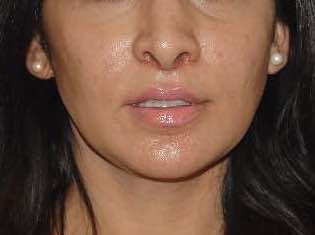
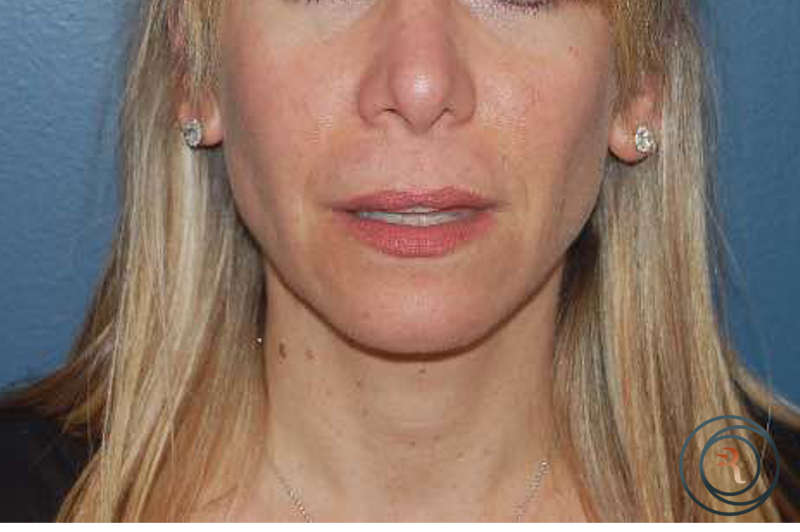

Both lip lifts above were performed in Morristown under local anesthesia with light sedation. The incisions sit in the crease at the base of the nose, where a well-healed line is hidden by the natural shadow of the nostrils.
Questions to Ask Any Plastic Surgeon About Lip Lift Scarring in North Jersey
If you are interviewing surgeons in Morristown, Summit, Chatham, Madison, Short Hills, Bernardsville, Florham Park, or anywhere across Northern New Jersey, the scar conversation deserves as much attention as the lip itself. Useful questions:
- How soon after a lip lift do you remove the sutures?
- Do you use surface sutures that need removal, dissolving sutures, or both — and why?
- Exactly where will my incision sit relative to the base of my nose?
- How do you decide how much skin to remove so I don’t end up with too much tooth show?
- If I already have a cross-hatched or widened scar, do you perform lip lift scar revision?
- Can I see before-and-after photos that include close-ups of the healed scar?
A surgeon who performs lip lifts regularly will answer all of these in specific terms. Vague answers — or a surgeon who can’t show you healed scars — are worth noting.
Common Questions Patients Search About Lip Lift Scars
Does a lip lift leave a permanent scar?
Every lip lift leaves some scar, but a well-placed one is hard to find. When the incision follows the crease at the base of the nose and the sutures are removed early, the mature line is usually thin, pale, and hidden in the shadow of the nostrils. What turns an expected fine line into a noticeable mark is poor placement, wound tension, or sutures left in too long — not the procedure itself.
Where is the lip lift scar located?
A subnasal or “bullhorn” lip lift incision runs along the base of the nose, tracing the curve of the nostrils and the columella. It is placed there on purpose: that crease is already a natural shadow line, so a healed scar blends into it. The scar is not on the lip or on the visible skin of the philtrum.
What causes the railroad-track or stitch-mark scar?
Those marks — cross-hatching — are tiny scars left where each suture passed through the skin, connected by the line of the incision. They form when stitches stay in past roughly five to seven days, or when wound tension pulls against them. Dr. Rafizadeh removes his lip lift sutures in less than five days specifically to prevent this.
How long does it take a lip lift scar to heal?
The incision closes within one to two weeks, but the scar matures over a full year. Redness peaks early and settles over the first several weeks; by three to six months the scar softens to a pale line, and it keeps lightening through twelve months. Most patients are comfortable going out without camouflage makeup within a few weeks.
Can a lip lift scar be revised or removed?
Yes. A cross-hatched, widened, or poorly placed scar can usually be improved by re-excising and re-closing it with fine technique and early suture removal, sometimes combined with fractional laser resurfacing. Dr. Rafizadeh has revised lip lift scars originally done elsewhere with good results. The plan depends on examining the scar and reviewing the patient’s before photos.
How do you minimize a lip lift scar?
Good scars come from surgical precision plus aftercare. The surgical essentials are tension-free closure, accurate placement in the nasal-base crease, and early suture removal at about five days. After healing starts, sun protection, gentle scar massage, and silicone gel or sheeting support a soft, flat result. If a mark remains raised once mature, laser or a minor revision can refine it.
Can a lip lift remove too much skin?
It is possible to over-resect, which can leave too much tooth show at rest or make full lip closure harder. That is why Dr. Rafizadeh decides how much to remove based on each patient’s tooth position and upper-lip length before surgery. When some upper lip remains, it tends to lengthen and relax over time, and gentle daily stretching can help it settle into place.
What causes cross-hatching or stitch marks on a lip lift scar?
Cross-hatching - the small 'railroad track' or rung-like marks running perpendicular to the scar - happens when sutures are left in too long or when dissolving sutures stay in place too long. The stitches leave their own tiny scars where they pass through the skin. Dr. Rafizadeh removes his lip lift sutures in less than five days, which is the single most important step for avoiding cross-hatching. Once present, the cross-hatching can be revised surgically.
Can a bad lip lift scar be revised or fixed?
Yes. A cross-hatched, wide, or poorly placed lip lift scar can usually be improved with scar revision, in which the old scar is carefully re-excised and closed with fine technique and early suture removal. Surface treatments such as fractional CO2 or erbium laser resurfacing can further soften residual marks. Dr. Rafizadeh has revised lip lift scars done elsewhere with good results. The right approach depends on examining the scar and reviewing the patient's before photos.
When should lip lift stitches be removed?
Non-absorbable lip lift sutures should generally come out within four to six days. Dr. Rafizadeh removes his in less than five days. Leaving stitches in longer - or using dissolving sutures that linger - is the most common reason patients develop cross-hatched stitch marks around the incision under the nose.
How long does it take a lip lift scar to heal and fade?
The incision itself closes within one to two weeks, but the scar matures over a full year. Early redness fades over the first several weeks; by three to six months the scar usually softens to a pale line, and it continues to lighten through twelve months. Most patients can go out in public without camouflage makeup within a few weeks.
Why does my lip lift scar have railroad track marks?
Railroad-track marks are the same thing as cross-hatching: tiny scars left by the suture entry and exit points, connected by the line of the incision. They form when stitches stay in past about five to seven days, or when wound tension pulls against the sutures. The good news is that these marks sit at the surface and respond well to scar revision and laser treatment.
Sources & References
- Rafizadeh F. Expert answer: “What can be done to fix this after lip lift removed too much skin and left bad scar?” RealSelf Q&A. realself.com
- Holzer-Geist I, et al. “The upper lip lift using the ‘bull’s horn’ approach.” J Drugs Dermatol / aesthetic literature. PubMed
- Cleveland Clinic. “Lip Lift: What It Is, Types, Surgery, Recovery & Scars.” my.clevelandclinic.org
- American Society of Plastic Surgeons. “Scar revision.” plasticsurgery.org
- American Board of Plastic Surgery. “Verify a surgeon’s certification.” abplasticsurgery.org
Related Reading From Dr. Rafizadeh’s Blog
Patients researching lip lifts and facial scars in Northern New Jersey may find these articles useful:
- Lip Lift Surgery in New Jersey — Dr. Rafizadeh’s Approach
- Upper Lip Shortening (Lift): An Important Element of Facial Beautification
- Lip Lift and Rhinoplasty Together: Philtrum & Tooth Show in North Jersey
- Lip Filler Migration and Why a Lip Lift May Be the Better Solution
- Avoiding Scars: How Dr. Rafizadeh Plans Incisions
- Facial Surgery Under Local Anesthesia With Conscious Sedation in New Jersey
Bottom Line
A cross-hatched, “stitch marks all the way round” lip lift scar is not the inevitable price of the procedure — it is usually the result of sutures left in too long. Removing them within five days, placing the incision precisely in the crease under the nose, and closing without tension are what produce the thin, hidden line a lip lift is supposed to leave. And if you already have a scar you dislike, it can very often be revised.
If you are considering a lip lift — or you have an existing lip lift scar you’d like evaluated — in Morristown, Summit, Chatham, Madison, Short Hills, or anywhere across Northern New Jersey, Dr. Rafizadeh is happy to examine the area, review your before photos, and walk through your options during a consultation.
Ready to schedule a consultation in Morristown, NJ?
Book a Consultation