
My conviction about the effectiveness of my lip lift procedures in rejuvenating and beautifying the face in Morristown N.J. was seriously reinforced by a presentation I saw at the 2016 aesthetic meeting in Las Vegas.
Dr Val Lambros is one the plastic surgeons that I most admire because of his honesty and hard work. He has been looking at the facial aging by comparing the young faces to the older faces and demonstrating the changes that result from the aging process and how to correct them. He has been collecting 3D images from the members of the ASAPS over the years to be able to compare them and come up with results that would represent the male and female patients through different ethnicity. He showed a fascinating video of 3D dynamic morphing image that showed a computer averaged image of 100 people. It showed the average face through its aging process by comparing the young faces to the older ones. He demonstrated that the most significant part of aging is the changes that happen around the mouth the lower aspect of the nose. As he covered the mouth area there was some changes in the jowls and the neck but the most significant visible changes happened around the mouth.
What happens is that the bases of the nostrils move up with minimal drooping of the tip of the nose. The upper lip gets longer between the nostrils and the vermilion border and both the upper and lower vermilions get thinner. By looking at X-ray images of the young person and over imposing them to the X-ray images of the same person, but older, he demonstrated that there is minimal change in the bony skeleton and most of the changes are thinning of the soft tissues. My conclusion is that as I had always thought the shortening of the elongated upper lip not only established the youthful appearance of the upper lip, but by pulling the nostril and alar bases down, it establishes the youthful relations of the mouth and the nose, two of the central elements of the face. It also shows the importance of establishing volume on the face and the lips. The lip lift is again so important because the addition of volume to the lips will elongate the lips, something that we want to avoid. After the lip has been lifted, filling the upper lips and the base of the nostrils will effectively reverse the signs of aging.
Why the Upper Lip Lengthens as We Age
The space between the base of the nose and the edge of the pink lip — the philtrum — is one of the few facial measurements that quietly lengthens over a lifetime. As the soft tissue thins and descends, that distance grows, the pink (vermilion) of the upper lip rolls inward and looks thinner, and the upper teeth all but disappear when the mouth is at rest. The result reads as “older” even when the rest of the face is well-maintained, because the mouth and nose are two of the central features the eye uses to judge age.
A lip lift reverses that specific change. By removing a small, precisely measured strip of skin at the base of the nose and lifting the lip upward, it shortens the philtrum back toward its youthful proportion, rolls more pink lip into view, and restores a natural amount of tooth show. It is a structural correction, not a volumizing one — which is why, for the right patient, it looks more natural and lasts far longer than filler.
Lift First, Then Add Volume — Not the Other Way Around
One of the most important points from the research above is the order of operations. Adding filler or fat to a long upper lip only makes it look longer — volume pushes the lip down and forward without correcting the underlying proportion. Dr. Rafizadeh’s philosophy, reinforced by Dr. Lambros’s aging data, is to shorten the lip first, then selectively add a small amount of volume to the pink lip and the base of the nostrils. In that sequence, the volume enhances a lip that is already in the right position rather than fighting against a lip that is too long.
This is also why so many patients who have chased fullness with repeated lip filler end up dissatisfied: the filler migrates, the lip distorts, and the original problem — an elongated philtrum — was never addressed. For many of them, the better answer is to remove the filler and convert to a lip lift.
Who Is a Good Candidate?
- Patients whose philtrum has lengthened with age and who show little or no upper tooth at rest.
- Younger patients born with a naturally long upper lip who want better proportion between the nose and mouth.
- Patients who have over-filled lips and want a more natural, structural result instead of more volume.
- Patients combining the lift with a facelift, rhinoplasty, or eyelid surgery for balanced facial rejuvenation.
The best way to know is an in-person evaluation, where Dr. Rafizadeh measures the philtrum, assesses tooth show, and discusses exactly how much skin should be removed for your anatomy.
What a Well-Healed Lip Lift Looks Like
The cases below were performed by Dr. Rafizadeh in Morristown. They are representative of the natural, balanced upper-lip results he designs around — a shorter philtrum, more visible pink lip, and a fine incision hidden in the crease at the base of the nose.
Patient Before & After
View Full Gallery →
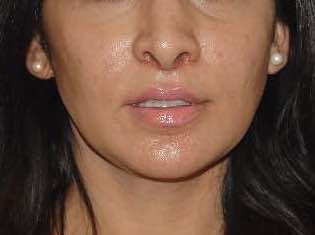
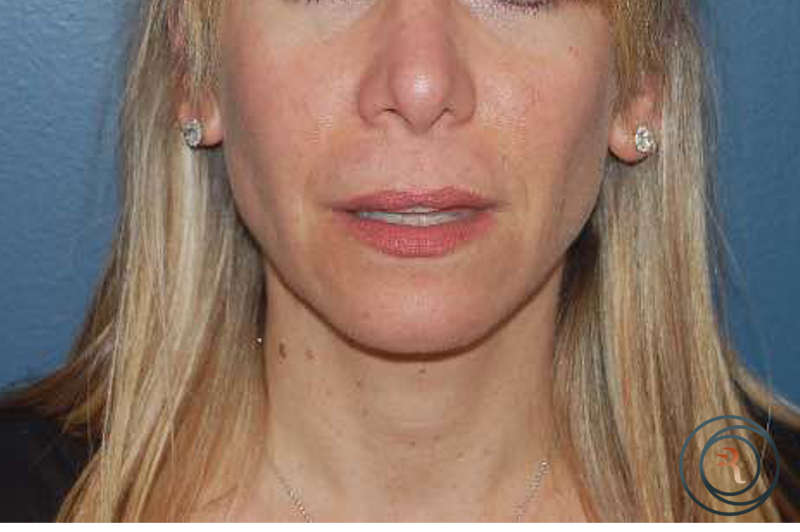

Both lip lifts above were performed in Morristown under local anesthesia with light sedation. The incision sits in the crease at the base of the nose, where a well-healed line is hidden by the natural shadow of the nostrils. Click any image to enlarge.
Recovery in Brief
A lip lift is a focused, in-office procedure done under local anesthesia, often with light sedation. Sutures are placed with fine technique and removed early — in less than five days — which is the single most important step for keeping the scar thin and avoiding cross-hatching. Most patients are presentable in public within 7–10 days, redness settles over the following weeks, and the scar continues to mature and fade over a full year. For a deeper look at scar healing and how a poor scar can be revised, see Dr. Rafizadeh’s article on lip lift scars and cross-hatching.
Common Questions Patients Search About Lip Lift Surgery
Will a lip lift leave a visible scar?
In Dr. Rafizadeh's hands, no — the bullhorn incision is hidden at the base of the nose where the skin shadows it. He has performed lip lifts as a focused procedure since 2012, well before it became popular, and the incision technique he uses (precise trichophytic-style closure with fine, layered sutures) is specifically designed to make the scar imperceptible in most patients within 3–6 months. Patients with very fair skin may see a thin line briefly; it fades.
How long does it take for lip lift scars to heal?
The visible part of healing — pinkness and any minor unevenness — resolves over 8–12 weeks. Most patients are presentable in public within 7–10 days with light concealer. Final scar maturity (the scar flattening and fully blending) takes about 12 months, though by that point it's usually undetectable without close inspection. Dr. Rafizadeh's Morristown patients are encouraged to use silicone gel or tape during weeks 2–12 to optimize the result.
How much does a lip lift cost in New Jersey?
An isolated lip lift in Northern New Jersey typically runs $4,500–$6,500. When combined with another procedure like a facelift, the incremental cost is lower because the operating-room time overlaps. Dr. Rafizadeh quotes an exact fee during the consultation. Lip lifts are highly specialized — the price should reflect the surgeon's experience with the procedure specifically, not just general plastic surgery experience.
Is a lip lift worth the scar?
For patients whose philtrum (the distance from the base of the nose to the upper lip) is longer than the aesthetic ideal of about a third of the lower face, the trade is almost always worth it. A well-done lip lift shortens the upper lip, shows more pink lip, often reveals more upper teeth at rest, and gives a more youthful proportion to the face. The scar is hidden at the nose base and fades; the change is permanent and obvious to the patient every time they look in the mirror.
Does upper lip lift ever go wrong?
Yes, when performed by surgeons without specific lip lift experience. The most common problems are over-elevation (too much skin removed, creating an unnaturally short upper lip and excessive teeth show), under-elevation (no visible change), nostril distortion, and a noticeable scar. All of these are technique problems, not problems with the operation itself. Dr. Rafizadeh's North Jersey lip lift revision patients almost universally come from surgeons who treat lip lift as a casual add-on rather than a focused procedure.
Can I have a lip lift instead of lip filler?
Often, yes — and many patients find the result more natural. Lip filler adds volume to the existing lip; a lip lift restructures the proportion of the face by shortening the philtrum and showing more of the natural pink lip. Patients who have chased volume with filler and ended up with migrated, distorted upper lips are often the best lip lift candidates. Dr. Rafizadeh has performed many revisions of over-filled lips by removing the filler and converting the patient to a lip lift instead.
How long does a lip lift last?
Permanently. A lip lift removes a strip of skin and elevates the upper lip in a way that does not relax back. The aging process continues — the lip will eventually thin and the philtrum will lengthen again over decades — but the change made by the operation does not reverse. This is one of the things patients appreciate most: unlike filler, which has to be repeated, a lip lift is a one-time procedure.
Sources & References
- Lambros V. “Facial aging: a 54-year, three-dimensional population study.” Plastic and Reconstructive Surgery. 2020;145(4):921–928. PubMed
- Penna V, et al. “The aging lip: a comparative histological analysis of age-related changes in the upper lip complex.” Plastic and Reconstructive Surgery. 2009;124(2):624–628. PubMed
- Holzer-Geist I, et al. “The upper lip lift using the ‘bull’s horn’ approach.” Aesthetic surgery literature. PubMed
- Cleveland Clinic. “Lip Lift: What It Is, Types, Surgery, Recovery & Scars.” my.clevelandclinic.org
- American Society of Plastic Surgeons. “Lip augmentation & lip procedures.” plasticsurgery.org
- American Board of Plastic Surgery. “Verify a surgeon’s certification.” abplasticsurgery.org
Related Reading From Dr. Rafizadeh’s Blog
Patients researching lip lifts and facial rejuvenation in Northern New Jersey may find these articles useful:
- Lip Lift Surgery in New Jersey — Dr. Rafizadeh’s Approach
- Upper Lip Shortening (Lift): An Important Element of Facial Beautification
- Lip Lift Scars: Preventing Cross-Hatching & Fixing a Bad Lip Lift Scar
- Lip Lift and Rhinoplasty Together: Philtrum & Tooth Show in North Jersey
- Lip Filler Migration and Why a Lip Lift May Be the Better Solution
Bottom Line
The science of facial aging keeps pointing back to the same place: the mouth and the base of the nose change first and change most. Shortening an elongated upper lip restores the youthful relationship between those two central features — and, done in the right order with conservative volume afterward, it reverses one of the clearest signals of age. It is permanent, it is hidden, and in experienced hands it is one of the most rewarding small operations in facial plastic surgery.
If you are considering a lip lift in Morristown, Summit, Chatham, Madison, Short Hills, or anywhere across Northern New Jersey, Dr. Rafizadeh is happy to measure your proportions, review your goals, and walk through your options during a consultation.
Ready to schedule a consultation in Morristown, NJ?
Book a Consultation