
Buccal fat removal — sometimes called a buccal lipectomy or “bichectomy” — has become one of the most-searched cosmetic procedures of the last few years, driven largely by social media and celebrity speculation. Patients come into the Morristown office, and write to Dr. Farhad Rafizadeh on his RealSelf Q&A page, asking a version of the same question.
“I have chubby cheeks and want a more sculpted, defined face. Is buccal fat removal worth it — or will it make me look older and hollow as I age?”
It is exactly the right question, because the second half of it is the one most patients forget to ask. Buccal fat removal is permanent, and the face you are trying to slim today is going to keep changing for the rest of your life. The honest answer for most North Jersey patients researching cheek contouring is that buccal fat removal is the right operation for only a small minority of faces — and that there are usually better, safer ways to get the definition you are after.
Dr. Rafizadeh’s Short Answer
Buccal fat removal is permanent, and that is the whole problem. The buccal fat pad shrinks on its own as we age, and the midface naturally loses volume in the forties and fifties. If I take that fat out of a young, thin face, I am borrowing definition now and paying for it with hollowing later. For most patients who want a more sculpted look, I would rather add structure than subtract volume — with fat grafting to the cheekbones and jawline, a conservative neck and jawline refinement, or simply time. I reserve buccal fat removal for the genuinely full, round face with strong cheekbones, and even then I take very little.
That captures the philosophy that has guided four decades of facial work in Morristown: in aesthetic surgery, you can almost always add back, but you can rarely put back what you have permanently removed. Caution with irreversible volume loss is not timidity — it is respect for how faces actually age.
What the Buccal Fat Pad Actually Is
The buccal fat pad (also called Bichat’s fat pad) is a discrete, encapsulated ball of fat that sits deep in the cheek, between the chewing muscles. It is a normal, functional structure — it cushions the muscles of the face and assists motion between them. It is not the same as the superficial fat just under the skin, and it is not “extra” fat from being overweight; lean people have buccal fat pads too.
Two facts about the buccal fat pad matter enormously for anyone considering removal. First, it naturally shrinks (involutes) with age — the round fullness of a young face tends to slim on its own through the late twenties and thirties. Second, removal is performed through a small incision inside the mouth, so there is no visible external scar — but once the pad is gone, it is gone permanently. There is no way to grow it back.
Why I’m Cautious About Buccal Fat Removal
Dr. Rafizadeh’s reservations are not a matter of opinion alone — they track closely with the published surgical literature and with simple facial anatomy.
1. It Permanently Removes Volume the Face Will Need Later
Because the buccal fat pad involutes with age, surgically removing it in a younger patient compounds a volume loss that was already going to happen. The result can be a midface that looks pleasantly slim at 25 and gaunt, drawn, or prematurely aged at 45. Surgeons who study facial aging note that removing the buccal fat pad can accentuate the appearance of jowls and expedite the deformations associated with aging, sometimes requiring fat grafting later just to undo it.
2. The Evidence for It Is Surprisingly Weak
For a procedure this popular, the science is thin. A 2021 systematic review in Medicina Oral, Patología Oral y Cirugía Bucal screened more than 1,400 references and found only four studies rigorous enough to include — concluding that the evidence supporting buccal fat removal is “scarce and of low quality,” with essentially no published long-term follow-up. Patients report short-term satisfaction, but almost no one has formally studied what these faces look like a decade or two out, which is exactly the window that matters.
3. It Sits Next to Structures You Don’t Want to Injure
The buccal fat pad lies in close relationship to the buccal branch of the facial nerve and the parotid (salivary) duct. Reported complications include over-resection and hollowing, facial asymmetry, hematoma, infection, trismus, and — less commonly — injury to those nerve and duct structures. Cadaver dissection studies have shown a meaningful chance of inadvertent injury during complete removal of the pad, which is one more argument for taking little or none.
What the Research Actually Shows
To be fair and evenhanded, the same literature that urges caution also shows that, in the short term, carefully selected patients do well:
- In the one study that measured it objectively with ultrasound, surgeons removed an average of roughly 2.7 mL of fat per cheek, and the large majority of patients rated their facial contour as much improved at six months.
- The pooled complication rate was low — on the order of 3% — with the most common issues being temporary trismus and transient nerve irritation.
- But the reviewers were blunt that there is a complete absence of long-term follow-up data, and that the ideal candidate is narrow: someone with “strong malar bones hidden by prominent cheeks,” and that the procedure is contraindicated in patients with weak cheekbones, where it tends to over-hollow the face.
In other words: buccal fat removal isn’t dangerous, and it isn’t useless. It is a procedure with a genuinely good indication in a small group of faces, performed today on a far larger group of faces than the evidence supports.
See how Dr. Rafizadeh evaluates cheek fullness, who is a good candidate, and when alternatives make more sense.
Explore Buccal Fat Removal or call (973) 267-0928Who Is — and Isn’t — a Good Candidate
If you are weighing this procedure, an honest candidacy assessment is worth more than any before-and-after photo. In Dr. Rafizadeh’s practice, the conversation looks roughly like this.
A reasonable candidate generally has:
- Strong, well-projected cheekbones that are partly obscured by genuinely full lower cheeks.
- A naturally round or “heavy” lower face that persists at a stable, healthy weight.
- Good skin elasticity.
- Realistic expectations and an understanding that the change is permanent.
A poor candidate — for whom removal is usually the wrong call — has:
- A naturally narrow or thin face, or weak/flat cheekbones.
- Early signs of midface volume loss, hollowing, or jowling already.
- A very young face that has not finished maturing.
- Fullness that is largely from skin and superficial fat, or from weight, rather than the deep buccal pad.
That last point is important: a lot of what patients call “chubby cheeks” is not buccal fat at all, and removing the buccal pad would do nothing for it while still permanently thinning the deep cheek.
What I Recommend Instead
For the majority of North Jersey patients who want a more defined, sculpted face, Dr. Rafizadeh leans toward strategies that add or redistribute volume rather than permanently subtract it:
- Facial fat grafting. Transferring a small amount of the patient’s own fat to sharpen the cheekbones, the jawline, or the chin often creates the impression of a slimmer, more contoured face — by building structure around the cheek rather than hollowing it. It is additive, uses your own tissue, and is the same technique used to repair over-aggressive buccal fat removal.
- Conservative jawline and neck liposuction. For many patients, the “heavy” look comes from fullness beneath the jaw and in the neck, not the cheek. Refining that contour can define the lower face far more reliably than buccal fat removal — and it doesn’t touch volume the midface needs.
- A chin implant or chin refinement. Improving lower-face projection and proportion can make the whole face look more sculpted without removing any cheek fat at all.
- Time and weight stability. In a young patient, the most underrated “procedure” is simply waiting. The buccal fat pad slims naturally over the next several years, and a stable, healthy weight does much of the work patients are tempted to pay a surgeon for.
And for the older patient who feels their face is “too full,” the issue is usually descent and laxity rather than excess fat — which is the domain of a facelift or brow lift with volume restoration, not fat removal. For more on why adding volume is half of modern facial rejuvenation, see Dr. Rafizadeh’s article on fat transfer with a facelift.
What Volume-Preserving Contouring Looks Like in Real Patients
The faces below were contoured in Morristown using volume-respecting techniques — facial fat grafting and lifting rather than deep-fat removal. They illustrate the look Dr. Rafizadeh designs toward: a defined, rested face that still has the fullness it needs to age well, rather than a hollowed one.
Patient Before & After
View Full Gallery →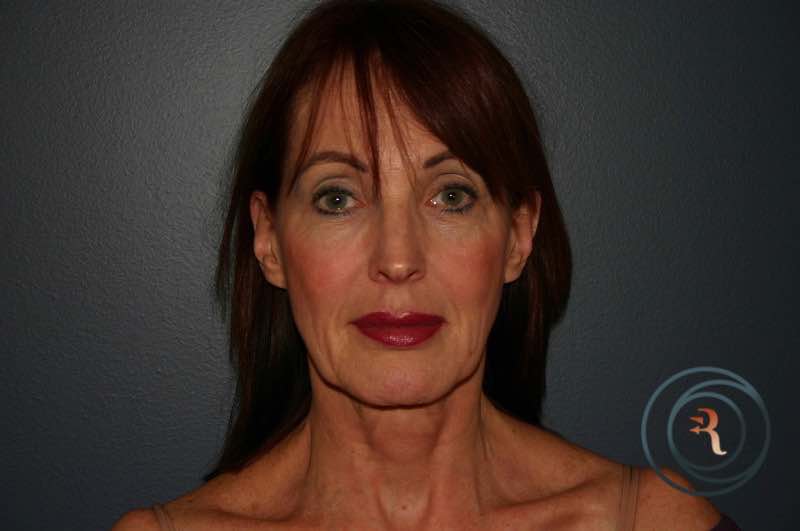


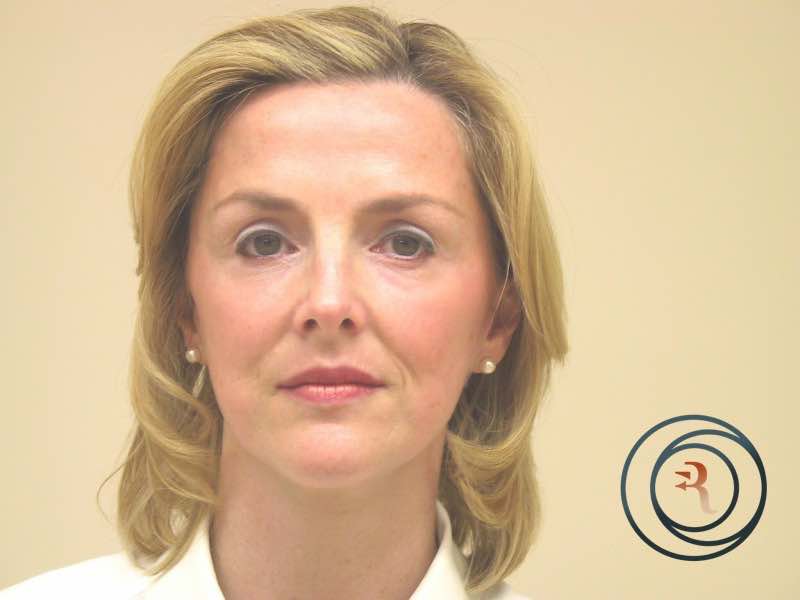
Both results were achieved by lifting and, where needed, restoring volume — not by removing deep cheek fat. Definition and youthful fullness are not opposites; the goal is to have both.
If You’ve Already Had Buccal Fat Removal and Regret It
Because the buccal fat pad does not regenerate, regret after over-resection — a hollow, gaunt, or aged look — is corrected by restoring volume, not by any further removal. The most natural and durable option is facial fat grafting: harvesting a patient’s own fat through gentle liposuction and re-injecting it into the cheek to rebuild fullness. Temporary soft-tissue fillers can re-volumize the area in the meantime while a patient decides on a permanent plan. If you are unhappy with a prior buccal fat removal anywhere in Northern New Jersey, a consultation focused specifically on volume restoration is the right next step.
Questions to Ask Any Surgeon About Buccal Fat Removal
If you are consulting surgeons in Morristown, Summit, Chatham, Madison, Short Hills, or anywhere across North Jersey about cheek contouring, the most useful questions are the ones that test whether the surgeon is thinking about your whole aging trajectory — not just today’s photo:
- Is my fullness actually deep buccal fat, or is it skin, superficial fat, weight, or the neck?
- Given my age and bone structure, what is my face likely to look like in 15–20 years if you remove this fat?
- Would a volume-adding option — fat grafting, jawline contouring, a chin implant — give me the definition I want without permanent loss?
- How conservative are you with how much you remove, and why?
- What is your plan if I end up too hollow later?
A surgeon who is comfortable saying “you are not a good candidate for this” is often the one worth trusting.
Common Questions Patients Search About Buccal Fat Removal
What are the disadvantages of buccal fat removal?
The main disadvantages are that it is permanent and irreversible, and that the buccal fat pad shrinks naturally with age — so removing it can over-hollow the face over time and accentuate jowling. The published evidence for long-term aesthetic benefit is weak, with no good follow-up data. There is also a small but real rate of complications, including asymmetry and injury to the buccal nerve branch or parotid duct. For many patients, looking slimmer in their twenties in exchange for looking gaunt in their forties simply isn’t a good trade.
Does buccal fat removal change your face shape?
Yes — that is its purpose. Removing the buccal fat pad reduces fullness in the medial cheek and makes the cheekbones and the hollow beneath them more pronounced, creating a more angular lower face. The caveat is that the change is permanent and keeps evolving as the face naturally loses volume with age, so the contour you see at six months is not the contour you will have in twenty years. Dr. Rafizadeh plans around that long arc, not just the early result.
What is the ideal age for buccal fat removal?
There is no single right age, but the younger the patient, the more cautious the surgeon should be, because more decades of natural midface volume loss still lie ahead. A face that looks pleasantly full at 22 may slim on its own by the early 30s without any surgery. In Dr. Rafizadeh’s experience, buccal fat removal in a very young patient whose face hasn’t finished maturing is the scenario most likely to be regretted.
What should I do if I regret buccal fat removal?
Because the fat pad does not grow back, the fix is to restore volume rather than remove more. Facial fat grafting — transferring your own fat into the cheeks — is the most natural and durable way to rebuild midface fullness after over-resection, and temporary fillers can re-volumize the area in the meantime. A consultation focused specifically on volume restoration is the right next step for anyone unhappy with a prior buccal fat removal in North Jersey.
Has buccal fat removal ever looked good?
Yes — in the right candidate, conservative buccal fat removal can give a genuinely improved, more sculpted lower face, and most published patients report short-term satisfaction. The trouble is patient selection and over-resection: the same operation that flatters a young patient with strong cheekbones and a heavy, round face can hollow out a thinner or older one. Good results come from doing less, in carefully chosen faces — not from removing as much as possible.
What procedure takes 10 years off your face?
No single procedure reverses a decade for everyone, but for most patients in their 50s and beyond the answer is a facelift or neck lift combined with volume restoration — fat grafting to the cheeks — not fat removal. Aging faces deflate and descend; they rarely become too full. Adding back lost volume and repositioning the deeper tissues is what restores a rested, youthful look, which is the opposite of what buccal fat removal does.
Is buccal fat removal worth it?
For a carefully selected patient — young, at a stable weight, with genuinely full lower cheeks and strong cheekbones — buccal fat removal can produce a more sculpted midface. But for most people it is not worth it, because the buccal fat pad naturally shrinks with age, and removing it permanently can accentuate hollowing and jowling later in life. A 2021 systematic review found the evidence supporting buccal fat removal to be scarce and of low quality, with no published long-term follow-up data. Dr. Rafizadeh is deliberately conservative with this procedure and usually recommends reversible or additive alternatives first.
Does buccal fat removal age your face?
It can. The buccal fat pad involutes — shrinks — naturally with age, and the midface loses volume in the 40s and 50s. Removing the buccal fat pad in a younger patient takes away volume that would have receded on its own, which can leave the cheeks looking hollow, gaunt, and prematurely aged a decade or two later. Because the procedure is permanent and not reversible, Dr. Rafizadeh weighs a patient's likely aging trajectory carefully before ever recommending it.
Who is a good candidate for buccal fat removal?
The ideal candidate has strong, well-defined cheekbones that are partly hidden by genuinely prominent lower cheeks, giving the face an excessively round or heavy look. The patient should be at a stable, healthy weight and have good skin elasticity. The procedure is contraindicated in patients with naturally narrow faces or weak (hypoplastic) cheekbones, because removing the fat in those faces tends to over-hollow the midface and produce an aged, skeletonized appearance.
Is buccal fat removal reversible?
No. Once the buccal fat pad is removed it does not grow back, and the change is permanent. If too much is taken, or if the face hollows with age, the only corrective option is to add volume back — typically with facial fat grafting (transferring the patient's own fat) or, temporarily, with filler. This is one of the main reasons Dr. Rafizadeh approaches buccal fat removal cautiously: an additive, reversible plan is almost always safer than an irreversible subtractive one.
What are the risks and complications of buccal fat removal?
Reported complications include over-resection and hollowing, facial asymmetry, hematoma, infection, trismus (difficulty opening the mouth), and temporary or rarely permanent injury to the buccal branch of the facial nerve or the parotid duct. The buccal fat pad sits in close anatomic relationship to these structures, and cadaver studies have shown a meaningful chance of injuring them during complete removal. The biggest long-term risk, however, is simply taking too much and producing a gaunt, prematurely aged face that is difficult to correct.
What are the alternatives to buccal fat removal for a slimmer face?
For most patients seeking a more defined lower face, Dr. Rafizadeh recommends approaches that add or redistribute volume rather than permanently remove it: facial fat grafting to sharpen the cheekbones and jawline, conservative jawline and neck liposuction to refine the contour beneath the jaw, a chin implant to improve lower-face proportion, and — where appropriate — weight stabilization and time, since the buccal fat pad naturally diminishes on its own. These options preserve the youthful fullness the face will need later.
Does Dr. Rafizadeh perform buccal fat removal in Morristown, NJ?
Dr. Rafizadeh evaluates each face individually and is candid that buccal fat removal is the right answer for only a small minority of patients. In his Morristown, NJ practice he far more often recommends facial fat grafting, jawline and neck contouring, or simply waiting, because these protect the patient against the predictable hollowing of midface aging. When a patient is a genuine candidate, he discusses it honestly; when they are not, he says so.
How much does buccal fat removal cost in North Jersey?
Cost varies by surgeon, facility, and whether the procedure is combined with other work, and Dr. Rafizadeh provides specific pricing only after an in-person evaluation. More important than the price, though, is the question of whether it is the right procedure at all. A relatively inexpensive operation that ages your face prematurely is far more costly in the long run than a thoughtfully chosen alternative — which is why the consultation focuses first on suitability, not cost.
Related Reading From Dr. Rafizadeh’s Blog
Patients researching cheek contouring and facial volume in Northern New Jersey may find these articles useful:
- Fat Transfer With a Facelift: Why Volume Restoration Is Half the Result
- Deep Plane Facelift in NJ — Dr. Rafizadeh’s Approach
- Chin Implant vs. Filler for Lower-Face Definition in North Jersey
- Neck Lift & a Sharper Jawline in North Jersey
- Facelift in Younger Patients: Getting Natural Results in New Jersey
- Marionette Lines & Jowls: Facelift vs. Fillers in North Jersey
Sources & References
- Traboulsi-Garet B, Camps-Font O, Traboulsi-Garet M, Gay-Escoda C. “Buccal fat pad excision for cheek refinement: A systematic review.” Med Oral Patol Oral Cir Bucal. 2021;26(4):e474–e481. PubMed
- Benjamin M, Reish RG. “Buccal Fat Pad Excision: Proceed With Caution.” Plast Reconstr Surg Glob Open. 2018;6(10):e1970. doi:10.1097/GOX.0000000000001970. PubMed
- Sezgin B, Tatar S, Boge M, Ozmen S, Yavuzer R. “The Excision of the Buccal Fat Pad for Cheek Refinement: Volumetric Considerations.” Aesthet Surg J. 2019;39(6):585–592. doi:10.1093/asj/sjy188. PubMed
- Harvard Health Publishing. “Buccal fat removal: What to know about cheek reduction surgery.” 2024. health.harvard.edu
- American Society of Plastic Surgeons. “Cheek reduction (buccal fat removal).” plasticsurgery.org
Bottom Line
Buccal fat removal is a real procedure with a real, narrow indication — and a far wider audience than the evidence justifies. For the small subset of patients with a genuinely full, round face and strong cheekbones, a conservative removal can help. For everyone else, permanently deleting volume that the face is going to lose anyway is a trade that tends to look worse with each passing decade. The more reliable path to a sculpted, defined face for most North Jersey patients is to build structure — through fat grafting, jawline and neck contouring, or a chin refinement — and to respect the volume the face will need to age gracefully.
If you are considering buccal fat removal, or you simply want a more defined face, in Morristown, Summit, Chatham, Madison, Short Hills, or anywhere across Northern New Jersey, Dr. Rafizadeh is glad to give you an honest candidacy assessment — including telling you when the answer is no — during a consultation.
Ready to schedule a consultation in Morristown, NJ?
Book a Consultation