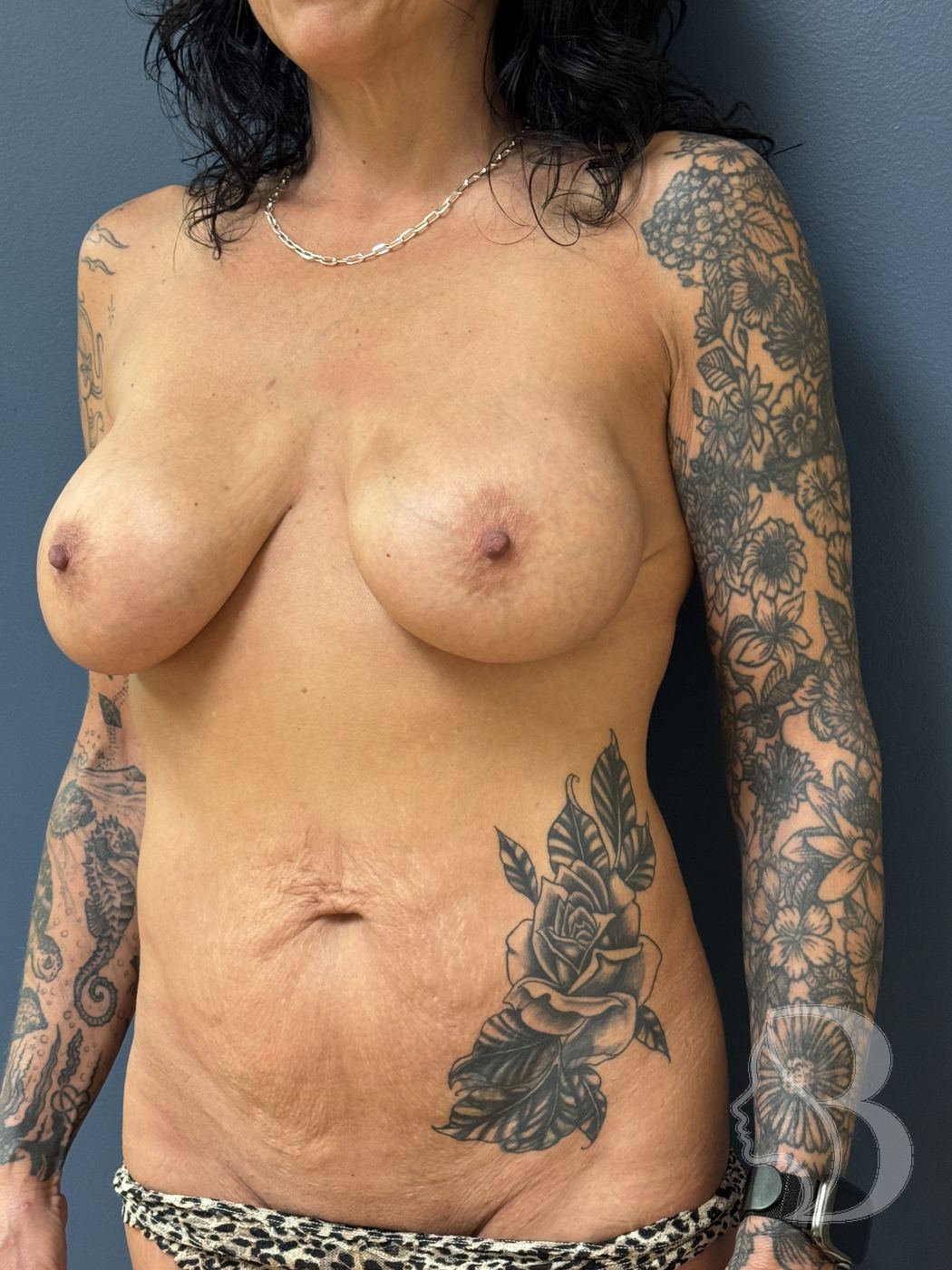
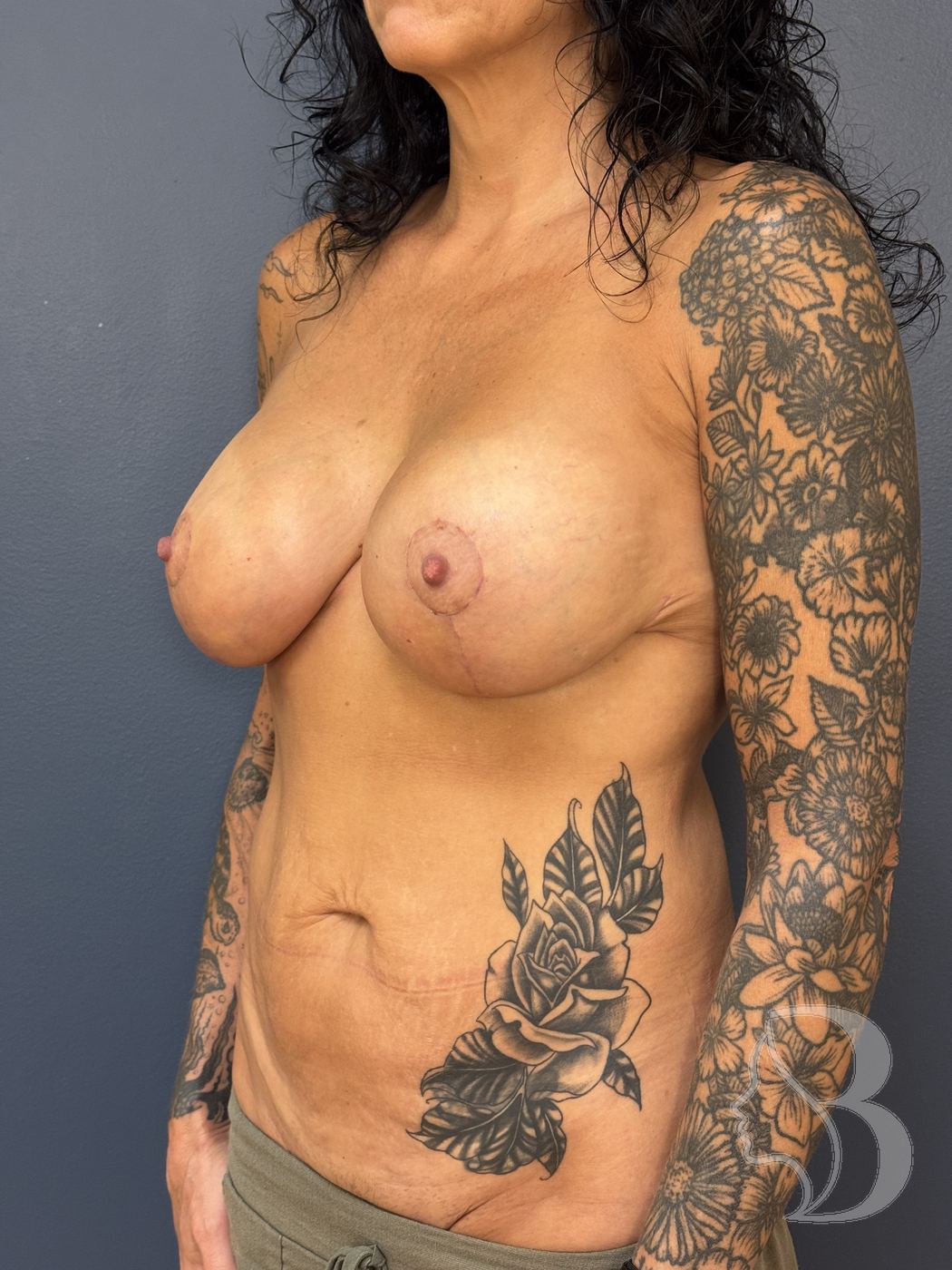
Body  ·  Morristown, NJ

Reverse Tummy Tuck Reverse Abdominoplasty

Target AreaUpper Abdomen
IncisionBreast Fold
Often Paired WithBreast Surgery
Back to Work1–2 Weeks

What Is a Reverse Tummy Tuck?

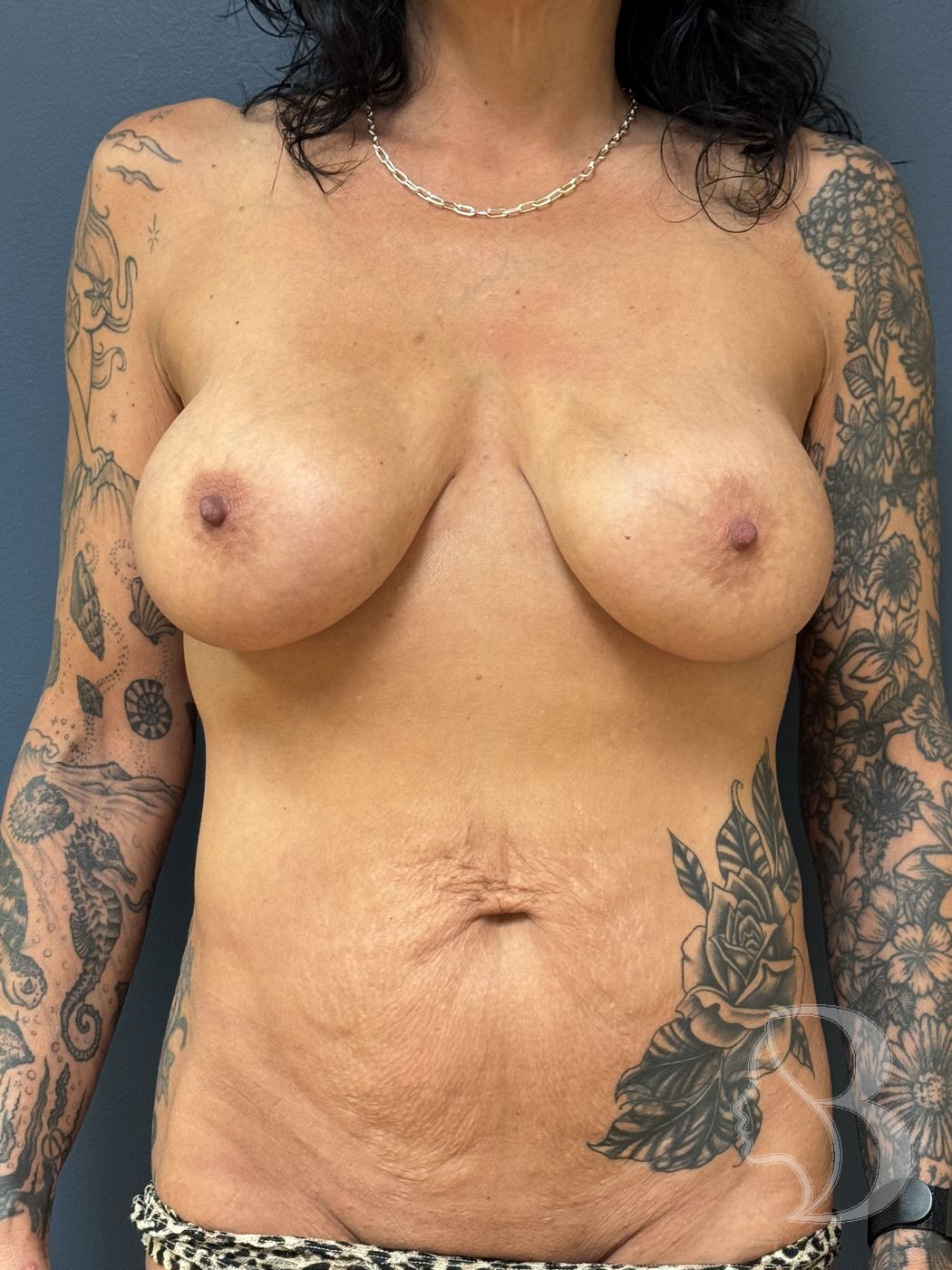
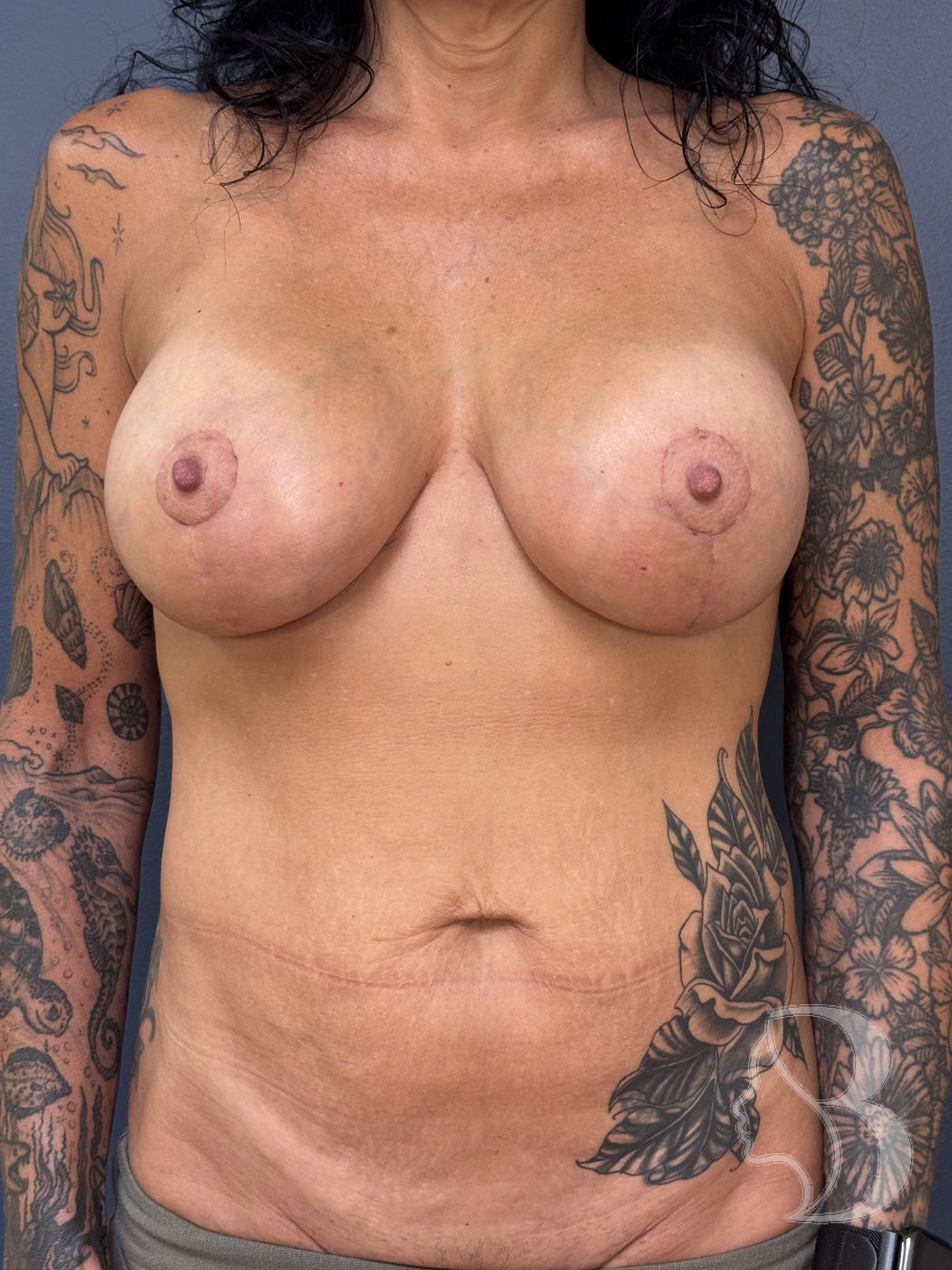
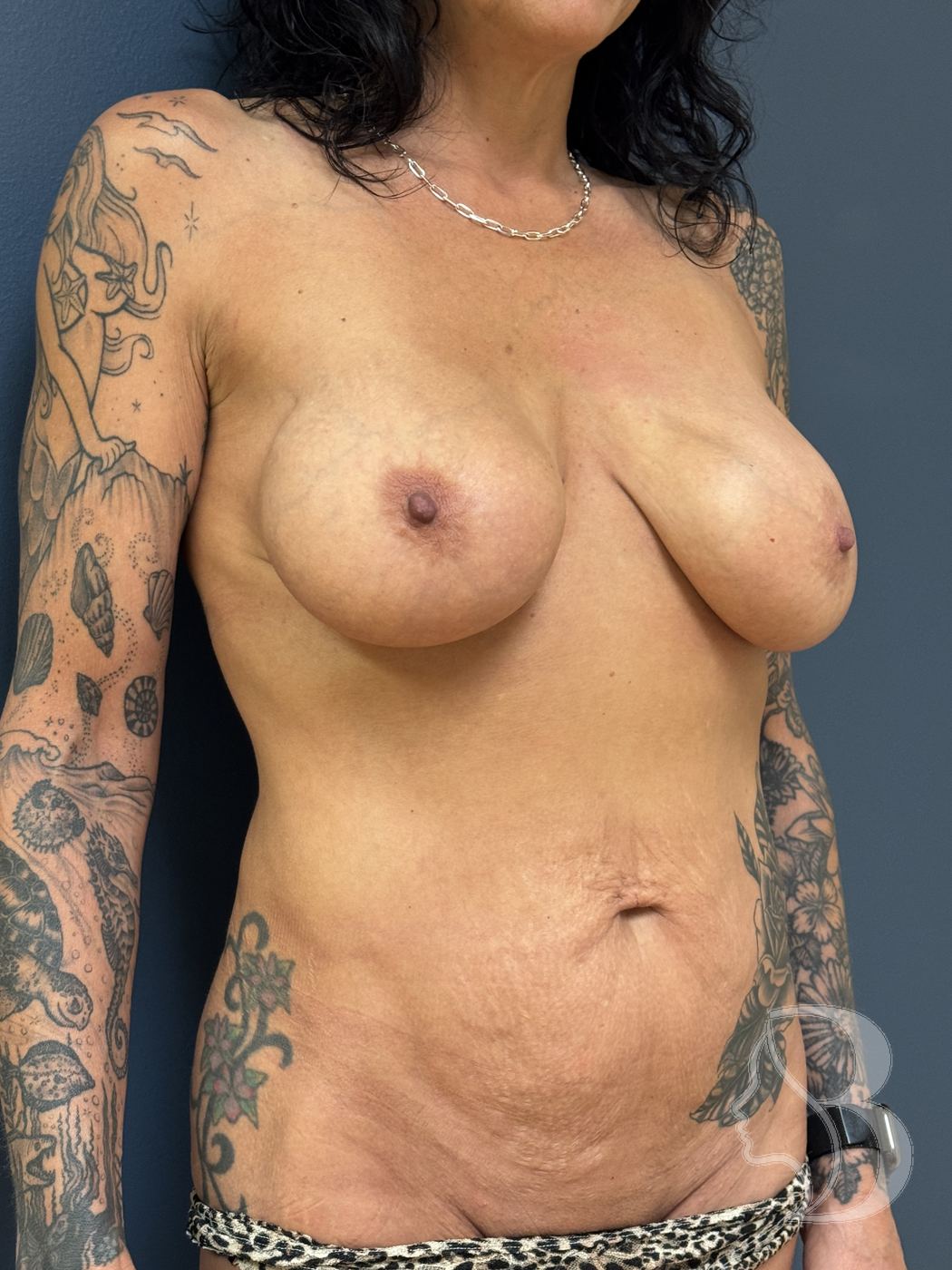
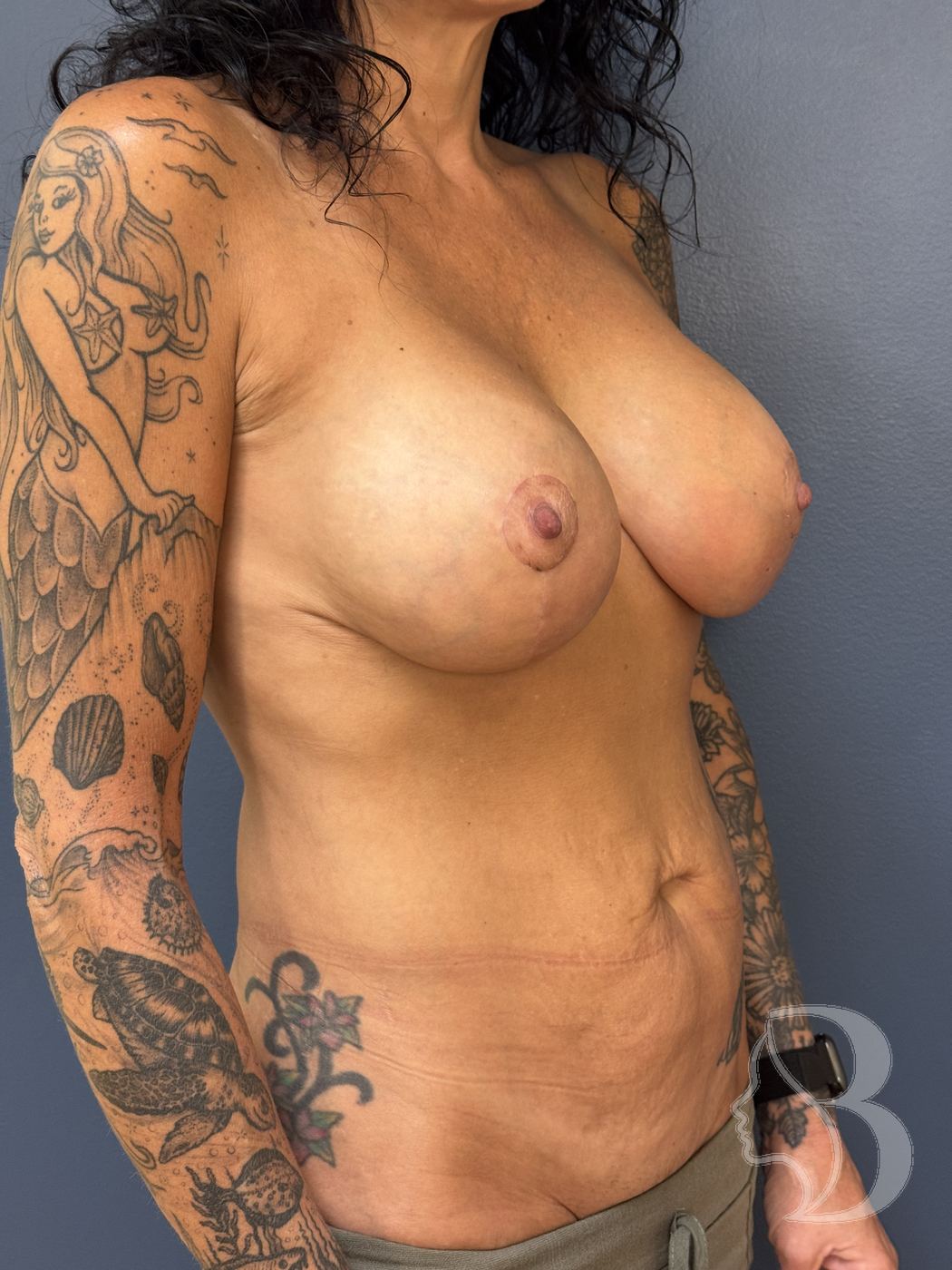
Most tummy tucks pull loose skin down. A reverse tummy tuck — formally, reverse abdominoplasty — does the opposite: it lifts excess skin of the upper abdomen upward and removes it through an incision concealed in the natural crease beneath the breasts. The result is a smoother, tighter upper abdomen without the hip-to-hip scar or navel repositioning of a standard tummy tuck.

It is the answer to a specific and often frustrating pattern: skin that folds, wrinkles, or overhangs above the belly button — common after significant weight loss, after pregnancy, or in patients who already had a standard abdominoplasty and are left with residual upper fullness that the first operation was never designed to reach.

“The standard tummy tuck flattens the lower abdomen beautifully — but it cannot chase laxity above the navel. When the problem lives in the upper abdomen, the honest answer is to lift, not to pull down harder.”

— Dr. Farhad Rafizadeh, MD FACS
Reverse vs. Standard vs. Mini: Choosing the Right Operation

The right abdominoplasty depends on where your laxity lives. Dr. Rafizadeh examines the upper and lower abdomen independently at consultation and recommends the operation — or staged combination — that matches your anatomy:

 Reverse Tummy TuckStandard Tummy TuckMini Tummy Tuck
TreatsUpper abdomen (above the navel)Full abdomen, mostly below the navelLower abdomen only
IncisionHidden in the breast foldHip to hip, low on the abdomenShort, low horizontal
NavelUntouchedRepositionedUntouched
Skin movesUpwardDownwardDownward
Best forUpper laxity, post–weight-loss, after a prior tummy tuckGeneralized laxity + muscle separationMild lower bulge or pooch

The Scar: Hidden in the Breast Fold

The incision follows the inframammary fold — the same crease used for breast augmentation — and, when both sides of the upper abdomen are treated, may connect with a short segment across the lower sternum. Placed precisely in the fold, the mature scar is covered by a bra or bikini top and shadowed by the breast itself. Like every surgical scar it fades over 12 to 18 months from pink to a thin, pale line, and Dr. Rafizadeh guides scar care throughout that first year.

Schedule a ConsultationMeet with Dr. Rafizadeh personally to examine your upper and lower abdomen and map the right plan. Call (973) 267-0928 or request a consultation online.

Who Is a Good Candidate?

The best candidates for a reverse abdominoplasty have loose or overhanging skin of the upper abdomen with relatively good lower-abdominal tone — and are at a stable weight, in good general health, and non-smoking. Three groups appear most often: patients after major weight loss (including GLP-1 medications and bariatric surgery) whose upper abdomen did not retract; women whose upper abdomen loosened after pregnancy; and patients with a prior standard tummy tuck whose lower abdomen is flat but whose upper rolls persist. It is not the right operation when laxity is concentrated below the navel or when significant muscle separation requires the access of a full abdominoplasty — in those cases Dr. Rafizadeh will tell you plainly and recommend the standard approach instead.

Combined With Breast Surgery

Because the incision already sits in the breast crease, the reverse tummy tuck pairs naturally with breast lift, breast reduction, or breast augmentation in a single operation — one anesthesia, one recovery, one concealed incision doing double duty. In select patients, the excess upper-abdominal tissue itself can be preserved and turned upward to add natural volume to the breasts, a technique described in the literature as reverse abdominoplasty with autologous breast augmentation. For women addressing both torso and breasts after pregnancy or weight loss, this combination thinking is the same philosophy behind the practice's mommy makeover planning.

What to Expect & Recovery Timeline

The procedure is performed under general anesthesia at an accredited facility and typically takes 2 to 3 hours, longer when combined with breast surgery. Recovery is broadly similar to a standard tummy tuck — and often somewhat easier, because the navel is untouched and muscle work is usually limited:

Days 1–7Soreness and tightness across the upper abdomen, managed with oral medication. A supportive garment is worn continuously. Short walks begin the day of surgery.
Weeks 1–2Most patients return to desk work. Swelling begins to settle; the incision line is protected and kept supported.
Weeks 4–6Return to full exercise and unrestricted lifting with Dr. Rafizadeh’s clearance. The garment is phased out.
Months 3–18Residual swelling resolves and the contour refines. The inframammary scar matures and fades progressively with scar care.

Cost, Insurance & Financing

The cost of a reverse abdominoplasty in New Jersey depends on the extent of skin removal, whether breast surgery is combined in the same session, and anesthesia and facility fees. Cosmetic reverse abdominoplasty is not covered by insurance, though combined procedures occasionally include covered components (such as breast reduction meeting insurance criteria) — Dr. Rafizadeh’s office will help you understand what applies to your case. Rather than quoting a generic figure, the practice provides a precise, all-inclusive written quote — surgeon, facility, and anesthesia together — at your consultation, and financing options are available.

Reverse Abdominoplasty in New Jersey

Reverse abdominoplasty is an uncommon operation that rewards experience — incision planning at the breast fold, judgment about how much skin can safely move, and coordination with breast surgery all matter. Dr. Rafizadeh has performed body-contouring surgery in Morristown for more than 40 years, serving patients across Morris, Essex, Union, Somerset, and Bergen counties and the greater New York area. Patients comparing a reverse tummy tuck in NJ with a standard or mini tummy tuck receive a direct, anatomy-based recommendation — not a one-size-fits-all answer.

Related Procedures

The reverse tummy tuck is one tool in a coordinated body-contouring plan. Dr. Rafizadeh matches the operation — or combination — to your anatomy.

Lower Abdomen
Tummy Tuck

The standard abdominoplasty: lower-abdominal skin removal, muscle repair, and navel repositioning for generalized laxity.

Explore →
Same Incision
Breast Lift

Restore breast position and shape in the same operation, sharing the concealed fold incision.

Explore →
Same Incision
Breast Reduction

Reduce and reshape heavy breasts while the upper abdomen is tightened below the same crease.

Explore →
Contour
Liposuction

Refine flanks and waist alongside skin tightening for a balanced, proportionate torso.

Explore →
After Weight Loss
Body Contouring

The post–weight-loss hub: staged planning for abdomen, arms, thighs, and breasts after GLP-1 or bariatric weight loss.

Explore →
Combination
Mommy Makeover

Abdomen and breasts addressed in one coordinated surgical plan — the philosophy the reverse tummy tuck was made for.

Explore →

Reverse Tummy Tuck FAQs

What is a reverse tummy tuck?+

A reverse tummy tuck — formally, reverse abdominoplasty — tightens the upper abdomen instead of the lower. Rather than pulling loose skin downward toward a hip-to-hip incision, the surgeon lifts excess upper-abdominal skin upward and removes it through an incision hidden in the natural crease beneath the breasts (the inframammary fold). It is designed for laxity that lives above the navel, which a standard tummy tuck often cannot fully correct.

How is a reverse tummy tuck different from a standard tummy tuck?+

Direction and territory. A standard abdominoplasty removes skin from the lower abdomen through a low horizontal incision and repositions the navel; it is the right operation when most of the laxity sits below the belly button. A reverse abdominoplasty works on the region above the navel through an incision under the breasts, and the navel is usually left untouched. Some patients — particularly after massive weight loss — benefit from each procedure at different stages.

Where is the scar, and will it show?+

The incision follows the inframammary fold — the natural crease where the breast meets the chest — and, when both sides are treated, may connect across the lower sternum. Placed well, it is concealed by a bra, bikini top, or the natural shadow of the breast. Like all surgical scars it matures over 12 to 18 months, fading from pink to a thin pale line with proper scar care.

Who is a good candidate?+

The best candidates have loose, wrinkled, or overhanging skin of the upper abdomen with relatively good lower-abdominal tone — a pattern common after significant weight loss, after pregnancy, or in patients who previously had a standard tummy tuck and have residual upper fullness. Candidates should be at a stable weight, in good health, and non-smoking. Patients whose laxity is mostly below the navel are usually better served by a standard abdominoplasty.

Can it be combined with breast surgery?+

Yes — this is one of the procedure’s greatest strengths. Because the incision already sits in the breast fold, it can serve double duty for a breast lift, breast reduction, or breast augmentation performed in the same operation. In select patients the excess upper-abdominal tissue can even be recruited to add volume to the breasts, a technique described in the plastic surgery literature as reverse abdominoplasty with autologous augmentation.

What is recovery like?+

Recovery is broadly similar to a standard tummy tuck, and often somewhat easier because the navel is not repositioned and the muscle work is usually more limited. Most patients take 1 to 2 weeks off work, wear a supportive garment, avoid lifting and strenuous exercise for about 6 weeks, and see swelling settle progressively over the first few months.

How much does a reverse tummy tuck cost in New Jersey?+

Cost depends on the extent of skin removal, whether breast surgery is combined in the same operation, and anesthesia and facility fees. Rather than quoting a one-size-fits-all figure, Dr. Rafizadeh provides a precise, all-inclusive written quote after your consultation in Morristown, so you know the complete cost before scheduling. Financing options are available.

Is it safe if I have breast implants?+

In experienced hands, yes. The dissection stays below the breast fold and does not need to disturb the implant pocket, though your surgeon must plan the incision carefully to preserve the fold’s support. If you are considering implant revision or exchange, the two procedures can often be coordinated through the same incision. Bring your implant records to your consultation so the plan accounts for them.

Sources & References

  1. American Society of Plastic Surgeons. “Tummy Tuck (Abdominoplasty).” Procedure overview and safety information. plasticsurgery.org
  2. Rebello C, Franco T. “Abdominoplasty through a submammary incision.” International Surgery. 1977;62(9):462–463. (Early description of the reverse abdominoplasty approach.)
  3. Zienowicz RJ, Karacaoglu E. “Augmentation mammaplasty by reverse abdominoplasty (AMBRA).” Plastic and Reconstructive Surgery. 2009;124(5):1662–1672.
  4. Halbesma GJ, van der Lei B. “The reverse abdominoplasty: a report of seven cases and a review of English-language literature.” Annals of Plastic Surgery. 2008;61(2):133–137.
  5. American Board of Plastic Surgery. Board certification verification. abplasticsurgery.org
BPS

Loose Skin Above the Navel?
There's an Operation for Exactly That.

Dr. Rafizadeh examines your upper and lower abdomen independently and recommends the right operation — reverse, standard, or staged — for your anatomy.

Book Consultation (973) 267-0928