A patient posted the following question on RealSelf, and it’s one of the most common questions I see from patients in Morristown, Summit, Chatham, and across North Jersey who are researching rhinoplasty:
Q: “What’s your opinion on rhinoplasty and breast augmentation costs? I’ve been getting quotes and there is a big range. Does a higher price actually mean better results?”
My answer, which I’ve given variations of for more than 40 years in practice, is this: price should not be the deciding factor when choosing a rhinoplasty surgeon. You will look at your nose every day for the rest of your life. You could be the happiest person — delighted with a result that genuinely changes how you feel about your face — or you could be miserable if the result isn’t what you hoped for. The difference is almost never the few thousand dollars you saved at the consultation. The difference is almost always who did the surgery.
Your Nose Is Permanent. The Surgeon You Choose Is Not Interchangeable.
Rhinoplasty is one of the most technically demanding operations in all of plastic surgery. The nose is a three-dimensional structure with millimeter-level tolerances. A change of 2 millimeters in tip projection, or 1 millimeter of asymmetry in the alar base, is visible to the naked eye. The surgeon must simultaneously address the bone, cartilage, skin, and airway — often through an incision barely longer than your thumbnail — and the tissue must heal in exactly the position it was placed.
When it works, the result is a nose that looks like it has always belonged on your face. When it doesn’t, revision rhinoplasty is one of the most complex and expensive procedures in facial plastic surgery — routinely costing more than the original operation, with a longer recovery and less predictable outcome.
This is the calculus behind the advice: the cost of a poorly performed rhinoplasty, measured in revision surgery, time, and psychological difficulty, almost always exceeds what you would have spent choosing a more experienced surgeon in the first place.
What Rhinoplasty Actually Costs in North Jersey
Let me give you the realistic numbers so you know what you’re comparing. In the greater New York–New Jersey metro area, the all-in cost of a primary rhinoplasty typically ranges from $12,000 to $22,000. That total generally breaks down as:
- Surgeon’s fee: $7,000–$14,000, depending on complexity, technique, and experience
- Anesthesia: $1,500–$2,500 (general anesthesia or monitored sedation)
- Operating room / surgical facility: $1,500–$2,500
- Pre-operative testing, post-operative visits: included in most practices
Quotes significantly below $10,000 all-in for a primary rhinoplasty in the New York metro area usually reflect one of three things: a very young surgeon still building a practice, a surgeon who performs rhinoplasty only occasionally as part of a general cosmetic practice, or a price that does not include all the components listed above. None of those are automatically disqualifying — but they warrant a deeper look.
Quotes above $22,000 are not unusual for surgeons who perform rhinoplasty exclusively, operate in premium Manhattan facilities, or have exceptionally high demand. A higher price alone does not mean better results, but the highest-quality rhinoplasty surgeons in the region rarely compete on price.
Why the Surgeon’s Fee Reflects More Than Overhead
The single largest component of rhinoplasty cost is the surgeon’s fee, and that fee reflects several things that matter directly to your outcome:
Volume and repetition. Rhinoplasty is a skill that requires constant practice. A surgeon who performs 100 rhinoplasties per year develops pattern recognition, technique efficiency, and judgment that a surgeon performing 15 per year simply cannot replicate. Experience accumulates differently in a high-volume practice.
Depth of training. Board-certified plastic surgeons who pursued additional rhinoplasty fellowship training, or who trained at programs with strong facial surgery volumes, enter practice with a skill base that reflects years of focused repetition under expert supervision.
Understanding of anatomy at a granular level. The nose varies significantly between patients — in skin thickness, cartilage strength, septal anatomy, and airway configuration. A surgeon who has seen enough rhinoplasties to recognize these variations, and who has a technical toolkit to address them, commands a higher fee because their track record justifies it.
“The most expensive rhinoplasty is the one that needs to be done twice. The surgeon who saved you $3,000 on the first procedure will not be the one writing the check for the revision.”
Red Flags When Evaluating Rhinoplasty Surgeons
When meeting with a surgeon — whether in Morristown, Summit, or anywhere else in Morris County or the surrounding area — these are warning signs worth noting:
- No before-and-after photos, or photos that look heavily filtered. Every high-volume rhinoplasty surgeon should have a robust gallery of natural, consistent results across different face types and nasal structures.
- Reluctance to discuss what they cannot do. A surgeon who tells every patient they are a good candidate without first performing a detailed examination of the nasal bones, cartilage, skin thickness, and airway is not being thorough.
- No discussion of the airway. Rhinoplasty that ignores nasal breathing is incomplete surgery. Any discussion of nose reshaping should include your current breathing function and whether the planned changes will help, leave unchanged, or risk impairing it.
- Very short consultations. A rhinoplasty consultation should take 45–60 minutes. Computer imaging, anatomy review, surgical plan discussion, and answering your questions cannot happen in 15 minutes.
- Pressure to decide quickly or accept a “promotion.” Elective surgery is not a commodity. A surgeon who offers last-minute discounts to book the procedure is competing on price by design.
What to Evaluate Instead of Price
If price is the wrong metric, here is what actually predicts whether you will be happy with your result:
1. Board certification. Your surgeon should be certified by the American Board of Plastic Surgery (ABPS) or the American Board of Facial Plastic and Reconstructive Surgery (ABFPRS). You can verify ABPS certification at abplasticsurgery.org. Board certification establishes that your surgeon completed an accredited residency, passed rigorous examinations, and meets ongoing continuing education requirements.
2. Rhinoplasty volume and consistency. Ask how many rhinoplasties the surgeon performs per year. Ask to see before-and-after photos of patients with a similar nasal structure and skin type to yours. Consistency across a large portfolio is a stronger signal than one extraordinary result.
3. Computer simulation at consultation. A surgeon who performs rhinoplasty frequently should be able to show you a computer-generated simulation of your likely result at the consultation visit. This is not a guarantee — anatomy, healing, and skin behavior can all affect the final outcome — but it demonstrates that the surgeon understands your goals and can translate them into a surgical plan.
4. Open versus closed technique. Both open rhinoplasty (with a small incision at the base of the columella) and closed rhinoplasty (entirely through the nostrils) can produce excellent results. The right technique depends on what needs to be done. Ask your surgeon which approach they plan to use and why. A surgeon who uses only one technique for every patient may not have the range that a complex case demands.
5. Recovery and revision policy. Rhinoplasty swelling resolves slowly — the final result is typically not apparent for 12 months. Understand what the post-operative protocol looks like, how many follow-up visits are included, and what the surgeon’s policy is if a minor revision is needed after healing.
Patient Results: Rhinoplasty at Our Morristown Practice
View Full Gallery →
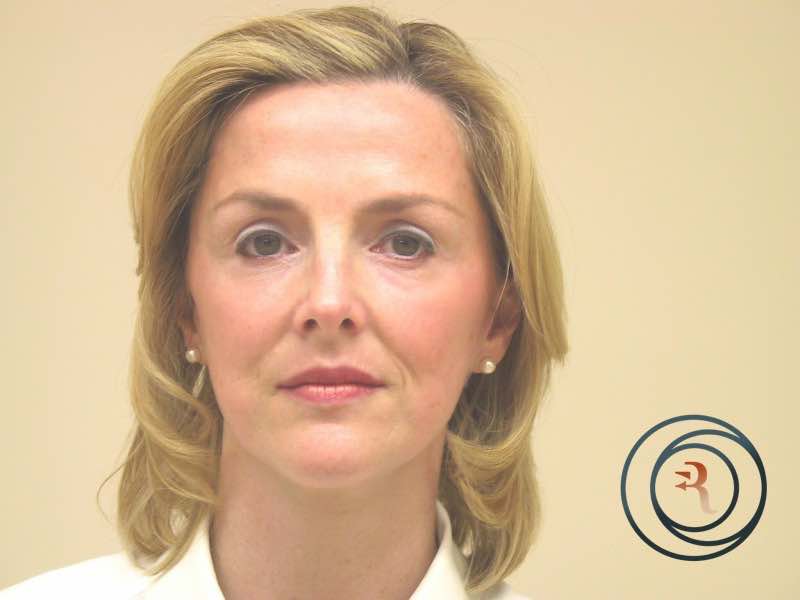


Results shown are from actual patients of Dr. Farhad Rafizadeh. Individual results vary based on anatomy, skin type, and healing. All procedures performed at our Morristown, NJ surgical facility.
Questions to Ask at Your Rhinoplasty Consultation
Whether you are consulting with me in Morristown or with a surgeon anywhere in the New Jersey or New York area, these are the questions worth asking before committing to any surgeon:
- How many rhinoplasties do you perform each year? What percentage of your practice is rhinoplasty?
- Will you perform computer imaging during this consultation so I can see a projected result?
- Are you planning open or closed rhinoplasty, and why?
- Will you be addressing my nasal airway or just the external appearance?
- What is your revision rate, and what is your policy if I am not satisfied with the final result after healing is complete?
- How many follow-up appointments are included, and what does the post-operative monitoring protocol look like?
- Can I speak with or correspond with a patient who has had a similar procedure with you?
A surgeon who is confident in their outcomes will welcome every one of these questions. Hesitation or evasiveness on any of them is information.
Common Questions North Jersey Rhinoplasty Patients Search
How much does rhinoplasty cost in New Jersey?
In North Jersey and the greater New York metro area, primary rhinoplasty all-in typically runs $12,000–$22,000, which covers the surgeon’s fee, anesthesia, and the surgical facility. The surgeon’s fee is the largest and most variable component. Revision rhinoplasty costs more than a primary procedure because operating through scar tissue is technically harder and takes longer. Ask any practice you consult to put the full breakdown in writing before you compare one quote to another.
How to choose a plastic surgeon for rhinoplasty?
Start with board certification — your surgeon should be certified by the American Board of Plastic Surgery (ABPS) or the American Board of Facial Plastic and Reconstructive Surgery. Then ask how many rhinoplasties they perform per year, review a large portfolio of before-and-after photos across different face types, and confirm they perform computer simulation at the consultation. Proximity and price should be the last criteria you consider, not the first.
How do I compare rhinoplasty doctors in NJ?
Line your candidates up against the same four criteria instead of against their marketing. First, certification and scope: many rhinoplasty doctors in NJ come from an ENT or facial-plastics background, whereas a full plastic surgeon is trained to treat the nose in harmony with the whole face rather than in isolation. Second, volume and consistency — how many noses does this surgeon operate on in a year, and do the results look stylistically consistent across different face types? Third, evidence you can actually see: a large before-and-after portfolio that includes noses built like yours, not only the easiest cases. Fourth, the consultation itself — whether the surgeon examines your breathing as carefully as your profile, and whether they are willing to tell you what they would not do. Dr. Rafizadeh has practiced as a board-certified New Jersey rhinoplasty surgeon in Morristown since 1984.
What determines the price of a nose job?
The largest variable is the surgeon’s fee, which reflects training depth, case volume, demand, and technical complexity of your planned procedure. Anesthesia and facility fees add $3,000–$5,000 on top of that. In North Jersey, primary rhinoplasty all-in typically runs $12,000–$22,000. Revision rhinoplasty costs more because working through scar tissue is technically harder and takes longer.
Can you negotiate a price with a plastic surgeon?
Experienced rhinoplasty surgeons generally do not negotiate on surgical fees — and that is actually reassuring. A surgeon competing on price is telling you something about how they attract patients. What you can ask about is financing (CareCredit, payment plans), whether facility fees are bundled, and what is included in the post-operative care period. Saving a few hundred dollars by choosing a less-qualified surgeon is a false economy when revision surgery costs more than the original procedure.
What happens 10 years after rhinoplasty?
A well-performed rhinoplasty with adequate structural support is permanent. The nose continues to age with the rest of your face, but the reshaping achieved at surgery should remain. The biggest long-term risk is over-resection — removing too much cartilage — which can cause nasal collapse, breathing difficulties, or a pinched-tip appearance that worsens over a decade. This is one of the core reasons conservative, experienced technique matters more than price.
Is 20 a good age for rhinoplasty?
Generally yes, provided nasal growth is complete — which typically occurs around age 15–16 in females and 17–18 in males. For patients in their late teens and early twenties in North Jersey, the consultation should include a discussion of realistic goals, psychological readiness, and what the nose will look like as the face continues to mature into the mid-twenties. I do not operate on patients younger than 16 for cosmetic rhinoplasty.
How do I know if a rhinoplasty surgeon is board certified in New Jersey?
You can verify ABPS board certification directly at abplasticsurgery.org — enter the surgeon’s name and the site will confirm their certification status and the date it was granted. In New Jersey, plastic surgery should be performed only by surgeons certified by ABPS or ABFPRS, operating in an accredited surgical facility. Membership in ASPS (American Society of Plastic Surgeons) is an additional signal that the surgeon meets ongoing peer review and continuing education standards.
Sources & References
- American Society of Plastic Surgeons. “Rhinoplasty.” plasticsurgery.org. plasticsurgery.org
- American Society of Plastic Surgeons. “Choosing a Board-Certified Plastic Surgeon for Rhinoplasty.” plasticsurgery.org. plasticsurgery.org
- Constantian MB. “Four common errors in nasal tip surgery.” Plast Reconstr Surg. 2003;111(7):2372–2383. PubMed
- Rohrich RJ, Ahmad J. “A practical approach to rhinoplasty.” Plast Reconstr Surg. 2016;137(4):725e–746e. PubMed
- Kadakia S, et al. “Revision rhinoplasty: an analysis of the literature.” Facial Plast Surg. 2016;32(6):624–629. PubMed
- American Board of Plastic Surgery. “Verify Board Certification.” abplasticsurgery.org
Related Reading From Dr. Rafizadeh’s Blog
If you are researching rhinoplasty in North Jersey, these articles from our blog may also be helpful:
- Will I Look Different After Rhinoplasty? Natural Results in North Jersey
- Inside the Operating Room: Rhinoplasty Photos and What Accurate Results Look Like
- Dorsal Hump Rhinoplasty in Morristown: Removing the Nasal Bridge Bump
- Tip Rhinoplasty in New Jersey — Refining the Nasal Tip
- Bulbous Tip Rhinoplasty in Morristown, New Jersey
- Non-Surgical Rhinoplasty vs. Surgical Rhinoplasty in New Jersey
Bottom Line
Rhinoplasty is a permanent procedure performed on the most visible part of your face. The surgeon you choose determines, more than any other variable, whether you will be satisfied with the result for the next 20, 30, or 40 years. Price is a real consideration — it belongs in the equation — but it should be the last filter you apply, after you have confirmed board certification, reviewed before-and-after photos, spoken at length with your surgeon about your specific anatomy and goals, and felt confident in the quality and transparency of the care you will receive.
If you are considering rhinoplasty in Morristown, Summit, Chatham, Madison, Short Hills, or anywhere across Northern New Jersey, I am happy to meet with you for a detailed consultation. We will review your nasal anatomy, perform computer simulation, and talk through exactly what can and cannot be accomplished — with honest expectations, not just what you want to hear.
Ready to schedule a consultation in Morristown, NJ?
Book a ConsultationConsultations are also available with Dr. Andre Rafizadeh, a fellowship-trained plastic surgeon now practicing at the Morristown office.