
One of the most common questions Dr. Farhad Rafizadeh hears from mothers in his Morristown consultation room — and a question that appears again and again on his RealSelf Q&A page — comes from women who are finished having children and want to address what pregnancy changed, all at once.
“I’m done having kids and I want to fix my stomach and my breasts. Can I have my tummy tuck and breast lift done at the same time, or is it safer to do them separately?”
It is exactly the right question to ask. After pregnancy and breastfeeding, two areas change together: the abdomen stretches and the muscles often separate, while the breasts lose volume and the skin loosens. A mommy makeover is simply the term for addressing both in one coordinated plan — and for most healthy patients, that plan can be a single operation.
Dr. Rafizadeh’s Short Answer
For a healthy patient who is finished having children and at a stable weight, combining a tummy tuck with a breast lift or augmentation in one operation is safe and efficient. You go through anesthesia once and recover once, and I can balance the upper and lower body in the same sitting. What matters is careful selection, a reasonable operative time, and a fully accredited setting. When a patient has significant medical issues or a very high body weight, I will recommend staging the procedures instead — safety always sets the plan.
That captures the philosophy: combine when it is safe to combine, stage when it is safer to stage. The decision is made patient by patient, not by a one-size-fits-all rule.
What a Mommy Makeover Actually Includes
There is no single fixed “mommy makeover” operation. It is a customized combination built around what pregnancy changed for the individual patient. The most common building blocks are:
- Tummy tuck (abdominoplasty) — removes loose lower-abdominal skin and, critically, repairs the separated abdominal muscles (diastasis recti) that pregnancy commonly causes.
- Breast lift (mastopexy) — removes excess skin and reshapes a breast that has deflated or sagged after breastfeeding.
- Breast augmentation — restores lost upper-pole volume with an implant, often combined with a lift.
- Liposuction — refines the waist, flanks, or upper abdomen to sharpen the overall contour.
Many patients need a lift but not an implant; others want the fullness an implant restores. The combination is decided at consultation based on skin laxity, breast volume, muscle separation, and the look the patient is after. For the full overview of how these procedures are combined, staged, and recovered from together, see Dr. Rafizadeh’s mommy makeover in NJ page.
Is It Safe to Combine the Procedures? What the Research Shows
This is the heart of the question, and it is well studied. Large single-practice series of combined abdominoplasty and breast surgery have reported complication and revision rates comparable to performing the procedures separately, when patients are appropriately selected. In other words, for the right patient, combining does not meaningfully raise the risk compared with two staged operations — while it removes a second anesthesia and a second recovery.
The key phrase is appropriately selected. Combined surgery is safest when:
- The patient is healthy, a non-smoker, and at a stable weight.
- Total operative time can be kept reasonable.
- The procedure is performed in an accredited surgical facility with a board-certified anesthesia provider.
- Blood-clot prevention measures are used during and after surgery.
When those conditions aren’t met — a significant medical history, a very high body mass index, or an operative plan that would run too long — Dr. Rafizadeh will recommend staging the breast and abdominal procedures into two shorter operations. The goal is never to do everything in one day; it is to do what is safe for that patient.
The Advantages of a Single-Stage Mommy Makeover
- One anesthesia. A single exposure instead of two, and one pre-operative workup.
- One recovery. One block of time off work and away from full activity, rather than two separate downtimes.
- A balanced result. Designing the lifted breasts and the flattened, tightened abdomen together helps the proportions of the whole torso work as one.
- Lower combined cost. Sharing one facility and anesthesia fee is usually less expensive than paying for two separate surgical days.
How Dr. Rafizadeh Plans the Operation
1. A Thorough Health and Goals Assessment
The consultation reviews medical history, medications, smoking status, weight stability, and whether childbearing is complete. The breast and abdominal anatomy are examined together so the plan addresses both as a unit.
2. Choosing the Right Breast Procedure
Some patients need only a lift; others want a lift with an implant to restore upper fullness. When implants are used, Dr. Rafizadeh selects smooth, FDA-approved implants from Motiva, Allergan, or Mentor sized to the patient’s frame. He does not use textured implants.
3. The Tummy Tuck and Muscle Repair
The abdominoplasty removes loose lower skin and repairs the separated muscles, rebuilding the core and flattening the profile. A small amount of liposuction is often added to refine the waistline.
4. An Accredited Setting With Continuous Monitoring
The operation is performed in a fully accredited outpatient surgical facility in Morristown with a board-certified anesthesia provider and continuous monitoring from start to finish. Blood-clot prevention is built into the plan.
Recovery: What the First Weeks Look Like
Recovery is driven mostly by the tummy tuck, because of the muscle repair. A realistic timeline for a Northern New Jersey patient:
- Week 1: The most restrictive phase. You’ll wear a compression garment, walk gently and often to prevent clots, sleep slightly bent at the waist, and avoid lifting. Arrange help at home, especially with young children.
- Weeks 2–3: Most desk-job patients return to work. Mobility improves and you stand up straighter as the abdominal repair settles.
- Weeks 4–6: Light activity expands; most patients are cleared for full exercise around six weeks.
- Months 2–6: Swelling continues to fade and the final contour refines. Scars begin to mature and lighten.
Plan on roughly two weeks off for a desk job and four to six weeks for physically demanding work. For more on the abdominal portion specifically, see Dr. Rafizadeh’s article on tummy tuck recovery in Morristown, New Jersey, or the complete procedure overview on his tummy tuck in New Jersey page.
Timing: When Are You Ready?
Two milestones matter most. First, be finished having children — a future pregnancy can stretch the repaired muscles and skin again and undo the result. Second, be at a stable weight, generally for three to six months. If breast surgery is included, wait three to six months after fully stopping breastfeeding so the breast tissue has settled. Most surgeons advise waiting at least six months after delivery before any major body procedure.
What This Looks Like in Real Patients
A mommy makeover combines two results into one plan. The cases below show the individual components Dr. Rafizadeh designs around — a breast lift and a tummy tuck — that are frequently performed together in a single mommy makeover for Morristown and Northern New Jersey patients. If you are comparing galleries as you research surgeons, it helps to know what a clinical photo pair can and cannot tell you — our guide to what mommy makeover before and after photos really show explains how to read them.
Patient Before & After
View Full Gallery →
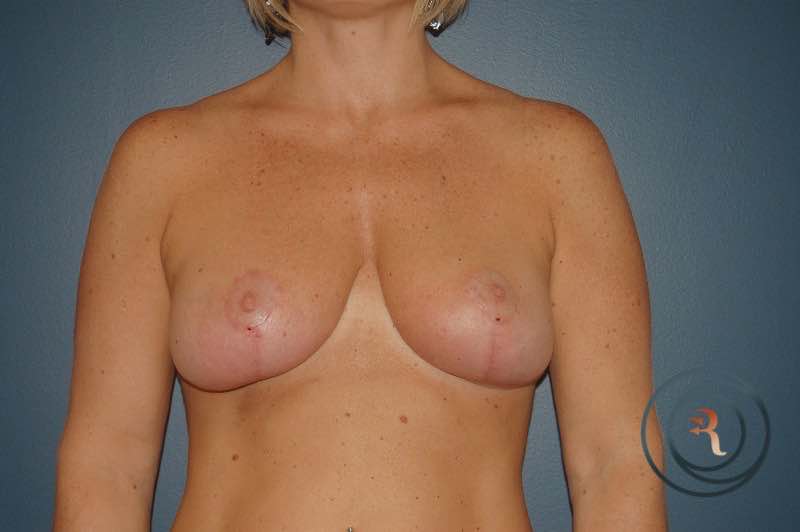
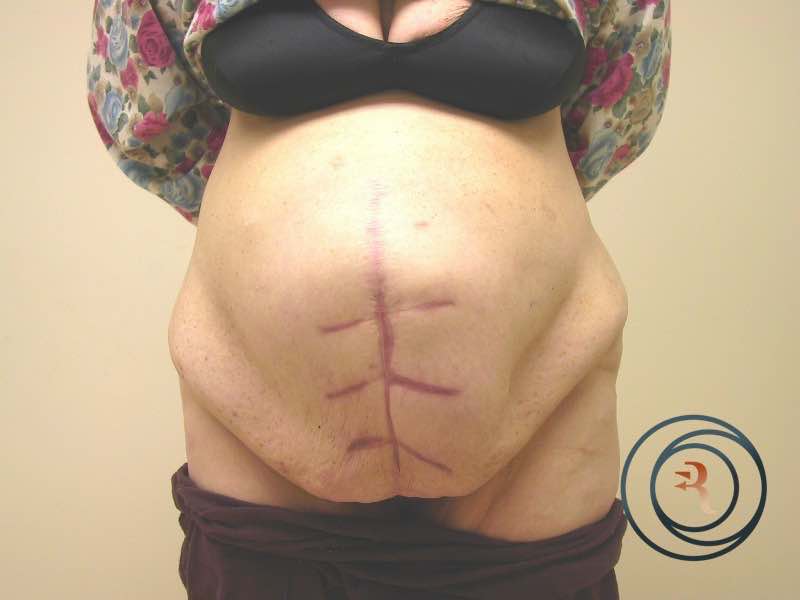
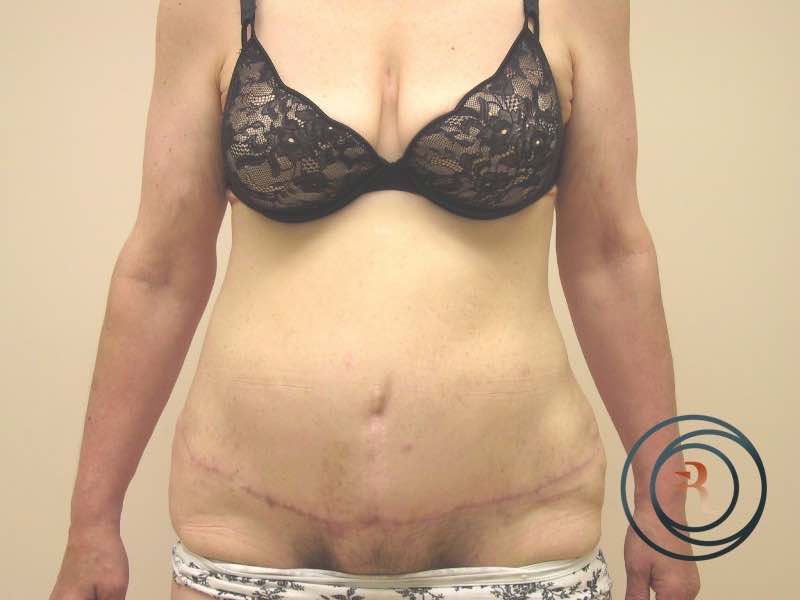
The breast lift and tummy tuck above are the two procedures most often combined into a single mommy makeover. Results vary by patient; photos shown with patient consent.
Questions Mothers Should Ask Any Plastic Surgeon in North Jersey
If you are interviewing surgeons in Morristown, Summit, Chatham, Madison, Short Hills, Bernardsville, Mendham, or anywhere across Northern New Jersey, useful questions include:
- Am I a candidate to combine my procedures safely, or would you recommend staging them — and why?
- How long will my specific operation take, and where is it performed?
- Who is the anesthesia provider, and what is the facility’s accreditation?
- What do you do to prevent blood clots during and after a combined surgery?
- If implants are part of my plan, which implants do you use and why?
- What does a realistic recovery look like given my job and my children’s ages?
Common Questions Patients Search About Mommy Makeovers
How soon after giving birth can you get a mommy makeover?
Most surgeons recommend waiting at least six months after delivery before any major body surgery, and three to six months after you have completely stopped breastfeeding if breast procedures are included. This lets your hormones normalize, your skin contract, and your weight stabilize — all of which make the result more accurate and longer lasting. There is no strict upper limit, and many North Jersey patients have their mommy makeover years after their youngest child.
How painful is mommy makeover recovery?
The tummy tuck muscle repair is the main source of discomfort, and the first three to five days are the most intense — most patients describe tightness and soreness rather than sharp pain. Long-acting local anesthetic and nerve blocks placed during surgery have made this far more manageable, and most patients move off prescription pain medication within several days and switch to over-the-counter relief.
How long should I take off work for a mommy makeover?
Plan on about two weeks off for a desk or remote job and four to six weeks for a physically demanding one. Just as important, arrange help at home for at least the first week — lifting is restricted while the abdominal repair heals, which matters most for patients with young children.
What disqualifies you for a tummy tuck or mommy makeover?
The most common reasons to wait or to stage the procedures are active smoking, uncontrolled diabetes or blood pressure, a very high body mass index, a bleeding or clotting disorder, certain heart or lung conditions, and planning a future pregnancy. Many of these are modifiable — stopping smoking well before surgery and reaching a stable, healthy weight often turns a borderline patient into a good candidate.
Is it cheaper to do a tummy tuck and breast surgery at the same time?
Usually, yes. Combining the procedures means you share a single facility fee and a single anesthesia fee rather than paying for two separate surgical days, which lowers the overall cost compared with staging. The surgeon’s fees for each procedure still apply, but the shared operative costs make the combined approach more economical for most candidates. To understand the factors behind the abdominal portion, see our guide to tummy tuck cost in New Jersey.
What is the 3-3-3 rule after pregnancy?
The “3-3-3 rule” is a postpartum recovery guideline — three days in bed, three weeks largely at home, and three months of overall recovery — describing how a mother’s body recovers from childbirth itself, not from surgery. It is a helpful reminder that the body needs real time to heal after delivery, which is part of why surgeons ask patients to wait several months before an elective mommy makeover.
Can I lose weight after a tummy tuck?
Yes. A tummy tuck removes loose skin and repairs muscle; it is not a weight-loss operation, and it does not prevent future weight loss. Many patients find it easier to stay active once the loose skin and muscle separation are corrected. For the most durable result, it is best to be close to your stable goal weight before surgery rather than planning major weight loss afterward.
Sources & References
- Stevens WG, Cohen R, Vath SD, et al. “Safe and Consistent Outcomes of Successfully Combining Breast Surgery and Abdominoplasty: An Update.” Aesthetic Surgery Journal. 2009;29(2):129–134. PubMed
- Winocour J, Gupta V, Ramirez JR, et al. “Abdominoplasty: Risk Factors, Complication Rates, and Safety of Combined Procedures.” Plastic and Reconstructive Surgery. 2015;136(5):597e–606e. PubMed
- American Society of Plastic Surgeons. “Everything you need to know about a mommy makeover.” plasticsurgery.org
- The Aesthetic Society. “Mommy Makeover — Aftercare & Recovery.” theaestheticsociety.org
- American Board of Plastic Surgery. “Verify a Surgeon’s Certification.” abplasticsurgery.org
- Farhad Rafizadeh, MD, FACS — RealSelf Q&A profile. realself.com
Related Reading From Dr. Rafizadeh’s Blog
Mothers researching post-pregnancy body and breast procedures in Northern New Jersey may find these articles useful:
- Breast Lift, Fat Transfer & Tummy Tuck at the Same Time in North Jersey
- Tummy Tuck Recovery in Morristown, New Jersey
- Mini Tummy Tuck, Full Tummy Tuck, or Just Liposuction?
- Extended Tummy Tuck in New Jersey
- Mons Pubis Lift (Monsplasty) With a Tummy Tuck, Explained
Bottom Line
For a healthy mother who is finished having children and at a stable weight, combining a tummy tuck with a breast lift or augmentation into a single mommy makeover is a safe, efficient, and well-studied approach — one anesthesia, one recovery, and a contour balanced top and bottom. When a patient’s health or weight makes a single long operation less safe, staging the procedures is the smarter plan. The right answer is the one built around your anatomy, health, and goals.
If you are considering a mommy makeover, tummy tuck, breast lift, or breast augmentation in Morristown, Summit, Chatham, Madison, Short Hills, or anywhere across Northern New Jersey, Dr. Rafizadeh is happy to review your health history and goals and tell you honestly whether combining or staging is right for you.
Ready to schedule a consultation in Morristown, NJ?
Book a Consultation