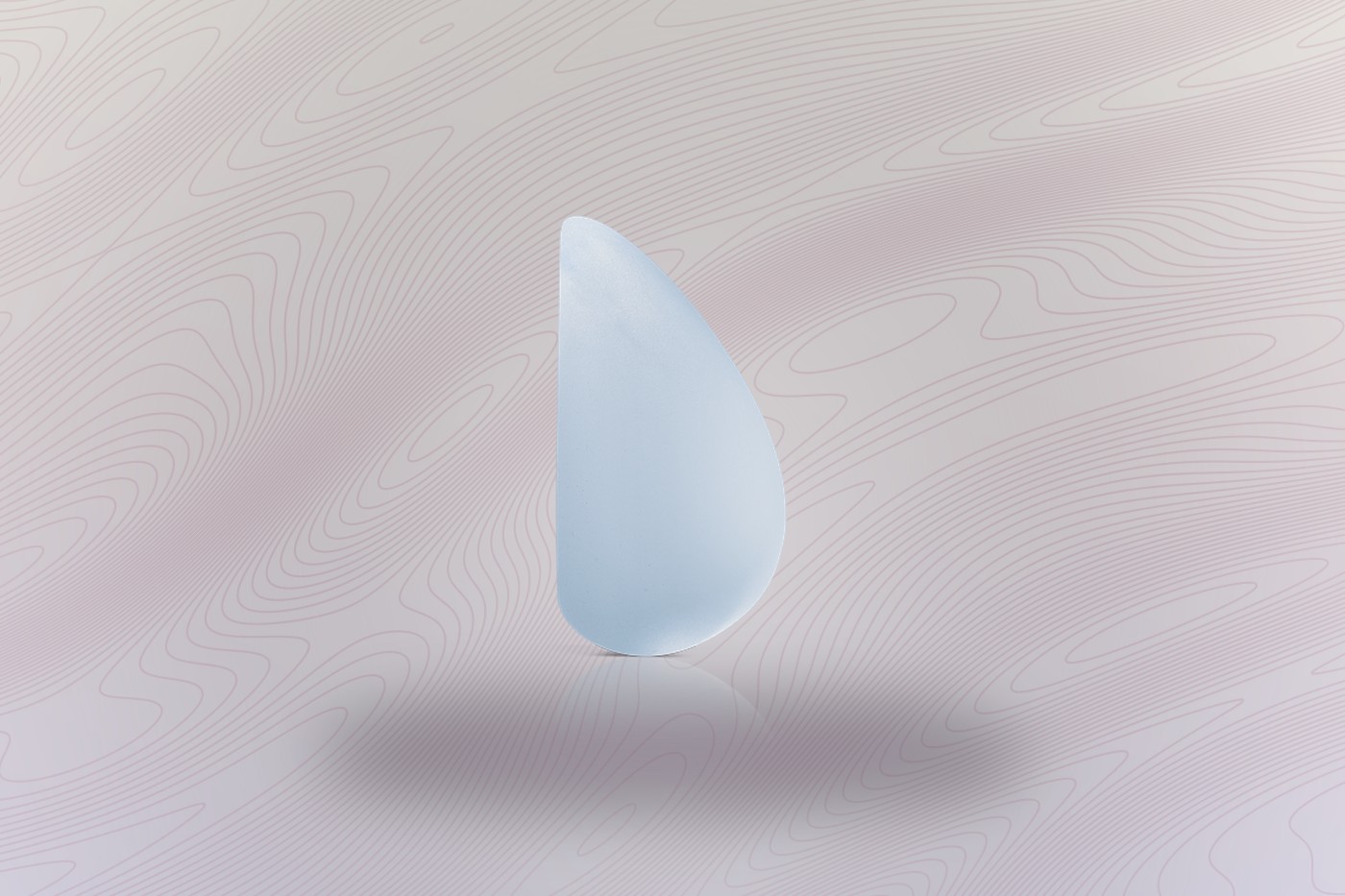
“Over or under the muscle?” is one of the first questions I hear at a breast augmentation consultation, and it usually arrives with an opinion attached. A friend had hers under and loves them. A forum says over looks fake. Someone read that under the muscle is safer. Each of those has a grain of truth that was more true ten years ago than it is today, because the decision has always depended on the implant as much as on the pocket, and the implants have changed.
This post is about what the newest generation of Motiva implants does and doesn’t change about breast implant placement. My father wrote a thorough piece on the classic over-versus-under decision, Breast Implants Over or Under the Muscle?, and the placement page covers the basics. I won’t repeat those. I want to talk about the third option most patients have never heard of, and why I find myself recommending it more often than I expected to.
It’s Three Planes, Not Two
The breast sits on the pectoralis major muscle. Covering that muscle is a thin, strong sheet of connective tissue called the pectoral fascia. An implant can go in one of three places:
- Subglandular (over the muscle). Between the breast gland and the fascia. Nothing beneath the breast is disturbed. The implant is covered only by breast tissue and skin.
- Subfascial. The fascia is lifted off the muscle and the implant is placed beneath it, still in front of the muscle. The fascia acts as an extra layer of coverage and a hammock that holds the implant in position. The muscle is not cut.
- Submuscular / dual plane (under the muscle). The lower attachments of the pectoralis are released and the upper two-thirds of the implant sit beneath the muscle, with the lower pole covered by breast tissue. This is what most American surgeons mean by “under.”
Subfascial augmentation was developed in Brazil in the late 1990s by Dr. Ruth Graf and colleagues specifically to get the natural movement of an over-the-muscle result without its two main drawbacks: visible implant edges and a higher rate of capsular contracture. It has been standard in parts of South America and Europe for twenty years and is only now getting a serious look in the United States.
Why “Under” Became the Default
For most of my training, under the muscle was the default for three reasons, and all three were sound at the time.
First, coverage. Many augmentation patients are slim and have a centimeter or less of breast tissue in the upper pole. An implant placed over the muscle in that patient shows its edge, ripples, and looks like what it is. The muscle adds a layer that hides all of that.
Second, capsular contracture. Every implant forms a scar capsule; contracture is when that capsule tightens and hardens the breast. With the implants available in the 2000s and 2010s, the published rates were consistently lower under the muscle than over it, and that was reason enough for a lot of surgeons.
Third, mammography. An implant behind the muscle gets in the way of a mammogram less than one sitting directly behind the gland.
The cost of going under is the muscle itself. Releasing it hurts more and recovers slower, and once an implant lives beneath a working muscle, the muscle moves it. That is animation deformity: the breast shifting or flattening when you push, lift, or flex. Systematic reviews report it in a majority of subpectoral patients, usually mild, occasionally not. For a woman who lifts weights, rows, swims competitively or does yoga, it is a daily reminder.
Read how Dr. Rafizadeh plans a proportion-first augmentation, which implants we use, and what recovery involves on the full procedure page.
Breast Augmentation in Morristown, NJ or call (973) 267-0928What Has Actually Changed With Motiva
Two of the three reasons for going under were really reasons about the implant, not the pocket. That is where the newest generation matters. Here is what is different, with the evidence as it stands.
The surface
Motiva implants have a shell the company calls SmoothSilk, with a surface texture measured in the single-digit micron range. It is classified as smooth, which is why we can use it; this practice has never used textured implants and will not. The idea behind the surface is a quieter inflammatory response from the tissue around the implant, which in theory means a thinner, softer capsule. A 2026 review in Aesthetic Surgery Journal summarizes the laboratory and clinical work behind that claim. I read it as plausible and still being proven, not proven.
The gel
The Ergonomix version uses a softer, more fluid silicone gel. Standing, the implant settles into a teardrop; lying down, it spreads out and rounds like a natural breast. That behavior is what people mean when they say Motiva implants “move like tissue.” It also means the implant is less likely to look like a fixed round shape sitting on the chest when it is placed in front of the muscle, which was a large part of the case against over-the-muscle placement in the first place.
The data
The FDA approved Motiva SmoothSilk Round and Ergonomix in September 2024 for primary and revision augmentation in women 22 and older. The 5-year results from the pivotal study were published in Aesthetic Surgery Journal in 2026: 451 primary augmentation patients, 87% follow-up at year five, low rates of rupture, and a reoperation rate for any reason of 8.8% in the primary cohort. The most common reasons for reoperation in that group were size change and malposition, not contracture. Those are the company’s trial numbers and the 10-year data are still being collected, so I describe them as encouraging. For comparison, 10-year core-study reoperation rates for the established brands run meaningfully higher, though trial populations differ and I would not put the numbers side by side as if they were a head-to-head study.
The sizes
On October 5, 2026, the FDA approved 28 additional sizes, including Round and Ergonomix implants down to 105 cc. That matters for the placement conversation more than it sounds. A proportion-first augmentation often means a smaller implant than the patient first imagined, and a smaller, softer implant needs less camouflage from the muscle. The approval is recent and the new sizes are expected to be available before the end of the year.
The technique around it
Alongside the implant, a minimally invasive, tissue-preserving approach has been built around it: a short inframammary incision, blunt tunneling, a balloon to open the pocket rather than cutting, and a soft implant that can be introduced through a small opening. A 2026 multicenter US series of 159 consecutive patients reported no early hematomas and no sensory disturbance, with 58% of cases done under local anesthesia with sedation and 94% of patients satisfied or extremely satisfied. It is early, single-group data from surgeons invested in the technique, and I treat it that way. But it is a real shift in how little the breast has to be disturbed to place an implant, and that approach lives naturally in front of the muscle.
Why This Tilts Some Patients Toward Subfascial
Put those pieces together and the old arithmetic changes for a specific kind of patient. If the implant’s surface is associated with a quieter capsule, the gel does not show its edges the way firmer gels do, and the size is proportionate, then the two implant-related reasons for going under the muscle get weaker. What is left is coverage, and that is where the fascia earns its keep.
A 2020 systematic review in Aesthetic Surgery Journal Open Forum pooled 22 studies of subfascial augmentation, 3,743 patients in all, and found a capsular contracture rate of about 1% and an infection rate of 0.1%, with no animation deformity reported. The authors’ conclusion was that the subfascial plane may offer the low contracture rates of submuscular placement while avoiding its discomfort and animation. A 2024 meta-analysis comparing subfascial to subglandular placement found the subfascial plane had the edge on contracture and rippling. Those reviews span many implant types, so they are about the plane, not about Motiva specifically; the combination is what makes the case.
In my own practice, the patients who do best in the subfascial plane tend to share a few things: at least two centimeters of pinchable tissue in the upper pole, a modest size goal, an active lifestyle where animation would bother them, and no prior breast surgery. Here is a recent one, with the rest of her views in our before and after gallery.
Subfascial Breast Augmentation with Motiva Ergonomix
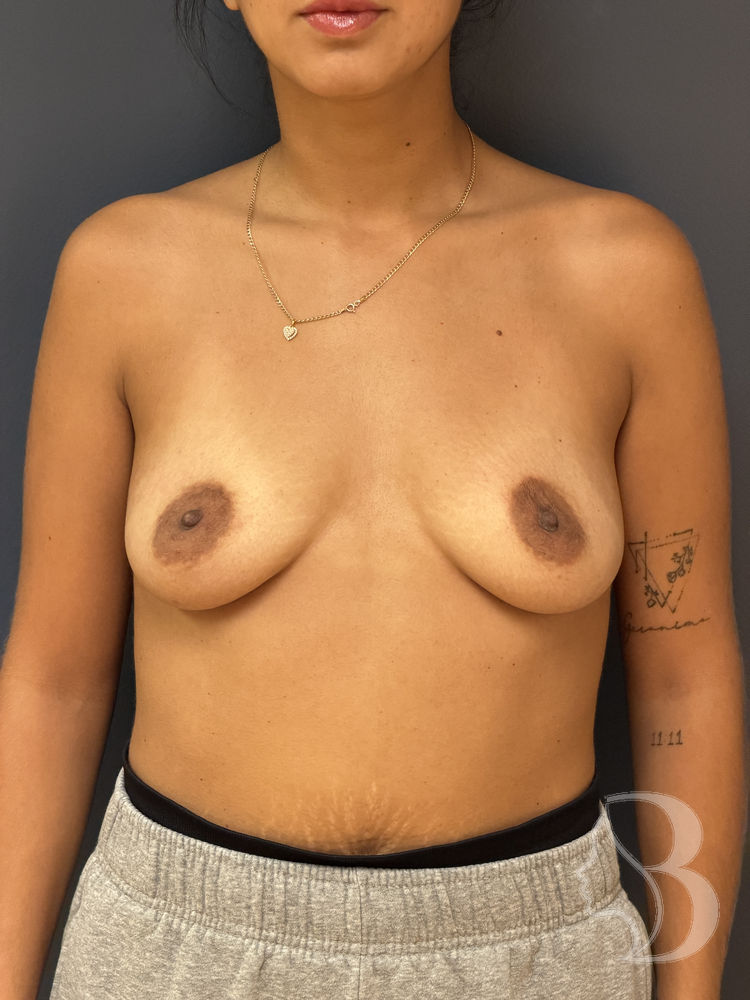
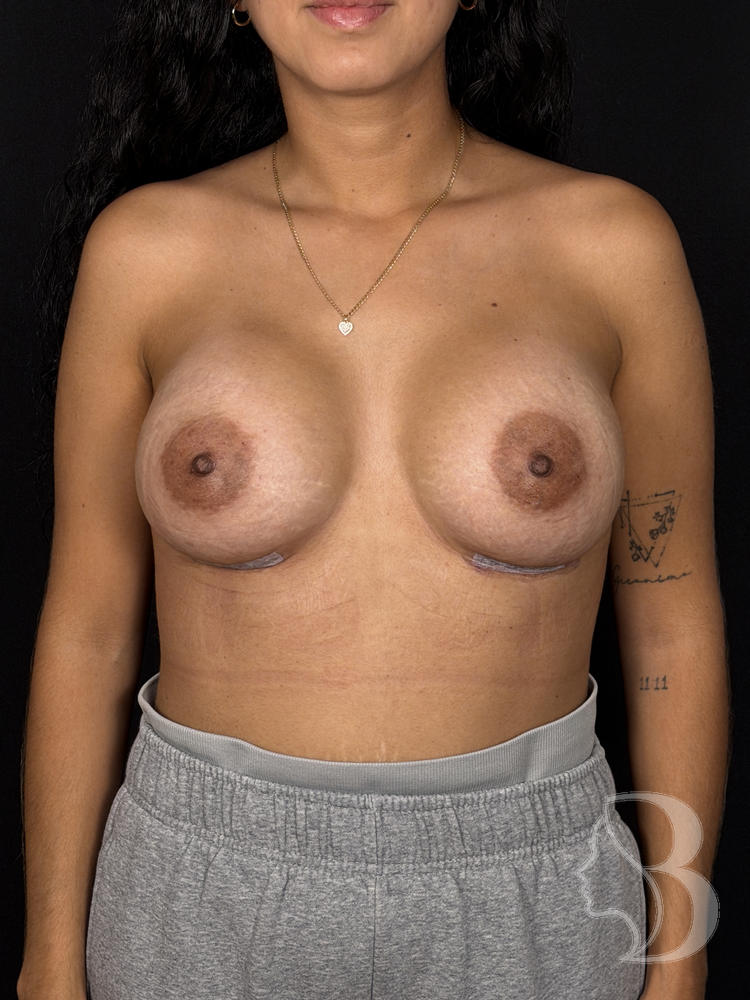
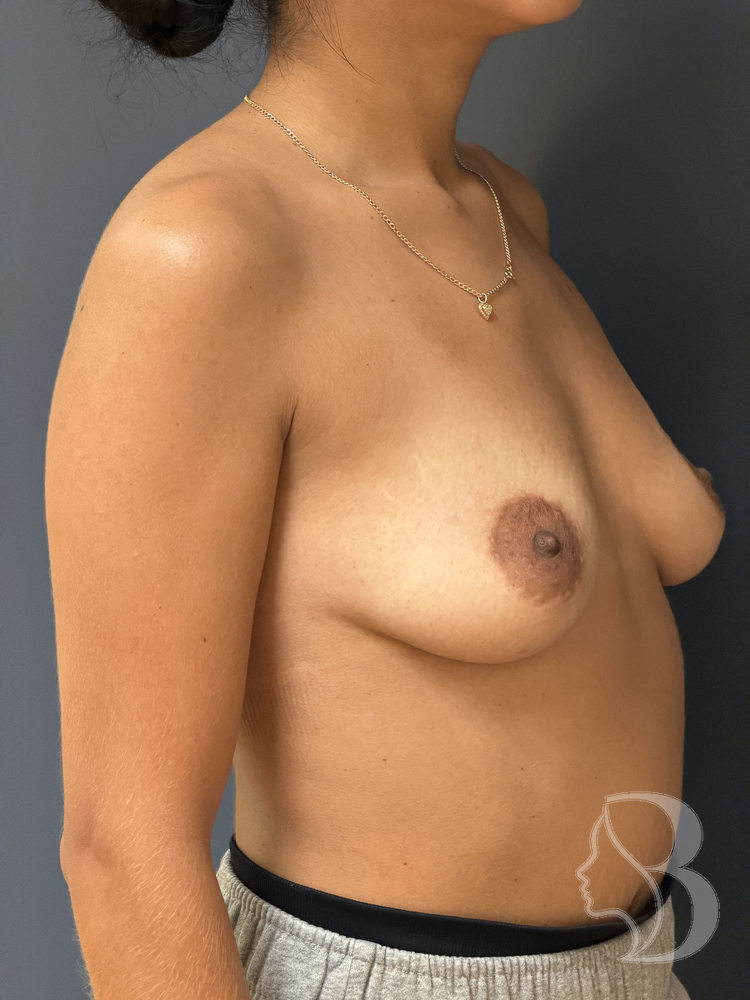
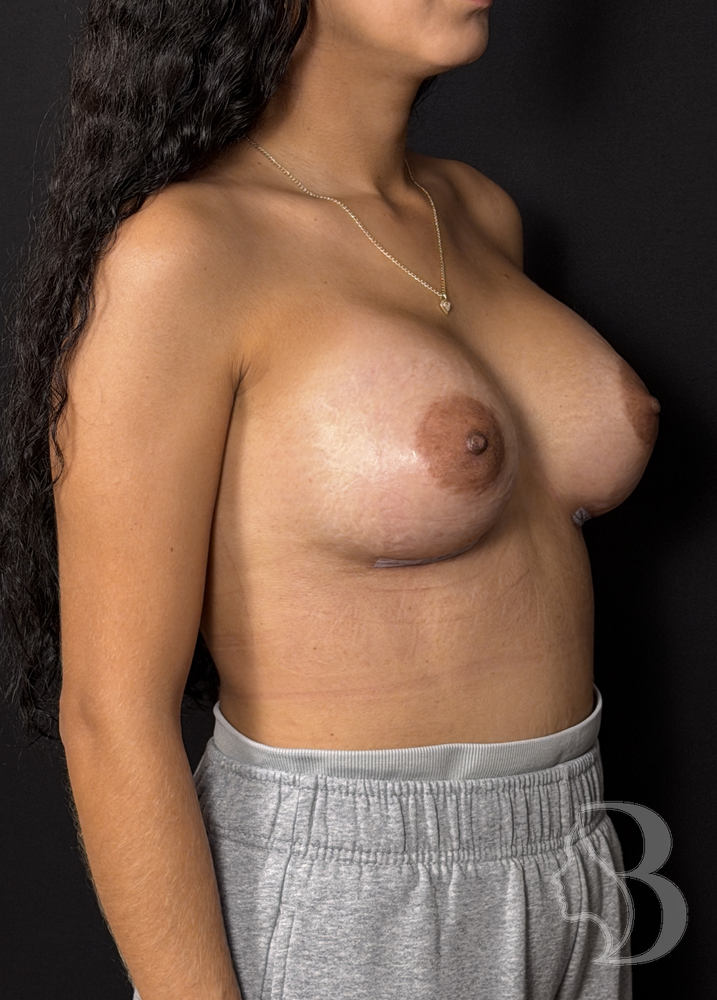
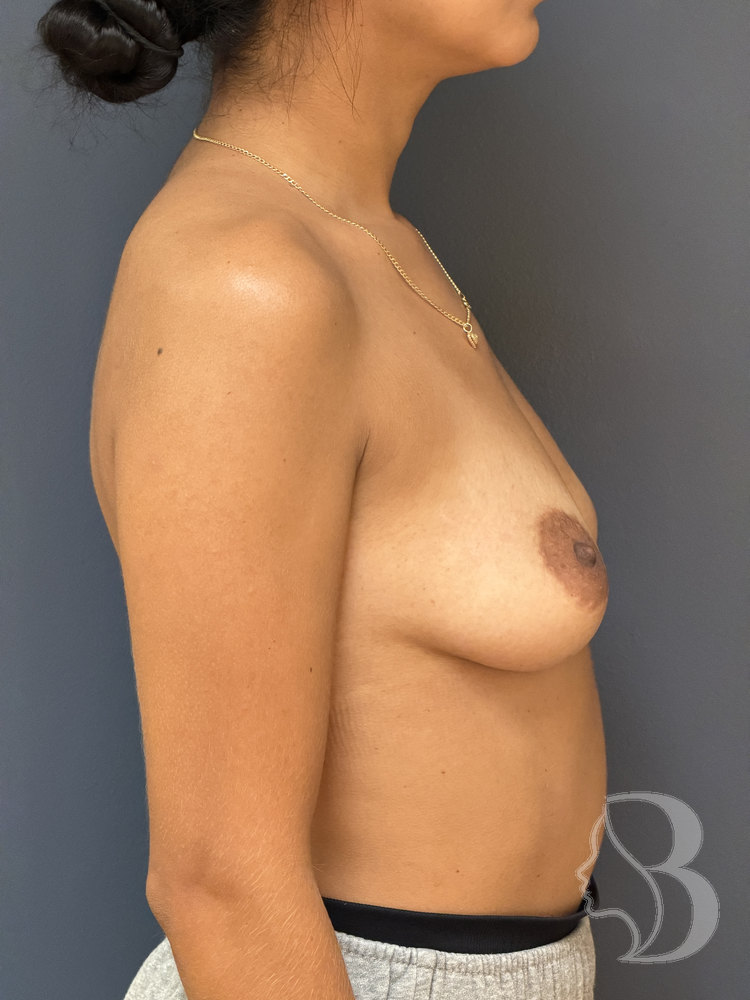
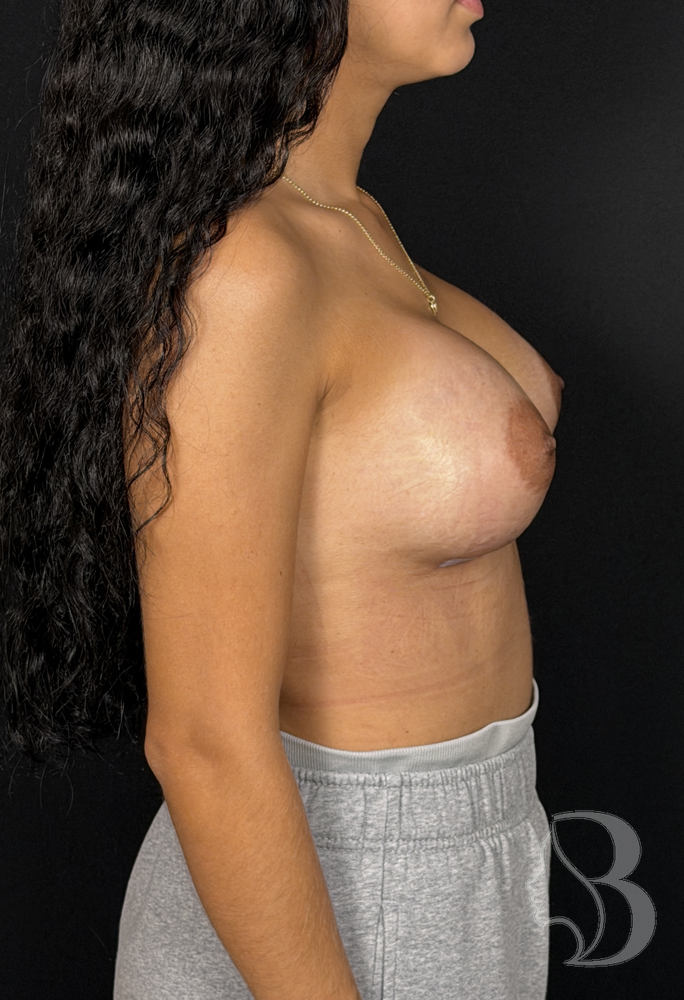
Implants placed in the subfascial plane, in front of the muscle, with the fascia providing the extra layer of coverage. Individual results vary. Photos shared with patient consent.
What It Does Not Change
A very thin patient with little upper-pole tissue still needs the muscle for coverage, and no implant surface fixes that. A patient with early sagging may need a lift, and the plane conversation is secondary to that. Someone with a strong history of contracture in a prior augmentation has reasons to stay under, or to combine a plane change with other measures. Mammography is still somewhat easier with the implant behind the muscle, which matters more as you get older and should be part of the discussion if you are in your forties or beyond.
And the honest caveat about the evidence: the long-term subfascial literature is smaller than the submuscular literature, and the Motiva 10-year data are not in yet. I would not tell a patient that subfascial Motiva is proven superior. I would tell her it is a well-supported option that fits certain anatomy and certain goals, and that the decision is made at an exam.
How I Decide at a Consultation
In the room, the placement decision comes down to a handful of measurements and a few questions. I pinch the tissue in the upper pole and at the fold. I measure the base width of the breast, because the implant has to fit inside it. I look at where the nipple sits relative to the fold, which tells me whether a lift is part of the conversation. I ask what you do with your chest: lifting, swimming, climbing, yoga. I ask whether you have had breast surgery before and whether anyone in your family has had breast cancer, which bears on screening. Then I show you implants, usually more than one, and we talk about what each plane would look like on your frame.
Sometimes the answer is dual plane, and I say so. Sometimes it is subfascial with an Ergonomix implant, and the patient has never heard the word before. The point of this post is only that the third option exists, that the newest implants make it more attractive for more people than it used to be, and that any surgeon you see should be able to explain all three planes and tell you which one fits you and why.
Questions to Ask Any Plastic Surgeon About Implant Placement
- Which plane do you recommend for my anatomy, and what would make you choose a different one?
- How much tissue do I have in the upper pole, and how does that change the decision?
- Do you place implants in the subfascial plane, and how often?
- Which implant are you recommending, and why that surface and gel for this plane?
- What is your rate of capsular contracture and of revision for malposition?
- How will this placement affect mammograms, and what should I tell the imaging center?
- Can I see before-and-after photos of patients with proportions similar to mine in the plane you’re recommending?
Motiva Implants and Placement: Common Questions
Is subfascial breast augmentation the same as over the muscle?
Not quite. Over the muscle (subglandular) places the implant between the breast gland and the pectoralis fascia. Subfascial lifts that thin fascial layer off the muscle and places the implant beneath it, so the implant is still in front of the muscle but has one more layer of coverage and support. The muscle itself is not cut or released in either plane.
Does Motiva recommend one implant placement over another?
No. Motiva SmoothSilk Round and Ergonomix implants are FDA approved for breast augmentation without a required plane; the pocket is the surgeon’s decision. The reason they come up in placement conversations is that their surface and gel behave differently from older implants, which changes some of the tradeoffs that pushed surgeons under the muscle.
Can I get Motiva implants under the muscle?
Yes. Dual plane placement works with Motiva implants exactly as it does with Mentor or Allergan. If you have very little breast tissue, or you want the extra upper coverage the muscle provides, under the muscle may still be the right plane for you regardless of the implant brand.
Will I have less pain with a subfascial Motiva augmentation?
Usually, because the pectoralis muscle is left intact rather than partially released, and the published subfascial series report less early postoperative discomfort than subpectoral placement. Recovery is individual, though, and a subfascial pocket still involves surgery on the breast. Dr. Rafizadeh will give you an honest recovery plan based on the plane and the implant he recommends for you.
What North Jersey Patients Search About Implant Placement and Motiva
Why do some surgeons now place Motiva implants in front of the muscle?
Because two of the three classic reasons for going under the muscle were about the implant, not the pocket. A smooth, low-surface-texture shell and a soft gel that settles like tissue weaken the case that the muscle is needed to hide the implant and lower contracture. Coverage still matters, which is why the subfascial plane, with its extra fascial layer, is the usual front-of-muscle choice. Under the muscle (dual plane) gives more coverage for thin patients and has the longest track record. Over the muscle looks most natural in motion and avoids animation. Subfascial sits in between and, with a soft, smooth-surfaced implant, is a strong option for women with adequate tissue who do not want muscle involvement. The decision is made at an examination, not from a list.
Are Motiva implants FDA approved in the United States?
Yes. The FDA approved Motiva SmoothSilk Round and SmoothSilk Ergonomix implants in September 2024 for primary and revision breast augmentation in women 22 and older. In October 2026 the FDA approved an additional 28 sizes, including implants as small as 105 cc.
What is animation deformity after breast augmentation?
When an implant sits under the pectoralis muscle, flexing the chest (pushing, lifting, certain exercises) can move or distort the implant. It ranges from barely noticeable to bothersome, and it is more of an issue for athletes and people who lift. Placing the implant in front of the muscle, whether subglandular or subfascial, avoids it.
Do Motiva implants have a lower capsular contracture rate?
The 5-year data from Motiva’s FDA pivotal study report low rates of rupture and capsular contracture in primary augmentation, with reoperation for any reason at 8.8% in that cohort. Those are company-sponsored trial results and the 10-year data are still being collected, so I describe them as encouraging rather than settled.
Can breast augmentation be done under local anesthesia?
For selected patients, yes. A 2026 multicenter series of 159 minimally invasive, tissue-preserving augmentations reported that 58% were performed under local anesthesia with sedation. Whether that is appropriate depends on your anatomy, the plane, and the implant. It is a conversation to have at your consultation rather than something to assume.
Sources & References
- Establishment Labs Holdings Inc. “Establishment Labs Receives FDA Approval for Additional Sizes of Motiva Implants.” Press release, October 5, 2026. investors.establishmentlabs.com
- Glicksman C, Wolfe A, McGuire P. “The Study of the Safety and Effectiveness of Motiva SmoothSilk Silicone Gel-filled Breast Implants in Patients Undergoing Primary and Revisional Breast Augmentation: 5-Year Clinical Data.” Aesthetic Surgery Journal. 2026;46(3):319–328. PubMed
- Gould DJ, Shauly O, Ohanissian L, Stevens WG. “Subfascial Breast Augmentation: A Systematic Review and Meta-Analysis of Capsular Contracture.” Aesthetic Surgery Journal Open Forum. 2020;2(1):ojaa006. PubMed
- Yuan M, Kim P, Gallo L, Austin RE, Lista F, Ahmad J. “Outcomes in Subfascial Versus Subglandular Planes in Breast Augmentation: A Systematic Review and Meta-analysis.” Aesthetic Surgery Journal. 2024;44(9):NP639–NP644. PubMed
- Pittman TA, Steve A, Zeidler K, Chidester JR, Calobrace MB. “Minimally Invasive, Tissue-Preserving Breast Augmentation: Insights From a Large Case Series, Technique and Surgical Pearls.” Aesthetic Surgery Journal. 2026;46(Suppl 2):S117–S126. PubMed
- Calobrace MB, Kinney BM, Doloff JC, et al. “From Bench to Bedside: Clinical Implications of a 4-Micron Surface-Modulated Immune Response in the Era of Breast Tissue Preservation.” Aesthetic Surgery Journal. 2026;46(Suppl 2):S96–S108. PubMed
- U.S. Food and Drug Administration. “Breast Implants: Risks and Complications.” fda.gov
Related Reading From the Blog
If you’re weighing breast augmentation in Northern New Jersey, these go deeper:
- Breast Implants Over or Under the Muscle? Choosing Placement
- Breast Implant Profile: Moderate vs. High Projection
- Breast Augmentation Incisions: Inframammary vs. Periareolar vs. Armpit
- Breast Implant Rippling: Causes and Fixes
- Smooth vs. Textured Breast Implants
Our Morristown office welcomes patients from Summit, Chatham, Madison, Short Hills, and across Northern New Jersey.
Ready to schedule a consultation in Morristown, NJ?
Book a Consultation